The Complete Ancient Grains List: Every Grain You Need to Know
A comprehensive list of all ancient grains with quick-reference nutrition data, flavor profiles, cooking times, and gluten-free status.
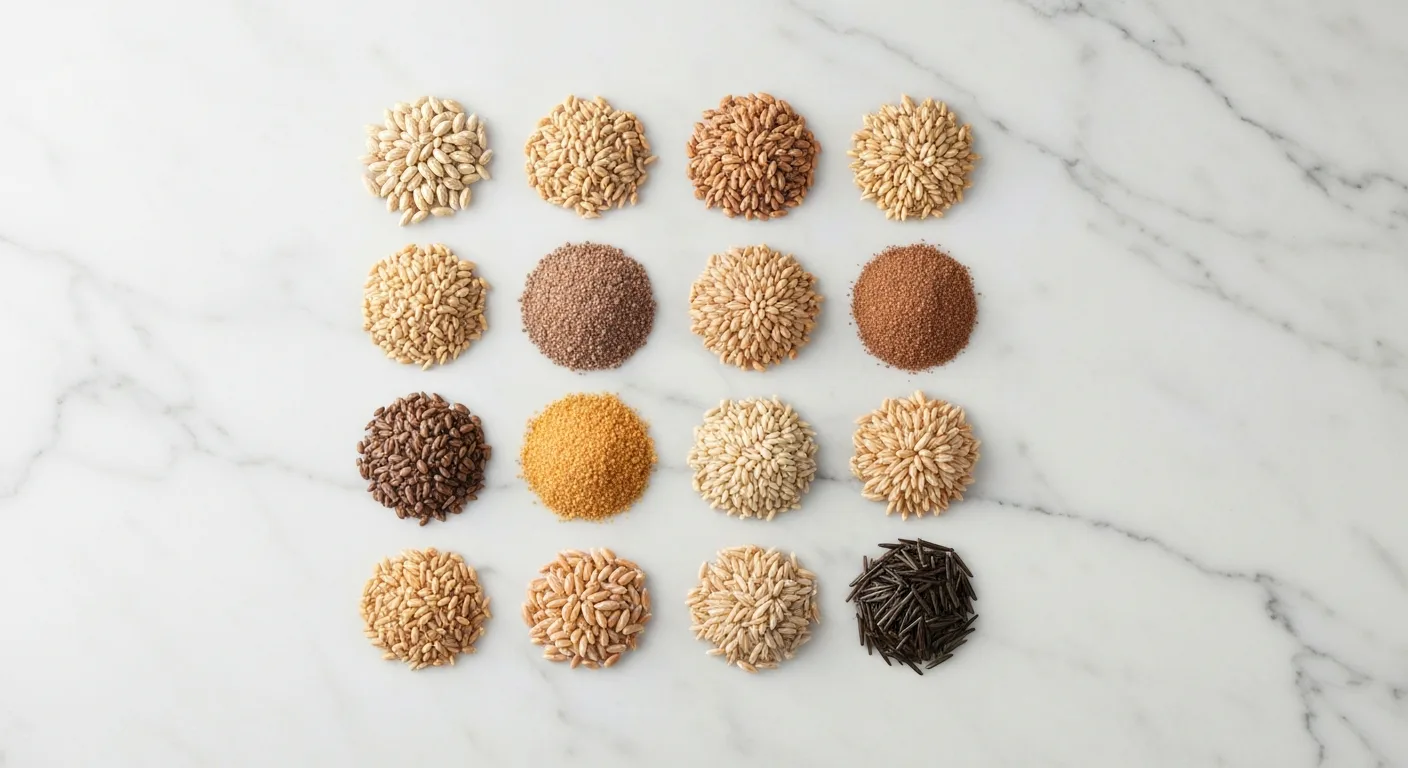
This is the reference list of ancient grains. It covers quick-reference data for every grain that qualifies, along with links to deeper profiles. For background on what makes a grain “ancient,” see our complete guide to ancient grains.
Quick-Reference Table
The table below summarizes the most frequently asked questions for each grain: Is it gluten-free? How much protein does it have? How long does it take to cook? Use this as a starting point, then read the individual profiles below for culinary tips and nutritional highlights.
| Grain | Botanical Family | Origin | Gluten-Free | Protein (per 100 g, dry) | Cooking Time | Flavor Profile |
|---|---|---|---|---|---|---|
| Quinoa | Amaranthaceae | Andes, South America | Yes | 14 g | 15 min | Mild, slightly nutty |
| Amaranth | Amaranthaceae | Mesoamerica | Yes | 14 g | 20 min | Earthy, grassy, peppery |
| Teff | Poaceae | Ethiopia | Yes | 13 g | 15-20 min | Mildly sweet, molasses notes |
| Millet | Poaceae | Africa / Asia | Yes | 11 g | 20-25 min | Mild, slightly sweet, corn-like |
| Sorghum | Poaceae | Africa | Yes | 11 g | 50-60 min | Mild, neutral, slightly sweet |
| Buckwheat | Polygonaceae | Central Asia | Yes | 13 g | 15-20 min | Earthy, robust, slightly bitter |
| Wild Rice | Poaceae | North America | Yes | 15 g | 45-55 min | Nutty, smoky, chewy |
| Black Rice | Poaceae | Southeast Asia | Yes | 9 g | 30-35 min | Nutty, slightly sweet |
| Farro (Emmer) | Poaceae | Fertile Crescent | No | 15 g | 25-40 min | Nutty, chewy, earthy |
| Spelt | Poaceae | Europe / Near East | No | 15 g | 45-60 min (berries) | Sweet, nutty, wheaty |
| Einkorn | Poaceae | Fertile Crescent | No | 14 g | 25-35 min | Buttery, rich, slightly sweet |
| Emmer | Poaceae | Fertile Crescent | No | 15 g | 30-45 min | Nutty, complex, firm |
| Kamut (Khorasan) | Poaceae | Near East | No | 15 g | 40-60 min | Buttery, smooth, rich |
| Freekeh | Poaceae | Levant / N. Africa | No | 13 g | 20-25 min (cracked) | Smoky, herbal, green |
| Barley (Hulled) | Poaceae | Fertile Crescent | No | 12 g | 50-60 min | Mild, chewy, slightly malty |
Protein values are approximate and vary by cultivar, growing conditions, and source. All cooking times assume stovetop preparation without pre-soaking unless noted.
Gluten-Free Ancient Grains
If you are managing celiac disease or a gluten sensitivity, these are the ancient grains safe for your diet. For each, look for products labeled “certified gluten-free” to avoid cross-contamination from shared processing facilities.
Quinoa
Origin: Andean highlands of Peru and Bolivia, cultivated for at least 5,000 years.
Quinoa is the most commercially successful ancient grain of the modern era. It is technically a pseudocereal, the seed of a broadleaf plant in the Amaranthaceae family rather than a grass. Its claim to fame is its amino acid profile: quinoa provides all nine essential amino acids in nutritionally meaningful quantities, making it one of the few complete plant proteins.
Quinoa comes in three primary varieties. White quinoa is the mildest and fluffiest, making it the most versatile for everyday cooking. Red quinoa holds its shape better and has a slightly earthier taste, ideal for salads. Black quinoa is the firmest and most robust in flavor. All three share a similar nutritional profile.
Culinary uses: Grain bowls, salads, porridge, pilaf, stuffed peppers, flour for baking. Rinse thoroughly before cooking to remove saponins, the naturally occurring compounds that give unrinsed quinoa a bitter, soapy taste.
Nutritional highlight: Complete protein, high in folate, magnesium, and manganese. One of the highest-protein grains per calorie.
Amaranth
Origin: Mesoamerica, central to Aztec agriculture and ritual before Spanish colonizers suppressed its cultivation.
Amaranth seeds are tiny, even smaller than quinoa, and cook into a thick, porridge-like consistency rather than forming distinct fluffy grains. This makes amaranth excellent for hot cereals, thickening soups, and binding veggie burgers. Popped amaranth, made by toasting dry seeds in a hot skillet, produces miniature puffs with a toasty, corn-like flavor that can top yogurt or salads.
Culinary uses: Porridge, polenta-style preparations, popped as a topping, flour for flatbreads, thickener for stews.
Nutritional highlight: Exceptionally high in manganese (one cup of cooked amaranth provides over 100% of the daily value), rich in phosphorus, iron, and magnesium. Like quinoa, amaranth is a complete protein source.
Teff
Origin: Ethiopian highlands, where it has been cultivated for an estimated 3,000 to 6,000 years.
Teff is the smallest grain in the world. A single kernel is about the size of a poppy seed, which means the bran and germ constitute a proportionally large share of each grain. You cannot refine teff into a “white” version the way you can with wheat; every form of teff is inherently whole grain.
Teff comes in ivory, brown, and dark (sometimes called red) varieties. In Ethiopia, teff flour is fermented to make injera, the spongy, slightly sour flatbread that serves as both plate and utensil. Outside of Ethiopian cuisine, teff works well as a porridge grain, a polenta-like side dish, or a gluten-free flour for baking.
Culinary uses: Injera, porridge, polenta, gluten-free baking, added to stews as a thickener.
Nutritional highlight: Highest calcium content of any grain (123 mg per 100 g dry), high in resistant starch, and a good source of iron, though the bioavailability of teff’s iron remains debated in the nutrition literature.
Millet
Origin: Multiple independent domestications across Africa and Asia, dating back 7,000 to 10,000 years.
Millet is not a single species but a collective term for several small-seeded cereal grasses. The most commonly available types in Western markets are pearl millet (the most widely grown globally), proso millet (the type typically sold in US grocery stores), finger millet (ragi, popular in India), and foxtail millet. Together, millets are a primary food source for more than 500 million people worldwide, particularly in the semi-arid tropics of Africa and Asia.
Millet is mild-flavored and quick-cooking. When prepared with less water, it yields a fluffy, couscous-like texture. With more water, it becomes creamy, making it a good base for porridge.
Culinary uses: Pilaf, porridge, flatbreads (roti in India), polenta substitute, added to baked goods for crunch, puffed as a cereal.
Nutritional highlight: High in B vitamins, especially niacin. Finger millet (ragi) is exceptionally high in calcium. All millets are drought-tolerant crops, making them important for food security in water-stressed regions.
Sorghum
Origin: Sub-Saharan Africa, domesticated approximately 8,000 years ago.
Sorghum is the fifth most produced cereal in the world, behind wheat, rice, maize, and barley, yet it remains relatively unknown in Western kitchens. Whole sorghum grains are round, about the size of peppercorns, and cook to a pleasantly chewy texture similar to Israeli couscous. Sorghum can also be popped like popcorn, ground into flour for gluten-free baking, or processed into syrup (sorghum molasses).
Culinary uses: Grain bowls, salads, popped sorghum snack, gluten-free flour, porridge, fermented beverages (traditional African beer).
Nutritional highlight: High in antioxidants, particularly in pigmented (red, brown, black) varieties. Rich in fiber and provides a good balance of B vitamins. Its neutral flavor makes it one of the most versatile gluten-free grains for baking.
Buckwheat
Origin: Central and western China, cultivated for at least 6,000 years. Despite its name, buckwheat is not related to wheat and is completely gluten-free.
Buckwheat is the seed of Fagopyrum esculentum, a broadleaf plant related to rhubarb and sorrel. Raw buckwheat groats are pale green; toasted buckwheat groats, known as kasha, are deep brown with a more intense, earthy flavor. Buckwheat flour is the base for Japanese soba noodles (when made without wheat filler), French galettes (savory crepes), and Russian blini.
Culinary uses: Soba noodles, galettes, kasha porridge, pancakes, granola, flour for baking.
Nutritional highlight: One of the richest food sources of rutin, a flavonoid associated with improved blood vessel strength and reduced inflammation. High in magnesium and resistant starch.
Wild Rice
Origin: The Great Lakes region of North America, where it has been harvested by Indigenous peoples, particularly the Ojibwe, for thousands of years.
Wild rice is not botanically related to Asian rice (Oryza sativa). It is the seed of aquatic grasses in the genus Zizania. True wild rice is hand-harvested from natural lake and river beds, which contributes to its high price. Cultivated “wild rice” grown in paddies is more affordable but may differ in flavor and texture.
Culinary uses: Pilafs, soups, stuffings, salads, casseroles. Blends well with brown rice. Its dramatic dark color and chewy texture make it a visually striking addition to grain bowls.
Nutritional highlight: Highest protein content of any grain on this list at roughly 15 g per 100 g dry. Very low in fat, high in B vitamins, and a good source of zinc.
Black Rice (Forbidden Rice)
Origin: Southeast Asia, historically reserved for Chinese royalty, hence the nickname “forbidden rice.”
Black rice gets its deep purple-black color from anthocyanins, the same class of antioxidant pigments found in blueberries and blackberries. When cooked, the grains turn a striking dark purple. Black rice has a slightly sticky texture and a sweet, nutty flavor that works well in both savory and sweet dishes.
Culinary uses: Grain bowls, rice pudding, sushi, congee, salads. Pairs well with coconut milk in Southeast Asian desserts.
Nutritional highlight: Among the highest antioxidant activity of any grain, driven by its anthocyanin content. Good source of iron and fiber.
Gluten-Containing Ancient Grains
These grains belong to the wheat tribe (Triticeae) or, in the case of barley, are closely related cereals that contain gluten or gluten-like proteins. They are not safe for individuals with celiac disease but may be tolerated better than modern wheat by some people with non-celiac wheat sensitivity. See Ancient Grains vs Modern Wheat for the research on why.
Farro (Emmer Wheat)
Origin: Fertile Crescent, one of the founding crops of agriculture roughly 10,000 years ago.
Farro is the Italian common name for emmer wheat (Triticum dicoccum), a tetraploid wheat with 28 chromosomes. In Italy, the term “farro” can technically refer to three different wheat species (farro piccolo/einkorn, farro medio/emmer, farro grande/spelt), but in American and British markets, “farro” almost always means emmer.
Farro is sold in three processing levels: whole (with bran intact), semi-pearled (some bran removed), and pearled (all bran removed). Whole farro is the most nutritious but takes longest to cook. Semi-pearled farro strikes the best balance for most home cooks.
Culinary uses: Grain salads, risotto-style dishes (farrotto), soups (especially Italian zuppa di farro), side dishes, breakfast bowls.
Nutritional highlight: High in protein and fiber, excellent source of niacin and zinc. Its firm, chewy texture holds up well in meal-prepped salads.
Spelt
Origin: First appeared in the archaeological record in the Caucasus region and spread throughout Europe during the Bronze Age.
Spelt (Triticum spelta) is a hexaploid wheat, meaning it has the same chromosome count (42) as modern bread wheat. However, spelt diverged from the main wheat lineage long before the intensive breeding of the 19th and 20th centuries. It has a tougher husk than modern wheat, which protects the grain from pests and disease but requires an extra de-hulling step during processing.
Spelt flour is widely available and is one of the easiest ancient grain flours to substitute in conventional baking recipes. Its gluten is more water-soluble and less elastic than modern wheat gluten, so baked goods tend to be more tender but may not rise as high. For a detailed comparison, see Spelt vs Wheat.
Culinary uses: Bread, pasta, muffins, pancakes, whole berries in salads and soups.
Nutritional highlight: Higher in protein, fiber, and several minerals (zinc, manganese, copper) than standard whole wheat.
Einkorn
Origin: Southeastern Turkey, the first wheat ever domesticated, around 10,000 years ago.
Einkorn (Triticum monococcum) is the simplest wheat, a diploid with just 14 chromosomes. Its grains are small and distinctly yellow due to high carotenoid content, particularly lutein. Einkorn flour produces baked goods with a golden hue and a rich, buttery flavor unlike any other wheat.
Einkorn’s gluten is structurally different from modern wheat gluten. It has a higher gliadin-to-glutenin ratio, which means the dough is sticky and extensible rather than elastic. Baking with einkorn requires technique adjustments: less kneading, lower hydration, and gentler handling. For the full comparison, see Einkorn vs Wheat.
Culinary uses: Pasta, flatbreads, pancakes, cookies, muffins. Best in recipes that do not require strong gluten development. Whole berries work well in salads and pilafs.
Nutritional highlight: Highest carotenoid content of any wheat species, particularly lutein, which is associated with eye health. Higher in protein and trace minerals than modern wheat.
Emmer
Origin: Fertile Crescent, domesticated alongside einkorn as one of the original Neolithic founder crops.
Emmer (Triticum dicoccum) is the tetraploid ancestor of both durum wheat and, indirectly, modern bread wheat. When sold as whole or semi-pearled berries in Italian markets, it is labeled “farro medio.” Emmer has a robust, earthy flavor and a firm texture that holds up well in soups and salads.
Culinary uses: Soups, stews, grain salads, pilaf, ground into flour for rustic breads and pasta. Traditional in Italian, Ethiopian, and Middle Eastern cuisines.
Nutritional highlight: High in fiber, protein, and resistant starch. Good source of B vitamins, magnesium, and zinc. Studies have shown emmer to have higher antioxidant activity than modern durum wheat.
Kamut (Khorasan Wheat)
Origin: Believed to originate in the Fertile Crescent, with modern commercial cultivation centered in Montana, USA, and parts of Canada.
Khorasan wheat is a tetraploid species with noticeably large kernels, roughly twice the size of modern wheat berries. The trademarked KAMUT brand guarantees the grain is grown organically, is never hybridized, and meets minimum nutritional standards for protein and selenium content.
Culinary uses: Grain salads, pilafs, ground into flour for bread and pasta. Kamut pasta is widely available in natural food stores. Its buttery, smooth flavor makes it one of the most approachable ancient wheat varieties.
Nutritional highlight: Very high in selenium (one serving can provide over 100% of the daily value), high in protein, and a good source of zinc and magnesium.
Freekeh
Origin: Levantine and North African cuisine, with references dating back at least to the 13th century.
Freekeh is made from young green durum wheat that is harvested early, then sun-dried and roasted over open flames. The fire burns away the chaff and the moisture in the immature kernels prevents the grain itself from burning. The result is a firm, chewy grain with a distinctive smoky, herbal flavor.
Freekeh is sold whole or cracked. Cracked freekeh cooks much faster (about 20 minutes) and has a texture similar to bulgur wheat.
Culinary uses: Pilafs, tabbouleh-style salads, soups, stuffings, grain bowls. The smoky flavor pairs especially well with roasted vegetables, lamb, and yogurt-based sauces.
Nutritional highlight: Higher in fiber and protein than mature durum wheat. The early harvest preserves more nutrients, and the roasting process increases resistant starch content.
Barley (Hulled)
Origin: Fertile Crescent, one of the oldest domesticated cereals alongside einkorn and emmer.
Barley is familiar to most people as an ingredient in soups and a raw material for beer production. The ancient grain distinction applies specifically to hulled barley (also called barley groats), which retains its bran layer. Pearled barley, the more common grocery store product, has had the bran polished away and is technically a refined grain.
Culinary uses: Soups (classic beef barley soup), risotto-style dishes, salads, flour for bread, malted for brewing.
Nutritional highlight: One of the richest sources of beta-glucan, a soluble fiber with strong evidence for cholesterol reduction. The FDA allows a health claim for barley beta-glucan’s role in reducing heart disease risk.
How to Choose Your First Ancient Grain
If you are new to ancient grains, start with one that matches your current cooking style:
- If you cook a lot of rice: Try quinoa or farro. Both cook similarly and substitute directly in most rice-based recipes.
- If you bake: Start with spelt flour, which is the easiest ancient grain flour to swap into existing wheat recipes. See Spelt vs Wheat for baking tips.
- If you eat gluten-free: Teff, millet, and sorghum are the most versatile gluten-free ancient grains for everyday cooking.
- If you meal-prep: Farro and quinoa hold their texture well for days in the refrigerator, making them ideal for batch cooking.
For detailed preparation instructions, water ratios, and timing for every grain on this list, see our cooking ancient grains guide. For nutritional deep dives, visit the ancient grains nutrition page.
Last updated March 12, 2026