Ancient Grains for Special Diets: Gluten-Free, Celiac, Keto, and More
Which ancient grains fit your dietary needs? Complete guide to ancient grains for gluten-free, celiac, low-carb, keto, and plant-based diets.
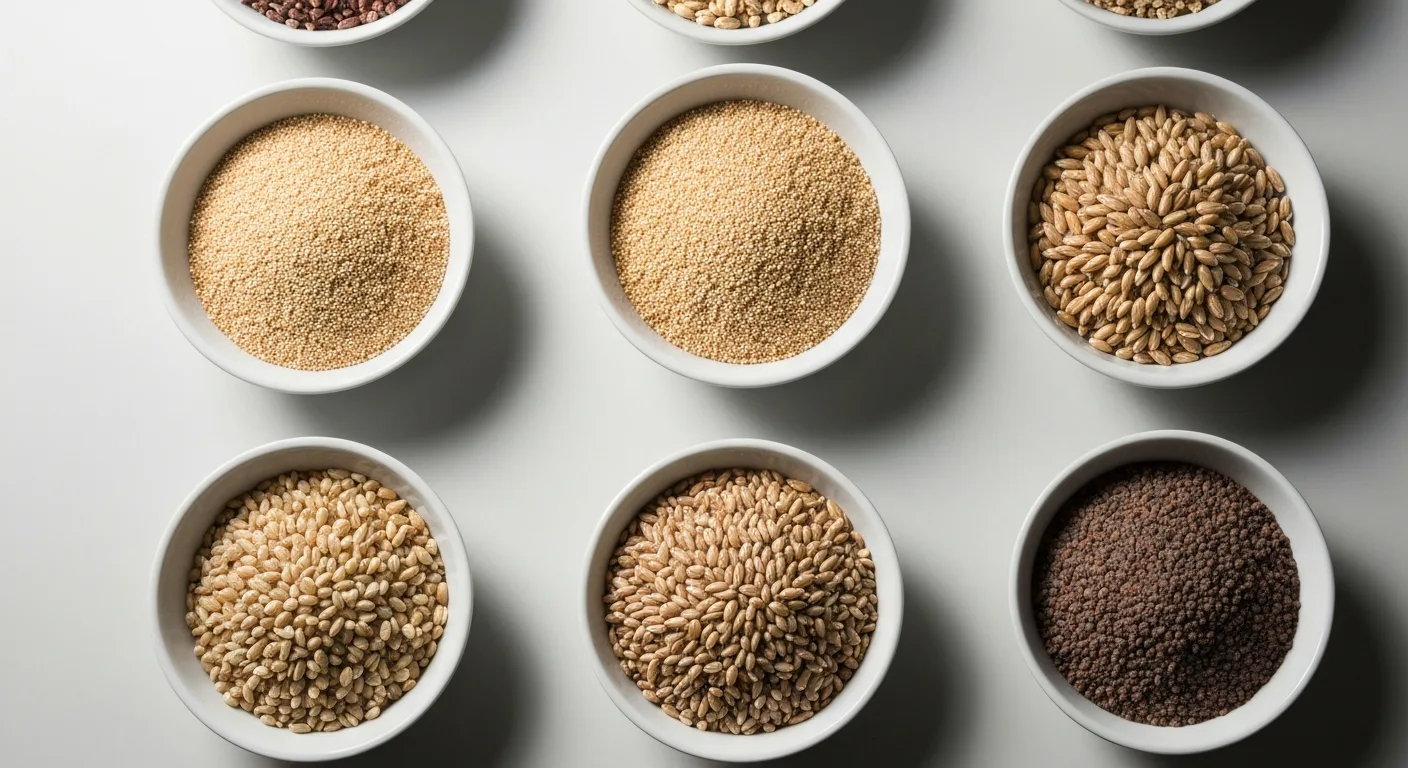
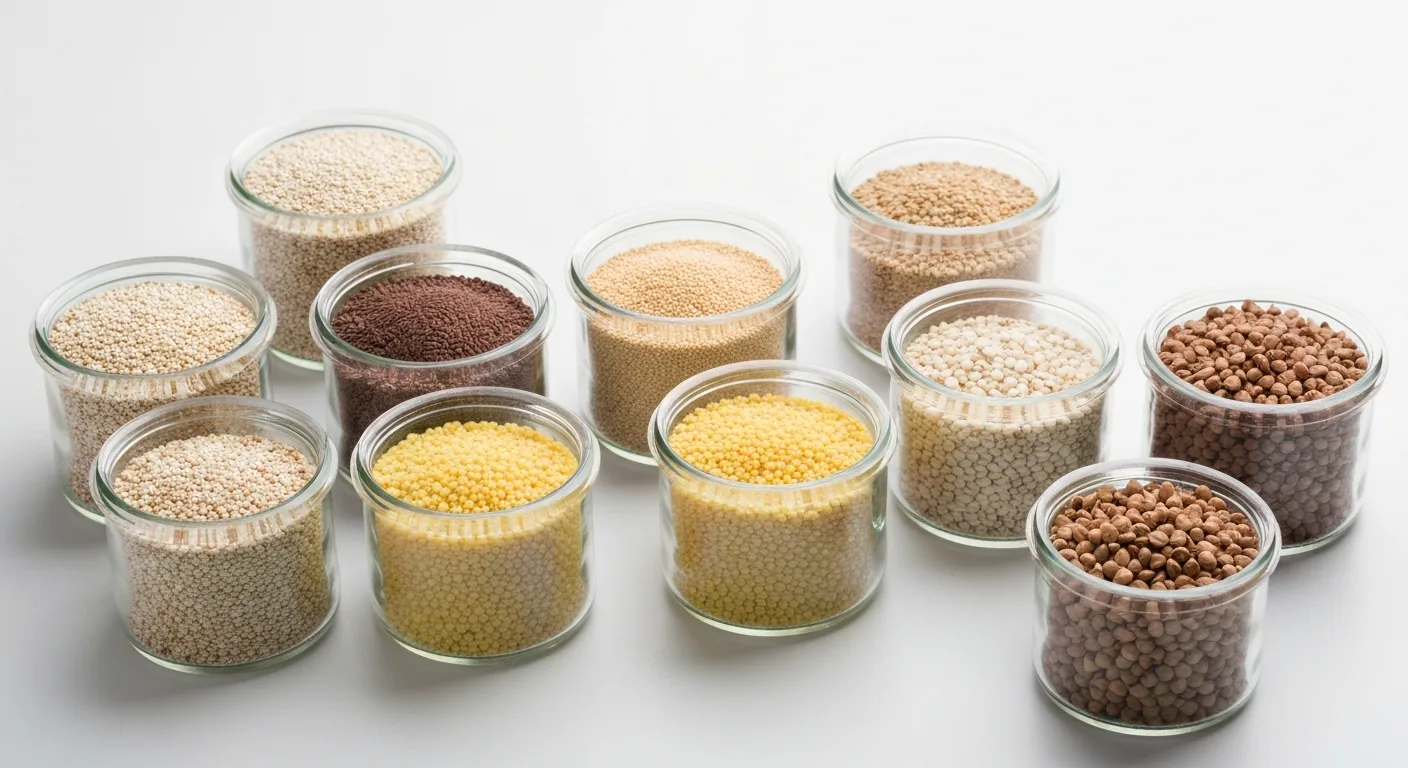
One of the most common questions about ancient grains is compatibility: can I eat this grain on my diet? The answer depends entirely on which grain and which diet. Ancient grains span a wide range of botanical families, gluten status, carbohydrate content, and nutrient profiles - there is no single answer that applies to all of them.
This guide organizes every major ancient grain by dietary compatibility, giving you a clear reference for gluten-free, celiac, low-carb, ketogenic, plant-based, anti-inflammatory, FODMAP, and Paleo diets. For complete nutritional data on each grain, see our ancient grains nutrition guide.
Quick Reference: Grain-Diet Compatibility Matrix
| Grain | Gluten-Free | Celiac-Safe | Low-Carb | Keto | Plant Protein | Anti-Inflammatory | Low-FODMAP |
|---|---|---|---|---|---|---|---|
| Quinoa | Yes | Yes | Moderate | No | Excellent | Yes | Yes |
| Amaranth | Yes | Yes | Moderate | No | Excellent | Yes | Yes |
| Teff | Yes | Yes | Moderate | No | Good | Yes | Moderate |
| Millet | Yes | Yes | Moderate | No | Moderate | Yes | Yes |
| Sorghum | Yes | Yes | Moderate | No | Moderate | Yes | Yes |
| Buckwheat | Yes | Yes | Moderate | No | Excellent | Yes | Moderate |
| Barley | No | No | No | No | Low | Yes | No |
| Spelt | No | No | No | No | Good | Moderate | No |
| Einkorn | No | No | No | No | Good | Moderate | No |
| Kamut | No | No | No | No | Good | Moderate | No |
| Farro (emmer) | No | No | No | No | Good | Moderate | No |
| Freekeh | No | No | No | No | Good | Moderate | No |
A few immediate observations. The gluten-free / celiac-safe categories are identical - if a grain contains gluten, it is unsafe for celiac disease, period. No ancient grain is truly ketogenic due to carbohydrate content. And the pseudocereals (quinoa, amaranth, buckwheat) consistently score highest across dietary compatibility categories.
Gluten-Free Diets
Naturally Gluten-Free Ancient Grains
Six major ancient grains are naturally gluten-free:
Quinoa - a pseudocereal from the Andes, quinoa is the most versatile gluten-free grain. It cooks quickly (15-20 minutes), has a neutral flavor that adapts to any cuisine, provides complete protein, and works in salads, pilafs, porridges, and baked goods. It is also available as flour, flakes, and puffed cereal.
Amaranth - another pseudocereal, originally domesticated in Mesoamerica. Amaranth has a distinctive earthy, slightly peppery flavor. It cooks into a porridge-like consistency when boiled (excellent for breakfast) or can be popped like miniature popcorn. Amaranth flour adds protein and binding properties to gluten-free baking.
Teff - the staple grain of Ethiopia, teff is the smallest grain in the world. It has a mild, slightly nutty flavor (white teff) or a more robust, earthy flavor (brown/dark teff). Teff is traditionally used to make injera, the spongy fermented flatbread, but also works well in porridge, polenta-style preparations, and baked goods. Teff flour produces a tender crumb in gluten-free baking.
Millet - widely consumed across Africa and Asia, millet is mild-flavored and easily digestible. It cooks fluffy like couscous when using less water, or creamy like polenta with more water. Millet flour is commonly used in Indian flatbreads (roti, bhakri) and works well in gluten-free pancakes and muffins.
Sorghum - the fifth most produced cereal globally, sorghum has a mild, slightly sweet flavor. Whole sorghum grains are chewy and satisfying in grain bowls and salads. Sorghum flour is one of the best gluten-free flours for baking, producing a texture and flavor closer to wheat than most alternatives. Popped sorghum is a popular snack.
Buckwheat - despite its misleading name, buckwheat is not related to wheat and contains no gluten. It is a pseudocereal related to rhubarb. Buckwheat groats (kasha) have a distinctive earthy, toasty flavor. Buckwheat flour makes excellent pancakes, crepes (French galettes), and Japanese soba noodles (though commercial soba often contains wheat - check labels).
For detailed profiles of each gluten-free grain, see our complete gluten-free ancient grains guide.
Cross-Contamination Warning
A grain being naturally gluten-free does not guarantee the product you purchase is gluten-free. Cross-contamination can occur at every stage:
- In the field: Crops may be grown adjacent to wheat fields, with grain mixing during harvest.
- In transport and storage: Shared trucks, silos, and elevators may contain wheat residue.
- In processing facilities: Mills and packaging lines that also handle wheat can introduce contamination.
For people with celiac disease or severe gluten sensitivity, only purchase grains and flours certified gluten-free by a third-party organization (GFCO, CSA, or equivalent). For detailed celiac-specific guidance, see our ancient grains and celiac disease guide.
Grains That Contain Gluten
The following ancient grains all contain gluten and are NOT safe for gluten-free diets:
- Spelt (Triticum spelta) - a hexaploid wheat species
- Einkorn (Triticum monococcum) - a diploid wheat species
- Emmer/Farro (Triticum dicoccum) - a tetraploid wheat species
- Kamut/Khorasan wheat (Triticum turgidum subsp. turanicum) - a tetraploid wheat species
- Freekeh - made from green durum wheat (Triticum durum)
- Barley (Hordeum vulgare) - contains hordein, a gluten-related prolamin
A persistent myth claims that ancient wheat species like einkorn or spelt have “different gluten” that is safe for celiac patients. This is false. While the gluten proteins in einkorn and emmer differ structurally from those in modern bread wheat, they still contain immunogenic peptide sequences that trigger the celiac autoimmune response. No wheat species is safe for celiac disease.
Celiac Disease
Celiac disease requires absolute gluten avoidance - not reduction, not “less reactive” gluten, but zero gluten from wheat, barley, and rye. Even 10-50 mg of gluten per day can cause intestinal damage in celiac patients, and a single wheat grain weighs about 35 mg with roughly 4 mg of gluten.
Safe Ancient Grains for Celiac Disease
The same six gluten-free grains listed above - quinoa, amaranth, teff, millet, sorghum, buckwheat - are safe for celiac patients, provided they are certified gluten-free. The certification requirement is critical. Uncertified buckwheat flour, for example, has been found to contain wheat contamination at levels exceeding 20 ppm (the FDA threshold for “gluten-free” labeling) in multiple surveys.
Grains to Absolutely Avoid
All wheat relatives (spelt, einkorn, emmer, kamut, freekeh) and barley. Marketing language around these grains can be dangerously misleading - terms like “ancient,” “heritage,” “low-gluten,” or “more digestible” may lead celiac patients to believe these grains are safe. They are not.
For our celiac-focused guide with sourcing recommendations and label-reading tips, visit ancient grains and celiac disease.
Low-Carbohydrate Diets
Ancient grains are fundamentally carbohydrate-rich foods - that is their biological function as seeds storing energy for germination. However, not all carbohydrates are equal, and some ancient grains fit moderate low-carb approaches better than others.
Net Carbs Comparison
For low-carb dieters who track net carbs (total carbohydrates minus fiber), here is how cooked ancient grains compare per half-cup serving:
| Grain (1/2 cup cooked) | Total Carbs (g) | Fiber (g) | Net Carbs (g) |
|---|---|---|---|
| Buckwheat groats | 17 | 2.3 | 14.7 |
| Quinoa | 20 | 2.6 | 17.4 |
| Amaranth | 23 | 2.6 | 20.4 |
| Teff | 25 | 3.6 | 21.4 |
| Millet | 21 | 1.1 | 19.9 |
| Sorghum | 24 | 3.2 | 20.8 |
| Barley | 22 | 3.0 | 19.0 |
| Spelt | 26 | 3.8 | 22.2 |
| Farro | 24 | 3.5 | 20.5 |
Bottom line for low-carb: Ancient grains can fit into moderate low-carb diets (100-150 g net carbs daily) as one component of a meal, but they cannot be eaten in large quantities. A half-cup serving of quinoa or buckwheat alongside protein and non-starchy vegetables is compatible with most moderate low-carb approaches. Strict low-carb diets (under 50 g net carbs daily) leave very little room for grains.
Tips for Reducing Glycemic Impact
Even within a moderate-carb framework, you can minimize the blood sugar impact of ancient grains:
- Cool after cooking - retrogradation converts some digestible starch to resistant starch, lowering effective net carbs.
- Eat with fat and protein - combining grains with fats (olive oil, avocado, nuts) and protein slows glucose absorption.
- Choose intact grains over flour - whole barley produces a much lower glycemic response than barley flour.
- Vinegar or acid - adding vinegar or lemon juice to grain dishes can reduce postprandial glucose by 20-30%.
Ketogenic Diets
True ketogenic diets restrict carbohydrates to 20-50 g net carbs per day to maintain nutritional ketosis. At these levels, ancient grains are effectively incompatible - even a small half-cup serving of the lowest-carb option (buckwheat, at ~15 g net carbs) would consume 30-75% of the daily carb budget.
The honest answer: If you are strictly following a ketogenic diet, ancient grains do not fit. Some keto practitioners include very small amounts (2-3 tablespoons) as a garnish or texture element, but this provides negligible nutritional benefit from the grain itself.
If you are on a cyclical ketogenic diet (CKD) with planned higher-carb days, ancient grains are an excellent choice for those carb-up periods, offering far more nutritional value than refined carbohydrate sources.
Plant-Based and Vegan Diets
Ancient grains are foundational foods for plant-based eating, providing protein, iron, zinc, B vitamins, and other nutrients that can be challenging to obtain without animal products.
Protein Priorities for Plant-Based Eaters
The key protein challenge on plant-based diets is not total protein quantity (which is easily achievable) but amino acid completeness and specific nutrients like lysine.
Best ancient grains for plant-based protein:
- Quinoa - complete protein, 8 g per cooked cup, rich in lysine
- Amaranth - complete protein, 9 g per cooked cup, highest lysine of any grain
- Buckwheat - near-complete protein, good lysine content
- Spelt - 11 g per cooked cup (highest quantity, but contains gluten and lacks lysine)
- Teff - 10 g per cooked cup, higher lysine than most cereals
Complementation strategy: Pair any grain with legumes (lentils, chickpeas, beans, peanuts) to create a complete amino acid profile. Traditional cuisines worldwide developed these pairings intuitively - teff with lentils in Ethiopia, millet with cowpeas in West Africa, buckwheat with tofu in Japan. For detailed protein analysis, see our ancient grains protein guide.
Iron for Plant-Based Eaters
Iron deficiency is the most common nutritional deficiency globally, and plant-based eaters face higher risk because plant iron (non-heme) is less bioavailable than animal iron (heme). Ancient grains can help significantly:
- Teff: 7.6 mg iron per 100 g dry - one of the richest plant iron sources
- Amaranth: 7.6 mg iron per 100 g dry
- Quinoa: 4.6 mg iron per 100 g dry
To maximize absorption: pair with vitamin C, avoid coffee and tea at meals, and use soaking/sprouting/fermentation to reduce phytic acid.
B12 Consideration
No ancient grain provides vitamin B12, which is exclusively found in animal products and must be supplemented on a vegan diet. This is not a grain-specific limitation - no plant food reliably provides B12.
Anti-Inflammatory Diets
Anti-inflammatory dietary patterns - including the Mediterranean diet, DASH diet, and various functional medicine protocols - emphasize foods that reduce systemic inflammation markers like CRP, IL-6, and TNF-alpha.
Best Anti-Inflammatory Ancient Grains
Sorghum - particularly pigmented (red, brown, black) varieties - contains 3-deoxyanthocyanidins with potent anti-inflammatory activity. These unique polyphenols inhibit NF-kB signaling, a master inflammatory pathway.
Buckwheat - the richest grain source of rutin, a flavonoid with well-documented anti-inflammatory and anti-oxidant properties. Buckwheat also contains quercetin and other flavonoids.
Quinoa - provides anti-inflammatory saponins and peptides, along with high magnesium (deficiency of which is associated with increased inflammation).
Barley - beta-glucan modulates immune function and reduces inflammatory markers in clinical trials. However, barley contains fructans that may promote inflammation in sensitive individuals, so response is individual.
Teff - contains phenolic acids (ferulic, vanillic, coumaric) with antioxidant and anti-inflammatory effects.
Grains That May Be Inflammatory for Some People
The ancient wheat relatives (spelt, einkorn, kamut, farro, freekeh) contain gluten, which is inflammatory for people with celiac disease and may promote inflammation in those with non-celiac gluten sensitivity. For the general population without gluten-related disorders, these grains are not inherently inflammatory - in fact, their fiber content likely has net anti-inflammatory effects.
The distinction matters: gluten is inflammatory for people with gluten-related disorders, not for everyone. Blanket claims that “all grains are inflammatory” lack scientific support. For more on this topic, see our ancient grains health benefits guide.
Low-FODMAP Diets
FODMAPs (Fermentable Oligosaccharides, Disaccharides, Monosaccharides, And Polyols) are short-chain carbohydrates that can trigger IBS symptoms in sensitive individuals. The low-FODMAP diet, developed at Monash University, involves eliminating high-FODMAP foods for 2-6 weeks and then systematically reintroducing them.
Low-FODMAP Ancient Grains
The following ancient grains are certified low-FODMAP at standard serving sizes by Monash University:
- Quinoa - low FODMAP at 1 cup cooked (155 g)
- Millet - low FODMAP at 1 cup cooked
- Sorghum - low FODMAP at standard portions
- Buckwheat - low FODMAP at 3/4 cup cooked (may contain moderate fructans at larger portions)
High-FODMAP Ancient Grains to Avoid During Elimination
- Barley - high in fructans and GOS
- Spelt - high in fructans (though sourdough spelt bread may be tolerated - fermentation reduces fructan content)
- Kamut - high in fructans
- Freekeh - high in fructans
- Farro - high in fructans
Moderate FODMAP
- Teff - limited Monash data; generally tolerated in small portions but may cause issues at large servings
- Amaranth - limited data; considered moderate risk
Paleo and Ancestral Diets
Strict Paleo diets exclude all grains based on the premise that pre-agricultural humans did not consume them. Under this framework, no ancient grain qualifies.
However, many modern interpretations of ancestral eating - sometimes called “Paleo 2.0” or “ancestral template” approaches - recognize that grain consumption predates agriculture. Archaeological evidence shows humans consuming wild grains at least 30,000 years ago, and the pseudocereals (quinoa, amaranth, buckwheat) are seeds rather than true grains, which some Paleo practitioners find acceptable.
If you follow a flexible ancestral diet, the pseudocereals (quinoa, amaranth, buckwheat) are the most compatible options - they are seeds, they are gluten-free, and they are minimally processed when purchased whole.
Whole30
The Whole30 program eliminates all grains for 30 days. No ancient grains are compatible during the elimination phase. After the 30-day reset, grains are reintroduced systematically - ancient grains, particularly gluten-free pseudocereals, are commonly the first grains reintroduced.
Mediterranean Diet
The Mediterranean diet enthusiastically includes whole grains, making it the most ancient-grain-friendly popular dietary pattern. Farro is traditional in Italian cuisine (farro salads, soups). Freekeh is a Levantine staple. Barley appears in Greek and Turkish cooking. All ancient grains fit within Mediterranean dietary guidelines.
Making Your Choice
The right ancient grain for your diet depends on your specific dietary requirements, but a few principles apply broadly:
- If gluten-free is non-negotiable: quinoa, amaranth, teff, millet, sorghum, buckwheat. Always buy certified GF.
- If maximizing protein on plants: quinoa and amaranth for completeness, spelt and kamut for quantity.
- If managing blood sugar: barley (beta-glucan), buckwheat (low GI), any intact whole grain over flour.
- If reducing inflammation: sorghum, buckwheat, quinoa, teff.
- If managing IBS: quinoa, millet, sorghum; avoid barley and wheat relatives.
- If no restrictions: eat them all, in rotation, for maximum nutritional diversity.
For complete nutritional data to guide your choices, return to our ancient grains nutrition guide.
Last updated March 12, 2026