How to Cook Quinoa: Perfect Results Every Time
The definitive guide to cooking quinoa — rinsing, water ratios, stovetop, rice cooker, and Instant Pot methods plus flavor variations.
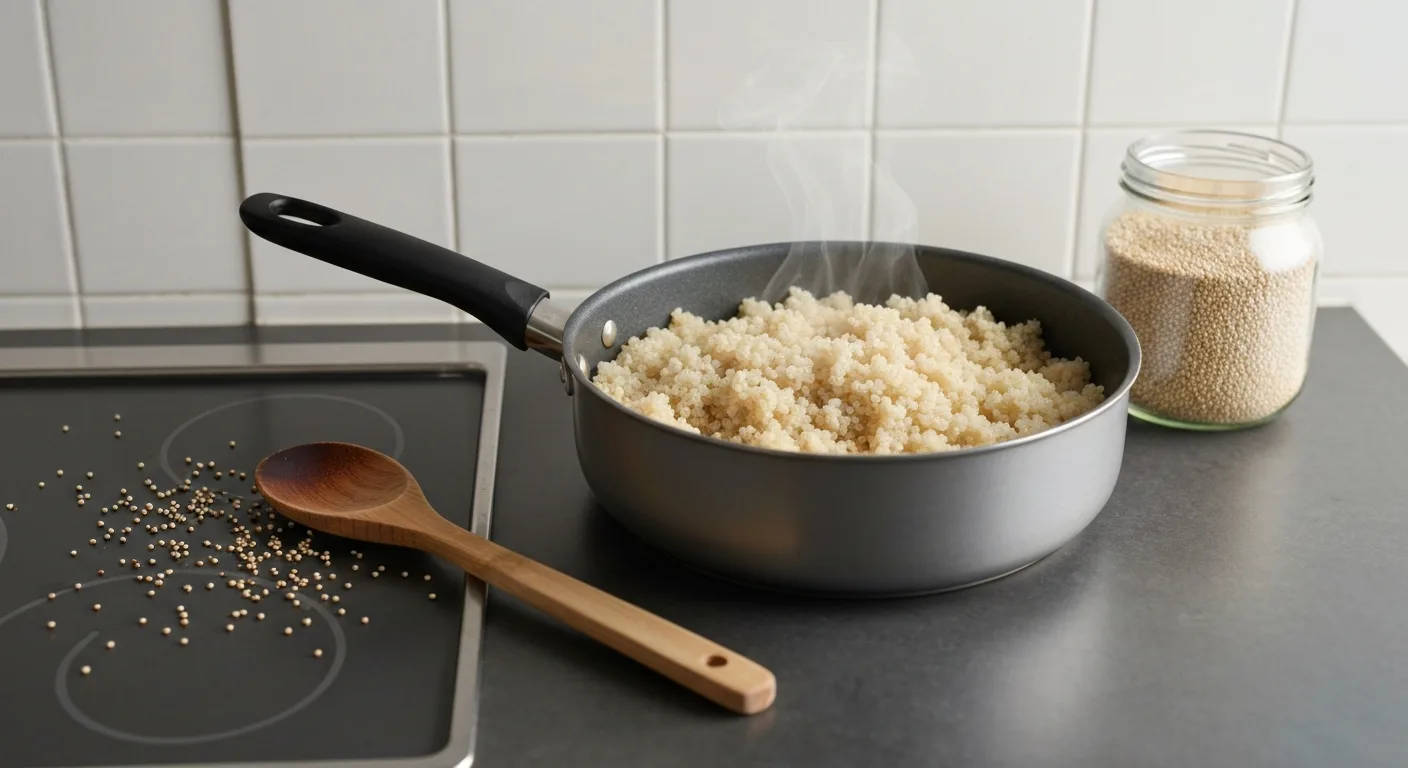
Quinoa has become one of the most popular grains in modern kitchens, though technically it is a seed. Regardless of classification, the cooking question remains the same: how do you get light, fluffy quinoa with distinct, separated grains instead of a mushy, bitter mess?
The answer comes down to three things: rinsing properly, using the right water ratio, and knowing when to leave it alone. This guide covers everything you need to know to cook quinoa perfectly, whether you are making it for the first time or troubleshooting a technique you have used for years.
For a broader overview of cooking techniques across all grains, see our complete ancient grains cooking guide.
Understanding Quinoa Varieties
Before you cook, it helps to know what you are working with. There are three main varieties of quinoa available in stores, and they cook slightly differently.
White quinoa is the most common and mildest in flavor. It cooks up the lightest and fluffiest, making it the most versatile option and the best starting point for beginners. It takes about 12 to 15 minutes on the stovetop.
Red quinoa holds its shape better after cooking and has a slightly earthier, nuttier flavor. It takes a minute or two longer to cook than white and works beautifully in salads because the grains stay more distinct and do not get as soft.
Black quinoa is the crunchiest of the three with the most assertive flavor - slightly sweet with earthy undertones. It takes the longest to cook (15 to 17 minutes) and retains its firm texture even when fully done.
Tri-color quinoa is a blend of all three. It looks striking on the plate but can be tricky because the three varieties cook at slightly different rates. Use the timing for red quinoa as your guide.
All four types are available in most grocery stores. For sourcing tips, check our guide to buying ancient grains.
To learn more about quinoa’s nutritional profile, origin, and cultural history, visit our quinoa overview page.
Why Rinsing Quinoa Matters
This is not optional advice. Rinsing quinoa is the single most important step in the entire cooking process.
Quinoa seeds are coated with saponins, naturally occurring compounds that the plant produces to deter birds and insects. Saponins taste intensely bitter and soapy. If you have ever cooked quinoa and found it unpleasantly bitter, saponins are almost certainly the reason.
Most quinoa sold in the United States and Europe is pre-rinsed during processing, which removes the majority of saponins. However, residual amounts often remain, and they are enough to affect the flavor.
How to Rinse Quinoa Properly
- Place the quinoa in a fine-mesh strainer. Quinoa grains are small - about 1 to 2 millimeters in diameter - so a standard colander will not work. If you do not have a fine-mesh strainer, use a nut milk bag or line a colander with cheesecloth.
- Run cold water over the quinoa for 30 to 60 seconds, rubbing the grains gently between your fingers.
- You may notice the water becomes slightly foamy or cloudy. This is the saponin washing away.
- Continue rinsing until the water runs mostly clear.
- Shake the strainer well to remove excess water before transferring to your cooking pot.
Some cooks go further and soak quinoa in water for 15 minutes before rinsing, which can extract even more saponins. This is not necessary for most commercially sold quinoa but can be helpful if you are using quinoa from a bulk bin or a less processed source.
The Water Ratio Debate: 1:1.5 vs 1:2
If you search for quinoa recipes online, you will find two water ratios cited almost equally: 1 cup quinoa to 1.5 cups water, and 1 cup quinoa to 2 cups water. Both work, but they produce different results, and knowing which to use and when will improve your cooking.
1:1.5 Ratio (Recommended)
This is the ratio I recommend for everyday cooking. It produces light, fluffy quinoa with separate, distinct grains. Each grain pops slightly when you bite it, and the overall texture is dry enough to use in salads, bowls, and pilafs without becoming waterlogged.
With this ratio, the quinoa absorbs almost all the water during cooking, so there is nothing to drain at the end.
1:2 Ratio
This ratio works but tends to produce softer, wetter quinoa. It is better suited for applications where you want a creamier texture - quinoa porridge, for example, or quinoa that will be blended into soups or sauces. If you use this ratio for a grain bowl, the quinoa may feel slightly heavy and clumpy.
If you do use a 1:2 ratio and find excess water in the pot, simply drain it and return the quinoa to the pot off heat for 5 minutes with the lid on.
Adjusting for Altitude
If you cook at elevations above 3,000 feet, increase the water by 2 to 3 tablespoons per cup of quinoa, as water evaporates faster at altitude. You may also need to add 2 to 3 minutes of cooking time.
Method 1: Stovetop (The Standard)
This is the method to learn first. Once you have it down, you can adapt it to any situation.
Ingredients:
- 1 cup quinoa, rinsed
- 1.5 cups water (or broth)
- 0.5 teaspoon salt
- 1 teaspoon olive oil or butter (optional)
Instructions:
-
Toast (optional but recommended). Place rinsed, drained quinoa in a dry medium saucepan over medium heat. Stir constantly for 2 to 3 minutes until the quinoa is dry and you can smell a nutty, popcorn-like aroma. Some grains may pop. This toasting step adds a subtle depth of flavor.
-
Add liquid. Carefully pour in the water or broth - it will sizzle and sputter if the pan is hot. Add salt and oil or butter if using. Stir once.
-
Bring to a boil. Increase heat to high and bring the liquid to a full boil.
-
Reduce and cover. Drop the heat to the lowest possible setting. Cover with a tight-fitting lid. Do not use a loose lid - steam retention is critical.
-
Cook for 12 to 15 minutes. Do not stir. Do not lift the lid. Set a timer and walk away. The quinoa is done when all the water has been absorbed and you can see tiny spiral-shaped “tails” (the germ separating from the seed) on the surface of the grains.
-
Rest for 5 minutes. Remove the pot from heat but keep the lid on. This resting step allows residual steam to finish cooking any remaining moisture and results in significantly fluffier quinoa.
-
Fluff with a fork. Remove the lid and use a fork - not a spoon - to gently fluff the quinoa. A spoon compresses the grains and makes them clumpy.
One cup of dry quinoa produces approximately 3 cups cooked.
Method 2: Rice Cooker
If you own a rice cooker, this is arguably the easiest method. The machine handles temperature regulation and timing automatically.
- Add 1 cup rinsed quinoa and 1.5 cups water to the rice cooker pot.
- Add salt.
- Close the lid and select the white rice setting (or the quinoa setting, if your cooker has one).
- When the cooker switches to “keep warm,” let it sit for 5 minutes.
- Open and fluff with a fork.
Most rice cookers produce excellent quinoa with no babysitting required. The only downside is that you cannot toast the quinoa first, which slightly reduces flavor complexity.
Method 3: Instant Pot / Pressure Cooker
The Instant Pot method is fast and hands-off, making it ideal for meal prep.
- Add 1 cup rinsed quinoa, 1.25 cups water, and a pinch of salt to the Instant Pot inner pot. The reduced water ratio accounts for minimal evaporation under pressure.
- Close the lid and set the valve to sealing.
- Select Manual or Pressure Cook on high pressure for 1 minute. Yes, one minute.
- When the cycle ends, allow a natural pressure release for 10 minutes. Do not quick-release - it causes quinoa to sputter out of the valve and results in uneven texture.
- Release any remaining pressure, open the lid, and fluff with a fork.
The Instant Pot method consistently produces some of the best quinoa I have made. The sealed environment creates perfect steam circulation.
Method 4: The Pilaf Method
This technique borrows from traditional rice pilaf preparation and produces the most flavorful quinoa.
- Heat 1 tablespoon olive oil or butter in a saucepan over medium heat.
- Add aromatics: diced onion, minced garlic, or diced shallot. Cook until soft, about 3 minutes.
- Add 1 cup rinsed quinoa and stir to coat in the oil. Toast for 1 to 2 minutes.
- Add spices: cumin, coriander, turmeric, or whatever suits your meal.
- Pour in 1.5 cups broth (vegetable or chicken). Add salt.
- Bring to a boil, reduce to low, cover, and cook for 15 minutes.
- Rest 5 minutes, then fluff.
The pilaf method works beautifully as a side dish on its own and is the foundation for many ancient grain recipes.
Flavor Variations
Plain quinoa is a blank canvas. Here are tested flavor combinations to try.
Mediterranean: Cook in vegetable broth. After cooking, toss with olive oil, lemon juice, sun-dried tomatoes, Kalamata olives, cucumber, feta, and fresh oregano.
Mexican-inspired: Cook with a teaspoon of cumin and a minced chipotle pepper in the water. After cooking, fold in black beans, corn, diced avocado, cilantro, and lime juice.
Coconut curry: Replace half the water with coconut milk. Add half a teaspoon of curry powder to the pot. After cooking, serve with roasted sweet potato and a drizzle of sriracha.
Herbed garden: Cook in chicken broth with a bay leaf. After cooking, toss with generous amounts of chopped fresh parsley, dill, mint, and chives, plus olive oil and lemon.
Maple breakfast: Cook with a cinnamon stick and a pinch of salt. After cooking, stir in a tablespoon of maple syrup, a splash of milk, and top with toasted walnuts and fresh berries.
Storing and Reheating Cooked Quinoa
Cooked quinoa stores exceptionally well, which makes it one of the best grains for meal prep.
Refrigerator: Transfer to an airtight container within an hour of cooking. Cooked quinoa keeps 5 to 7 days in the refrigerator - longer than most cooked grains.
Freezer: Spread cooked quinoa on a parchment-lined sheet pan and freeze for 1 hour (this prevents clumping). Transfer to freezer bags, press out air, and freeze for up to 6 months. Alternatively, freeze directly in measured portions in freezer bags - the clumping is minimal with quinoa because of its small grain size.
Reheating: Add 1 to 2 tablespoons of water per cup of quinoa. Microwave covered for 1 to 2 minutes, or warm in a covered saucepan over medium-low heat for 3 minutes. For salads and cold dishes, cold quinoa straight from the fridge works perfectly.
Common Mistakes
Not rinsing. Already covered, but it bears repeating. Bitter quinoa is almost always under-rinsed quinoa.
Too much water. The 1:2 ratio that many older recipes call for produces mushy quinoa. Use 1:1.5 for the best texture.
Stirring during cooking. Leave it alone. Stirring releases starch and makes the quinoa gummy.
Using too high a heat. After the initial boil, the heat should be as low as your stove allows. If you hear aggressive bubbling with the lid on, it is too high.
Skipping the rest. Those 5 minutes off heat with the lid on are not optional. They make a meaningful difference in the final texture.
Fluffing with a spoon. A spoon compresses the grains. A fork separates them. This seems minor but it genuinely affects the result.
Not toasting. Toasting is optional, but once you try it, you will wonder why you ever skipped it. The flavor upgrade is significant for minimal effort.
Quinoa Nutrition at a Glance
One cup of cooked quinoa contains approximately:
- Calories: 222
- Protein: 8 grams (complete protein with all 9 essential amino acids)
- Fiber: 5 grams
- Iron: 15% of the daily value
- Magnesium: 30% of the daily value
- Manganese: 58% of the daily value
Quinoa is one of the few plant foods that provides a complete protein, meaning it contains all nine essential amino acids in sufficient quantities. This makes it particularly valuable in vegetarian and vegan diets. For a deeper nutritional breakdown and comparison with other grains, see our quinoa profile page.
Frequently Asked Questions
Do I need to soak quinoa before cooking? No. Unlike whole grain berries such as spelt or kamut, quinoa does not benefit from soaking. Rinsing is sufficient. Soaking can actually make quinoa too soft.
Can I cook quinoa in broth instead of water? Absolutely, and you should. Broth adds tremendous flavor. Vegetable, chicken, and mushroom broths all work well.
Why does my quinoa taste bitter? Residual saponins. Rinse more thoroughly next time. Try rubbing the grains between your hands under running water.
Can I eat quinoa cold? Yes. Cold quinoa is excellent in salads and grain bowls. It firms up slightly in the refrigerator, which many people prefer.
Is quinoa gluten-free? Yes. Quinoa is naturally gluten-free. However, if you have celiac disease, look for certified gluten-free quinoa to ensure there was no cross-contamination during processing.
What is the white spiral thing on cooked quinoa? That is the germ (technically the endosperm) separating from the seed during cooking. It is completely normal and a sign that your quinoa is properly cooked.
Quinoa is one of the most rewarding grains to learn to cook well. Once you master the basic technique, it becomes a weekly staple - fast, nutritious, and endlessly adaptable. For more ideas on what to do with your cooked quinoa, browse our ancient grains recipe collection.
Last updated March 12, 2026