Einkorn: The World's First Cultivated Wheat
Einkorn is the original domesticated wheat from 10,000 years ago. Discover its unique nutrition, simpler gluten structure, and rich buttery flavor.
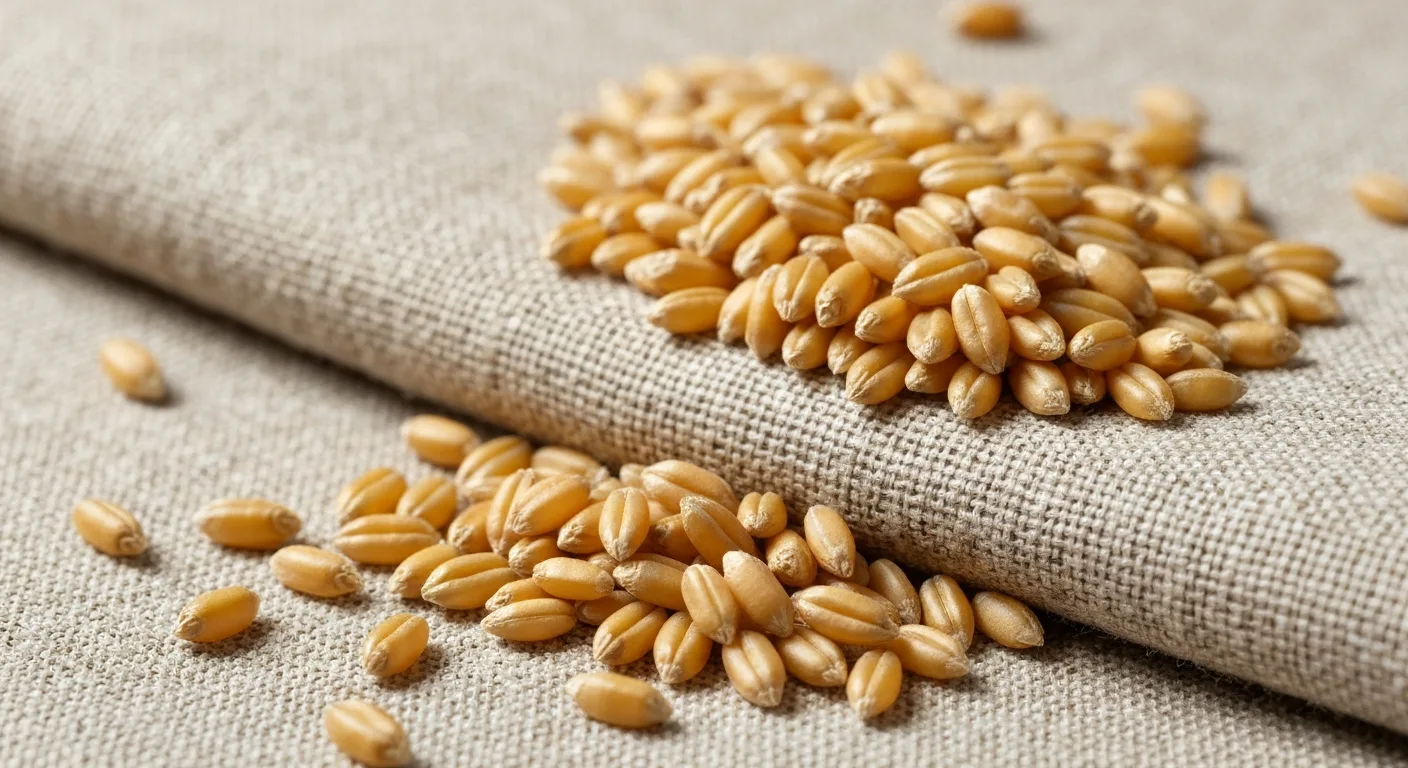
Every grain of wheat eaten on earth today traces its ancestry back to a single, small-seeded grass that grew wild on the slopes of a volcanic mountain in southeastern Turkey. That grass was einkorn, Triticum monococcum, and its domestication roughly 10,000 years ago marked one of the most consequential events in human history. It was the beginning of agriculture, the foundation of settled civilization, and the origin of the wheat lineage that would eventually feed billions.
Today, einkorn exists as a living relic of that beginning. It has not been hybridized, has not been genetically modified, and has undergone minimal selective breeding compared to its modern descendants. Eating einkorn is as close as modern humans can get to eating the wheat that launched the Neolithic revolution.
What Is Einkorn?
Einkorn (Triticum monococcum) is the simplest and most ancient of all cultivated wheat species. Its name comes from the German Einkorn, meaning “single grain,” referring to the single kernel contained in each spikelet of the seed head (in contrast to later wheats, which carry multiple grains per spikelet).
The defining characteristic of einkorn is its diploid genome: it carries only two sets of seven chromosomes, for a total of 14. This is the simplest possible wheat genome and stands in stark contrast to the genetic complexity of later wheats:
- Einkorn: 14 chromosomes (diploid, AA genome)
- Emmer/Farro: 28 chromosomes (tetraploid, AABB genome)
- Spelt and modern bread wheat: 42 chromosomes (hexaploid, AABBDD genome)
This genomic simplicity has profound implications for einkorn’s nutritional profile, gluten structure, flavor, and agricultural characteristics. Each step in wheat’s evolutionary expansion, from diploid to tetraploid to hexaploid, added new genetic material through natural hybridization with wild grass species. Modern bread wheat is essentially a triple hybrid, carrying genetic contributions from three distinct ancestral species. Einkorn carries only the original set.
The Karacadag Mountains: Where It All Began
The origin of einkorn domestication has been pinpointed with remarkable precision. In 1997, a landmark genetic study by Heun et al., published in Science, compared the DNA of modern domesticated einkorn with wild einkorn populations (Triticum boeoticum) collected from across the Fertile Crescent. The results pointed clearly to a single origin: the Karacadag mountains in southeastern Turkey, near the headwaters of the Tigris and Euphrates rivers.
This is the same region that contains Gobekli Tepe, the mysterious monumental site dating to approximately 9500 BCE that predates Stonehenge by 6,000 years. The proximity of the world’s earliest known monumental architecture and the world’s earliest known domesticated grain is almost certainly not coincidental. Some archaeologists have proposed that the labor demands of building Gobekli Tepe may have catalyzed the shift from gathering wild grains to intentionally cultivating them.
From the Karacadag region, cultivated einkorn spread across the Fertile Crescent and into Europe, carried by Neolithic farmers who migrated westward. Einkorn was a primary crop across much of Europe for thousands of years, eventually being supplanted by higher-yielding emmer and, later, by free-threshing bread wheat. For more on the deep history of ancient grains, see our article on ancient grains history.
Einkorn Nutrition: The Advantages of Simplicity
Einkorn’s simple diploid genome translates into a nutritional profile that differs meaningfully from modern wheat. Research consistently shows several advantages:
Higher Protein
Einkorn protein content typically ranges from 15-20% by dry weight, substantially higher than modern bread wheat’s 10-13%. This elevated protein content reflects einkorn’s genetic makeup: without the additional starch-producing genes introduced through hybridization, a greater proportion of the kernel is devoted to protein.
Superior Carotenoid Content
Einkorn contains significantly more lutein and other carotenoids than modern wheat, typically 3-8 times as much. These yellow-orange pigments give einkorn flour its distinctive golden color (in contrast to the pale white of modern wheat flour) and contribute important health benefits. Lutein is a critical antioxidant for eye health, associated with reduced risk of age-related macular degeneration and cataracts.
The carotenoid content is perhaps the most visually obvious difference between einkorn and modern wheat. Pasta, bread, and baked goods made with einkorn flour have a warm golden hue that comes entirely from natural pigments, no food coloring needed.
More Minerals and Antioxidants
Studies comparing einkorn to modern wheat consistently find higher concentrations of zinc, iron, manganese, and several other minerals in einkorn. The antioxidant activity of einkorn has been measured at significantly higher levels than both modern bread wheat and even other ancient wheats like emmer and spelt.
Lipid Profile
Einkorn contains more fat than modern wheat, approximately 3-4% compared to 1.5-2% in bread wheat. This higher fat content contributes to einkorn’s richer, more buttery flavor and also means einkorn flour is more perishable than standard wheat flour.
For a full comparison of nutrient profiles, see our ancient grains nutrition guide. For a detailed side-by-side analysis, visit our einkorn vs. wheat comparison.
The Gluten Question: Simpler but NOT Safe for Celiacs
This is the most nuanced and frequently misunderstood aspect of einkorn, and it requires careful explanation.
Einkorn does contain gluten. It produces gliadin proteins that trigger the immune response in celiac disease. Einkorn is NOT safe for people with celiac disease. This cannot be stated strongly enough, because a dangerous amount of misinformation circulates online claiming otherwise.
However, the gluten in einkorn is structurally different from the gluten in modern bread wheat, and these differences are scientifically documented:
Different gliadin profile. Modern bread wheat (hexaploid) contains omega-gliadins from its D genome that are among the most immunotoxic gluten proteins for celiac patients. Einkorn, lacking the D genome entirely, does not produce these particular omega-gliadins. Einkorn’s gliadin profile is simpler and contains fewer of the specific peptide sequences known to trigger the strongest celiac immune response.
Weaker gluten network. Einkorn gluten is more fragile and forms weaker, less elastic networks than modern wheat gluten. This has practical implications for baking (discussed below) and may relate to subjective reports of easier digestibility.
Research findings. Some in vitro studies have shown that einkorn gliadin triggers a less intense immune response in celiac disease cell models compared to modern wheat gliadin. However, and this is critical, “less intense” does not mean “safe.” Any immune activation in celiac disease causes intestinal damage, and even a reduced response is clinically harmful.
A small number of preliminary human studies have explored einkorn tolerance in celiac patients, with mixed and inconclusive results. No major celiac disease medical organization recommends einkorn as safe for celiac patients. For anyone with diagnosed celiac disease, einkorn must be treated as a gluten-containing grain and avoided. For a deeper exploration of this topic, see our article on ancient grains and celiac disease.
For individuals with non-celiac gluten sensitivity (NCGS), a less well-defined condition, anecdotal reports of better tolerance with einkorn are common but not yet supported by robust clinical evidence.
Flavor Profile: Why Chefs and Bakers Love Einkorn
Einkorn’s flavor is often described as its most compelling attribute. Where modern wheat flour tastes neutral to slightly starchy, einkorn offers a rich, buttery, slightly sweet flavor with undertones of honey and toasted nuts. The flavor is noticeably more complex than any other wheat, ancient or modern.
This flavor richness comes from multiple sources: the higher fat content contributes buttery notes, the elevated carotenoids add depth, and the overall nutritional density creates a more complex taste experience. Many people who try einkorn products for the first time are surprised by how much flavor can come from something as simple as wheat.
Einkorn pasta, in particular, has gained a devoted following. The golden color and rich flavor produce pasta that stands on its own with minimal sauce,a far cry from the neutral carrier that standard wheat pasta often functions as.
Baking with Einkorn: Challenges and Rewards
Baking with einkorn flour requires significant technique adjustments, and this is where many people encounter frustration. Einkorn gluten behaves very differently from modern wheat gluten, and recipes designed for bread flour simply do not translate directly.
Key Baking Characteristics
Weak gluten structure. Einkorn gluten is fragile and does not form the strong, elastic networks that modern bread wheat produces. This means einkorn breads will not achieve the same rise and airy crumb that standard bread flour delivers. Einkorn breads tend to be denser, with a tighter crumb,more similar to traditional European hearth breads than to modern sandwich loaves.
High water absorption variability. Einkorn flour can behave unpredictably with liquids. It tends to absorb liquid slowly, and doughs that initially seem too dry may become sticky as they hydrate. Start with less liquid than a wheat recipe calls for and adjust gradually.
Minimal kneading. Even more so than spelt, einkorn dough does not tolerate extended kneading. Brief, gentle mixing is sufficient,typically 3-4 minutes. Overkneading breaks down the delicate gluten network and produces a dense, gummy result.
Sticky dough. Einkorn doughs tend to be tackier and stickier than wheat doughs. Resist the urge to add extra flour; work with wet hands or lightly oiled surfaces instead.
Best Einkorn Baking Applications
Einkorn flour excels in applications where strong gluten development is not required:
- Pancakes and waffles,Exceptional. The buttery flavor and golden color produce pancakes that need little embellishment.
- Quick breads and muffins,The rich flavor enhances banana bread, zucchini bread, and similar recipes.
- Cookies,Einkorn cookies have a tender, almost shortbread-like quality with superior flavor.
- Pasta,Perhaps einkorn’s highest calling. The golden color, rich flavor, and adequate protein content produce outstanding fresh pasta.
- Pie crusts,The weak gluten produces a naturally tender, flaky crust.
- Sourdough,Einkorn sourdough is an excellent bridge. The long fermentation strengthens the dough structure somewhat, and the sour notes complement einkorn’s natural sweetness beautifully.
Types of Einkorn Flour
- Whole einkorn flour retains the bran and germ, producing denser, more flavorful results. It has a nuttier, more robust taste.
- All-purpose (sifted) einkorn flour has the bran removed, producing lighter baked goods while retaining much of einkorn’s distinctive flavor and golden color.
Availability and Cost
Einkorn remains a niche crop with limited production, which translates to significantly higher prices than conventional wheat. Einkorn flour typically costs 3-5 times as much as standard all-purpose flour, and einkorn berries and pasta are similarly premium-priced.
This cost reflects genuine economic realities: einkorn yields are roughly half those of modern wheat per acre, the hulled grain requires additional processing to remove the tough outer husk, and production volumes remain small. As demand grows and more farmers adopt einkorn, prices may moderate,but einkorn is unlikely to ever compete on price with modern commodity wheat.
Einkorn products are available through specialty mills, natural food stores, and online retailers. Several small-scale U.S. and European farms have begun growing einkorn specifically for the artisan and health-food markets.
Cooking Whole Einkorn Berries
Beyond flour, whole einkorn berries can be cooked and eaten as a grain. They are smaller and softer than modern wheat berries, with a faster cooking time.
- Soak einkorn berries overnight (optional but recommended).
- Combine 1 cup berries with 2 cups water.
- Bring to a boil, reduce heat, and simmer for 25-35 minutes (soaked) or 45-60 minutes (unsoaked).
- The berries are done when tender with a pleasant chew.
Cooked einkorn berries work well in grain salads, soups, and as a side dish. Their flavor is notably sweeter and richer than modern wheat berries.
Einkorn Among the Ancient Wheats
On the ancient grains list, einkorn occupies a singular position: it is the oldest, the simplest, and the most genetically distinct from modern wheat. While farro (emmer) and spelt represent intermediate stages in wheat’s evolutionary journey, einkorn is the starting point,the original from which all subsequent wheats descended.
This genetic distance from modern wheat gives einkorn its distinctive advantages (higher protein, more carotenoids, simpler gluten) and its disadvantages (lower yields, baking challenges, higher cost). For those willing to navigate the trade-offs, einkorn offers a unique window into the grain that started civilization,and a genuinely superior eating experience. Read more about how ancient wheats differ from their modern descendants in our ancient grains vs. modern wheat guide.
Last updated March 12, 2026