Gluten-Free Ancient Grains: The Complete Guide
A comprehensive guide to naturally gluten-free ancient grains — quinoa, amaranth, teff, millet, sorghum, buckwheat, and more.
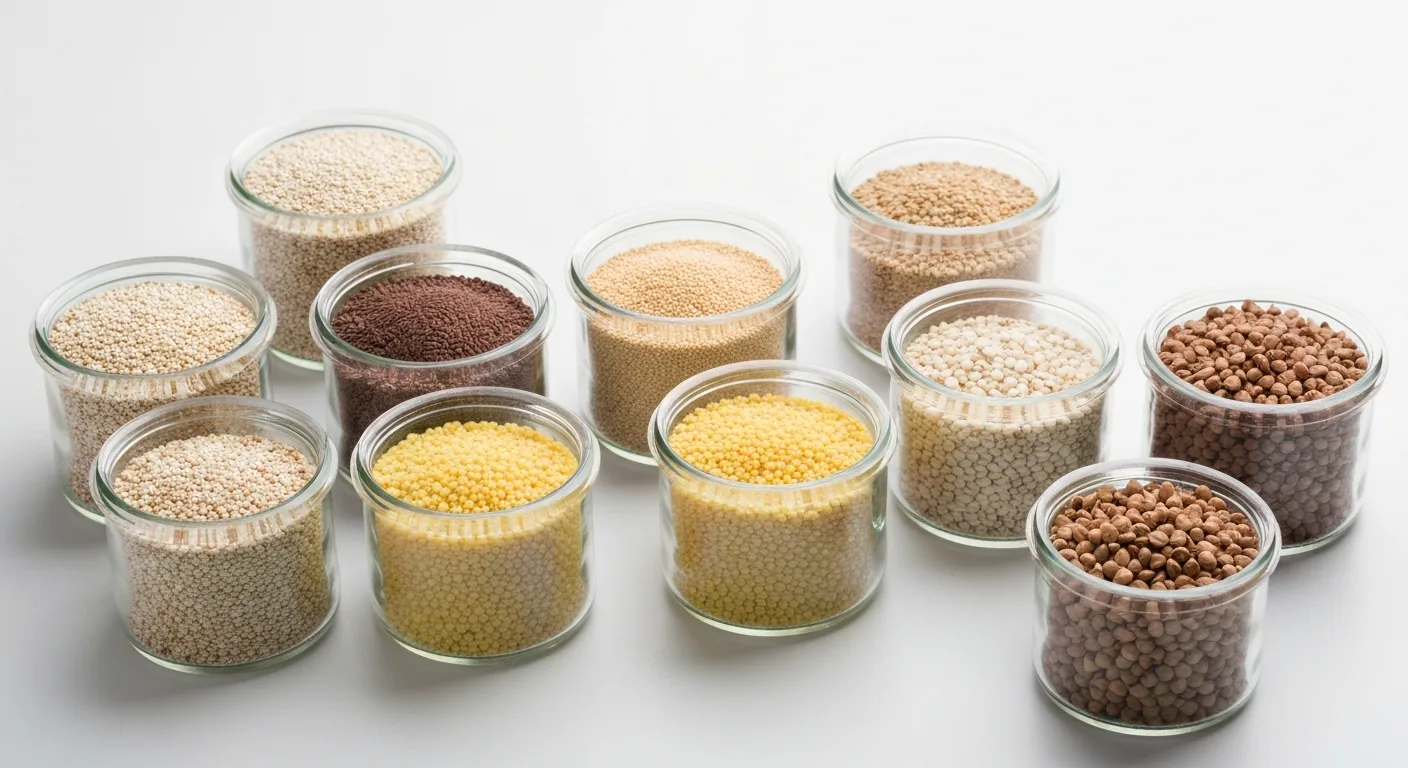
The intersection of ancient grains and gluten-free eating is one of the most practically useful topics in modern nutrition. Six major ancient grains are naturally gluten-free, and each brings a distinct nutritional profile, flavor, texture, and culinary application that far surpasses the refined rice and corn products that dominate most gluten-free aisles.
This guide provides a detailed profile of every gluten-free ancient grain, addresses cross-contamination risks, covers certified sourcing, and offers practical cooking and baking guidance. For the celiac-specific perspective on safety, testing, and medical considerations, see our dedicated ancient grains and celiac disease guide. For how these grains fit into broader dietary patterns, visit our special diets guide.
The Six Gluten-Free Ancient Grains
1. Quinoa
Botanical family: Amaranthaceae (chenopod subfamily) Origin: Andean region of South America (Peru, Bolivia, Ecuador) Domestication: ~5,000-7,000 years ago
Nutritional highlights per cooked cup:
- Calories: 222
- Protein: 8.1 g (complete - all essential amino acids)
- Fiber: 5.2 g
- Iron: 2.8 mg (15% DV)
- Magnesium: 118 mg (28% DV)
- Folate: 78 mcg (19% DV)
Quinoa is the most widely available and versatile gluten-free ancient grain. Its neutral, slightly nutty flavor adapts to virtually any cuisine and preparation style. It comes in three primary color varieties - white (mildest, fluffiest), red (nuttier, holds shape better), and black (earthiest, most dramatic visually).
Why it matters for gluten-free diets: Quinoa provides complete protein, making it invaluable for gluten-free eaters who are also vegetarian or vegan. Many gluten-free diets inadvertently become protein-poor because wheat products (bread, pasta, cereal) contribute significant protein in standard diets. Quinoa fills that gap. For more on protein considerations, see our ancient grains protein guide.
Cooking basics: Rinse quinoa before cooking to remove saponin residue (a bitter, soapy-tasting coating). Use a 1:1.75 ratio of quinoa to water. Bring to a boil, reduce to a simmer, cover, and cook for 15 minutes. Let stand 5 minutes, then fluff with a fork. The germ ring separates from the seed when properly cooked - this is normal, not a defect.
Gluten-free baking: Quinoa flour produces a slightly bitter, dense product when used alone. Best results come from blending it with other GF flours - a ratio of 25-30% quinoa flour with 40% sorghum flour and 30% tapioca or potato starch works well for most baked goods.
2. Amaranth
Botanical family: Amaranthaceae Origin: Central America (Mexico, Guatemala) Domestication: ~6,000-8,000 years ago
Nutritional highlights per cooked cup:
- Calories: 251
- Protein: 9.3 g (complete - all essential amino acids)
- Fiber: 5.2 g
- Iron: 5.2 mg (29% DV)
- Magnesium: 160 mg (38% DV)
- Calcium: 116 mg (9% DV)
Amaranth is quinoa’s Mesoamerican cousin - another pseudocereal with complete protein and exceptional mineral density. It has the highest lysine content of any grain and the highest iron content alongside teff. The Aztecs considered amaranth sacred, and it was banned by Spanish colonizers - a testament to its cultural and nutritional importance.
Flavor and texture: Amaranth has an earthy, slightly grassy, mildly peppery flavor. When boiled, it produces a porridge-like, slightly sticky consistency (quite different from the distinct individual grains of quinoa). When popped in a dry skillet, it becomes light, crunchy, and nutty - this is how alegria (traditional Mexican amaranth candy) is made.
Cooking basics: For porridge, use a 1:2.5 ratio of amaranth to water. Bring to a boil, reduce heat, and simmer for 20-25 minutes, stirring occasionally. For popping, heat a dry skillet over high heat, add 1-2 tablespoons of amaranth at a time, and shake constantly - the tiny seeds pop within seconds. Use popped amaranth as a cereal topping, in granola, or pressed into bars.
Gluten-free baking: Amaranth flour adds protein, binding properties, and a mild nutty flavor to gluten-free baking. It works best at 15-25% of a flour blend. Higher proportions can make baked goods dense and heavy. Amaranth flour combined with tapioca starch produces excellent gluten-free tortillas.
3. Teff
Botanical family: Poaceae (grass family, tribe Eragrostideae) Origin: Ethiopian Highlands Domestication: ~3,000-5,000 years ago
Nutritional highlights per cooked cup:
- Calories: 255
- Protein: 9.8 g
- Fiber: 7.1 g
- Iron: 5.2 mg (29% DV)
- Calcium: 123 mg (9% DV)
- Manganese: 7.2 mg (313% DV)
Teff is the world’s smallest grain - roughly the size of a poppy seed. This tiny size is actually a nutritional advantage: because the grain is too small to mill into separate bran, germ, and endosperm fractions, teff is always a whole grain. You cannot refine it even if you wanted to.
Varieties: Ivory/white teff has the mildest flavor - slightly sweet, with notes of chestnut. Brown and dark (red) teff varieties are more robust and earthy. In Ethiopia, white teff is considered premium and commands higher prices.
The injera connection: Teff’s most famous application is injera, the spongy, tangy flatbread that is the foundation of Ethiopian and Eritrean cuisine. Traditional injera is made by fermenting teff flour batter for 2-3 days, producing a naturally leavened, slightly sour bread with a unique, porous texture. The fermentation process reduces phytic acid and increases mineral bioavailability - a nutritionally elegant traditional practice.
Cooking basics for grain: Use a 1:3 ratio of teff to water. Bring to a boil, reduce heat, and simmer covered for 15-20 minutes. Teff absorbs water completely and produces a polenta-like consistency. Stir occasionally to prevent sticking. For a pilaf-like texture with distinct grains, use less water (1:2 ratio) and check at 12 minutes.
Gluten-free baking: Teff flour is one of the best single-grain GF flours for baking. It produces a tender crumb with a pleasant, slightly sweet flavor. It works well at 50-100% in pancakes, waffles, and quick breads. For yeast breads, blend with other starches for better rise.
4. Millet
Botanical family: Poaceae (multiple genera - pearl millet, foxtail millet, proso millet, finger millet) Origin: Africa (pearl millet) and East Asia (foxtail millet) Domestication: ~7,000-10,000 years ago
Nutritional highlights per cooked cup:
- Calories: 207
- Protein: 6.1 g
- Fiber: 2.3 g
- Iron: 1.1 mg (6% DV)
- Magnesium: 77 mg (18% DV)
- Phosphorus: 174 mg (14% DV)
Millet is actually a group of several small-seeded grasses rather than a single species. Pearl millet (Pennisetum glauceum) is the most commercially important and the variety you will most commonly find in Western markets. Finger millet (Eleusine coracana, also called ragi) is a nutritional standout, particularly rich in calcium (344 mg per 100 g dry - exceptional for a grain).
Flavor and texture: Millet has a mild, slightly sweet, corn-like flavor. Its texture varies dramatically based on water ratio and cooking method - it can be fluffy like couscous (less water), creamy like mashed potatoes (more water), or crispy when pan-fried as a cake after initial cooking.
Cooking basics: For fluffy millet, toast in a dry pan for 3-4 minutes until fragrant (this deepens flavor significantly), then add 2 cups water per 1 cup millet. Bring to a boil, cover, reduce heat, and simmer 15-20 minutes. For creamy millet, use 3-4 cups water and stir occasionally. Let rest 10 minutes off heat before fluffing or serving.
Gluten-free baking: Millet flour has a mild, sweet flavor that works well in cakes, muffins, and cornbread-style preparations. It can replace up to 25% of a GF flour blend without significantly altering flavor. Millet flour combined with sorghum flour is a versatile base for many GF recipes.
Thyroid note: Raw millet contains goitrogens (compounds that can interfere with thyroid function). Cooking eliminates most goitrogenic activity, so cooked millet is safe for people with normal thyroid function. People with existing thyroid conditions should consult their healthcare provider, though the clinical significance of cooked millet’s residual goitrogen content is debated.
5. Sorghum
Botanical family: Poaceae (grass family, genus Sorghum) Origin: Northeastern Africa (Sudan/Ethiopia region) Domestication: ~5,000-8,000 years ago
Nutritional highlights per cooked cup:
- Calories: 230
- Protein: 8.4 g
- Fiber: 6.5 g
- Iron: 3.4 mg (19% DV)
- Phosphorus: 222 mg (18% DV)
- Niacin: 3.7 mg (23% DV)
Sorghum is the fifth most produced cereal in the world, a staple across Africa and South Asia, yet relatively unknown in Western kitchens. This is changing rapidly as its gluten-free status and exceptional nutritional profile gain recognition.
Varieties worth knowing: White/cream sorghum is the mildest and most versatile. Red and bronze sorghum have a nuttier, more assertive flavor and higher polyphenol content. Black sorghum has the highest antioxidant content of any grain variety, with polyphenol levels rivaling blueberries.
Flavor and texture: Whole sorghum grains are chewy and satisfying, with a mild, slightly sweet flavor reminiscent of wheat berries but without gluten. They hold their shape well in salads, grain bowls, and soups - making sorghum an excellent wheat berry substitute in gluten-free cooking.
Cooking basics: Sorghum takes longer to cook than most grains - 50-60 minutes at a simmer, or 25-30 minutes in a pressure cooker. Use a 1:3 ratio of sorghum to water. The grains should be tender but still chewy when done. For faster preparation, soak overnight, which reduces cooking time to 35-40 minutes.
Popped sorghum: Heat a small amount of oil in a deep pot, add sorghum, cover, and shake - it pops like miniature popcorn. Popped sorghum is a traditional snack in India and parts of Africa.
Gluten-free baking: Sorghum flour is arguably the single best GF flour for approximating wheat flour’s flavor and texture. It has a mild, slightly sweet taste, produces a fine crumb, and works well at high proportions (50-70%) in flour blends. Professional GF bakers consistently rate it as their most-used flour.
6. Buckwheat
Botanical family: Polygonaceae (not a grass - related to rhubarb and sorrel) Origin: Southwest China / Tibet Domestication: ~6,000-8,000 years ago
Nutritional highlights per cooked cup:
- Calories: 155
- Protein: 5.7 g (near-complete amino acid profile)
- Fiber: 4.5 g
- Magnesium: 86 mg (20% DV)
- Manganese: 0.7 mg (30% DV)
- Rutin (flavonoid): significant levels (unique among grains)
Buckwheat’s name causes endless confusion - it is not wheat, it is not even a grass. It is a dicotyledon seed, botanically closer to rhubarb than to any cereal. The name likely derives from the Dutch “boekweit” (beech wheat), referring to the triangular seed’s resemblance to beech tree nuts.
Forms available:
- Raw groats: Light green-tan color, mild flavor. Cook like rice for pilafs and salads.
- Kasha (toasted groats): Dark brown, intensely nutty and earthy. A staple of Eastern European cuisine (Russian, Polish, Ukrainian).
- Buckwheat flour: Available in light (hulled, milder) and dark (unhulled, more intense) varieties. Used for soba noodles, crepes, pancakes.
Cooking basics: For groats, use 1:1.5 ratio of buckwheat to water. Bring to a boil, reduce heat, cover, and simmer 10-15 minutes (groats cook quickly). For kasha, toast raw groats in a dry pan or toss with beaten egg before adding water - this keeps the grains distinct rather than mushy.
Cross-contamination concern: Buckwheat is frequently processed in facilities that also handle wheat. Japanese soba noodles commonly contain wheat flour alongside buckwheat. Always verify packaging labels and seek certified GF products.
Gluten-free baking: Buckwheat flour excels in pancakes, crepes, and quick breads. French galettes (savory buckwheat crepes) are a naturally gluten-free traditional dish. For cookies and cakes, limit buckwheat flour to 30-40% of the blend unless you want a very pronounced buckwheat flavor.
Cross-Contamination: The Hidden Gluten Risk
Understanding cross-contamination is essential for anyone avoiding gluten for medical reasons.
Where Contamination Occurs
Agricultural contamination: In North America, many ancient grains are grown as rotation crops in fields that also grow wheat. Volunteer wheat plants can appear in quinoa or millet fields, and harvesting equipment may retain wheat grain from previous harvests. Studies have found gluten contamination levels above 20 ppm in uncertified samples of oats, buckwheat, millet, and sorghum.
Facility contamination: Mills that process both wheat and GF grains on the same equipment introduce contamination risk. Shared conveyance systems, storage bins, and packaging lines all contribute.
Retail contamination: Bulk bins at grocery stores are a high-risk contamination source - scoops are shared, grain dust spreads between bins, and spillage between adjacent products is common.
How to Source Safely
- Buy certified gluten-free products. Third-party certifications (GFCO at < 10 ppm, CSA, NSF) require testing and facility audits. This is the most reliable protection.
- Contact manufacturers directly. Ask about dedicated GF facilities, allergen testing protocols, and testing frequency.
- Avoid bulk bins if you have celiac disease.
- Trusted brands: Several brands specialize in certified GF ancient grains - Bob’s Red Mill (dedicated GF facility products), Lundberg, Arrowhead Mills, Shiloh Farms, and others carry certified options.
Gluten-Free Flour Blends with Ancient Grains
One of the biggest challenges in gluten-free baking is replicating the structure, texture, and flavor that gluten provides in conventional baking. Ancient grain flours, used in combination, can produce excellent results.
All-Purpose GF Blend (Ancient Grain Based)
This blend works for most recipes calling for all-purpose flour:
- 40% sorghum flour (structure, mild flavor)
- 20% teff flour (binding, nutrition, color)
- 20% tapioca starch (lightness, chewiness)
- 15% potato starch (moisture, tenderness)
- 5% quinoa flour (protein, structure)
- Add 1 tsp xanthan gum per cup of blend (for structure)
High-Protein GF Blend
For breads and recipes needing more structure:
- 30% sorghum flour
- 25% amaranth flour
- 20% buckwheat flour
- 15% tapioca starch
- 10% quinoa flour
- Add 1.5 tsp xanthan gum per cup
Tips for GF Baking with Ancient Grains
- Let batters rest 20-30 minutes before baking - this allows GF flours to fully hydrate and reduces grittiness.
- Add extra liquid - GF ancient grain flours are often more absorbent than wheat flour. Start with an extra 2 tablespoons of liquid per cup of flour.
- Expect denser results - GF baked goods will never be as light as gluten-containing ones. This is physics, not a flaw in your technique.
- Toast flours before using - lightly toasting sorghum, millet, or teff flour in a dry pan mellows any raw grain flavor.
- Psyllium husk as an alternative to xanthan gum provides structure and moisture retention. Use 2 tsp per cup of flour blend.
Cooking Guide: Quick Reference
| Grain | Water Ratio | Cook Time | Yield from 1 cup dry | Best For |
|---|---|---|---|---|
| Quinoa | 1:1.75 | 15 min | 3 cups | Salads, pilafs, bowls |
| Amaranth | 1:2.5 | 20-25 min | 2.5 cups | Porridge, popping |
| Teff | 1:3 | 15-20 min | 3 cups | Porridge, polenta, injera |
| Millet | 1:2 | 15-20 min | 3.5 cups | Pilafs, polenta, patties |
| Sorghum | 1:3 | 50-60 min | 3 cups | Bowls, salads, soups |
| Buckwheat | 1:1.5 | 10-15 min | 2.5 cups | Pilafs, porridge, salads |
The Bottom Line
Gluten-free eating does not have to mean nutritional compromise. The six gluten-free ancient grains - quinoa, amaranth, teff, millet, sorghum, and buckwheat - collectively provide complete protein, exceptional mineral density, diverse fiber types, and a range of protective phytochemicals that rival or exceed modern wheat.
The keys to success: source certified GF products to avoid contamination, learn the distinct cooking characteristics of each grain, and rotate between them for maximum nutritional diversity.
For celiac-specific safety information, read our ancient grains and celiac disease guide. For complete nutritional comparisons, visit our ancient grains nutrition guide. To see how these grains fit into broader dietary patterns, explore our special diets guide.
Last updated March 12, 2026