Spelt: The Ancient Wheat with Modern Appeal
Spelt is one of Europe's oldest cultivated grains. Discover its nutrition, baking properties, how it compares to wheat, and whether it's right for you.
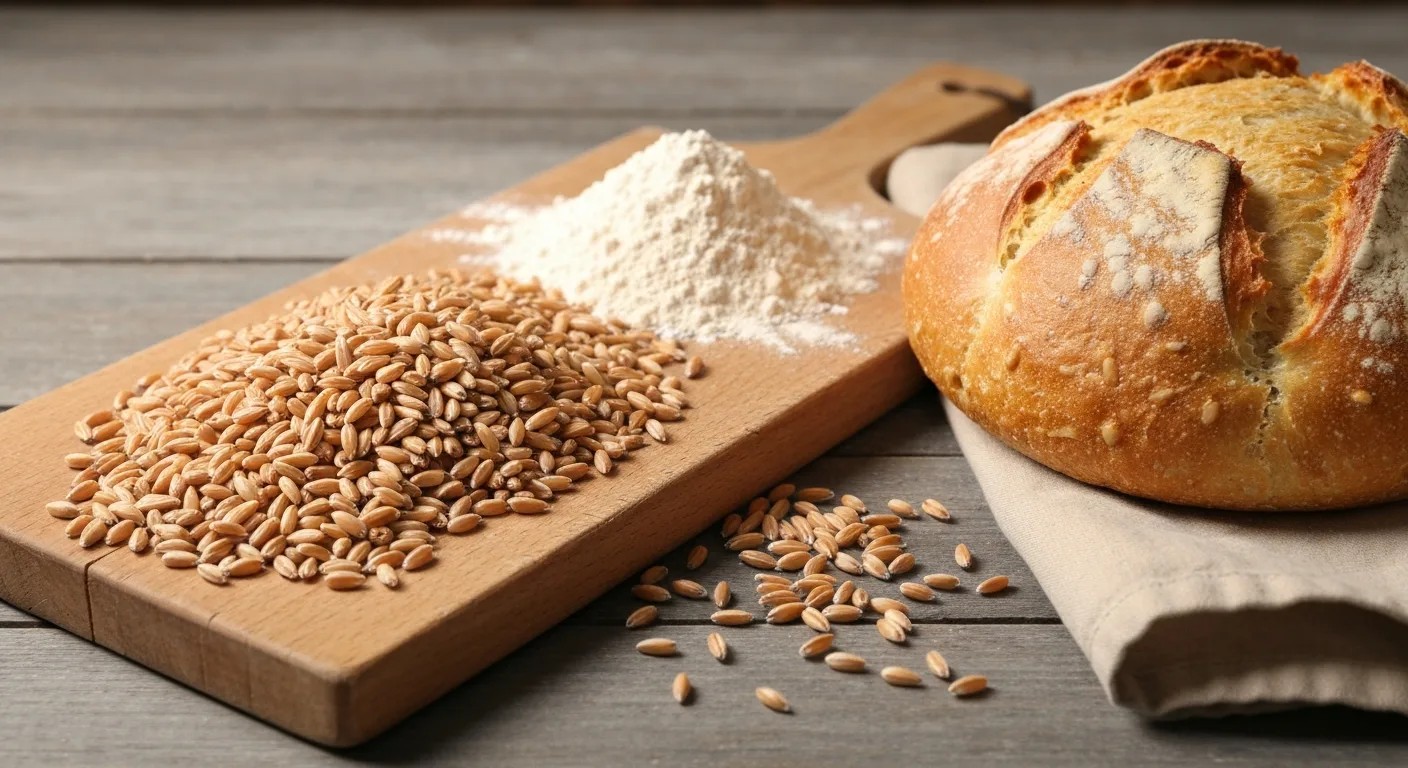
Spelt has been feeding Europeans for over 7,000 years, and its remarkable staying power is no accident. This ancient wheat variety offers something unusual: a grain that bakes like wheat, tastes better than wheat, and provides more nutrition than wheat, yet has been repeatedly overshadowed by its modern descendant. Understanding why spelt fell out of favor and why it is coming back reveals much about what we have gained and lost in the evolution of our food system.
What Is Spelt?
Spelt (Triticum spelta) is a hexaploid wheat species, meaning it carries six sets of chromosomes (42 total), just like modern common wheat (Triticum aestivum). This makes it genetically closer to the bread wheat on grocery store shelves than other ancient wheats like einkorn (diploid, 14 chromosomes) or farro/emmer (tetraploid, 28 chromosomes).
The key difference between spelt and modern wheat lies not in chromosome count but in thousands of years of divergent selection. Modern wheat has been aggressively bred for yield, uniformity, short stature (to resist lodging), and industrial processing characteristics. Spelt has largely escaped this selection pressure, retaining traits that older wheat varieties carried — a tough hull that protects the grain, longer stalks, lower yields per acre, and a nutritional and flavor profile that many people find superior.
Spelt is a hulled wheat, meaning the outer husk clings tightly to the grain and must be mechanically removed after harvest. This hull shields the grain from pests, diseases, and environmental pollutants during growth, but it also adds processing cost. Modern free-threshing wheat, by contrast, releases its kernels easily during harvest, which is one reason it displaced spelt commercially.
European History: From Staple to Obscurity to Revival
Spelt’s history in Europe runs deep. Archaeological evidence places its cultivation in the region stretching from the Balkans to Germany and Switzerland as early as 5000 BCE. By the Bronze Age, spelt was a primary grain crop across much of northern and central Europe, where it thrived better than the more delicate emmer wheat.
The Romans cultivated spelt throughout their northern territories, and after the empire’s fall, spelt remained a staple across Germanic and Celtic lands for centuries. In medieval Germany, spelt was the dominant bread grain. It held a special place in the writings of Hildegard von Bingen (1098-1179), the German Benedictine abbess, mystic, and early naturalist.
Hildegard wrote extensively about food as medicine, and she singled out spelt above all other grains. In her work Physica, she declared: “Spelt is the best of grains. It is rich and nourishing and milder than other grain. It produces a strong body and healthy blood for those who eat it, and it makes the spirit of man light and cheerful.” She recommended spelt for virtually every ailment, from digestive troubles to depression.
Whether Hildegard’s specific medical claims hold up under modern scrutiny is debatable, but her assessment of spelt’s nutritional and gustatory qualities was prescient. Modern analysis confirms that spelt does indeed offer nutritional advantages over common wheat — advantages that would take centuries for science to quantify.
Spelt’s decline began in the 18th and 19th centuries as higher-yielding, free-threshing wheat varieties became available. By the 20th century, spelt had nearly vanished from commercial agriculture in most of Europe, surviving mainly in parts of Germany, Switzerland, Austria, and Belgium. The late 20th century organic and whole-foods movements triggered its revival, and today spelt is once again widely available in health food stores, bakeries, and mainstream supermarkets across Europe and North America.
Spelt Nutrition
Spelt offers consistent, measurable nutritional advantages over modern common wheat. Here is what a one-cup serving (about 174 grams) of cooked spelt berries provides:
- Calories: 246
- Protein: 10.7 grams
- Fat: 1.7 grams
- Carbohydrates: 51 grams
- Fiber: 7.6 grams
- Iron: 3.2 mg (18% DV)
- Magnesium: 95 mg (23% DV)
- Phosphorus: 291 mg (23% DV)
- Niacin (B3): 5.0 mg (31% DV)
- Manganese: 2.1 mg (91% DV)
- Zinc: 2.4 mg (16% DV)
Protein Advantage
Spelt consistently contains more protein than modern wheat, typically 12-15% protein by weight compared to 10-12% for standard bread wheat. The protein in spelt also tends to be more water-soluble, which may contribute to easier digestibility for some people, though the evidence on this point remains preliminary.
Mineral Content
Spelt exceeds common wheat in several key minerals, including magnesium, zinc, and iron. Some researchers attribute this to spelt’s retained hull, which protects the grain from mineral depletion during growth, and to the fact that spelt is often grown in less-depleted soils using organic or low-input methods.
B Vitamins
Spelt is particularly rich in B vitamins, especially niacin (B3) and thiamine (B1). These vitamins are essential for energy metabolism, nervous system function, and skin health. Whole spelt berries retain the full complement of B vitamins found in the bran and germ; white spelt flour, like white wheat flour, loses much of this content.
For a comprehensive comparison of nutritional profiles across heritage grains, see our ancient grains nutrition guide.
The Gluten Question: Spelt Is NOT Gluten-Free
To be clear: spelt contains gluten and is not safe for people with celiac disease. This is one of the most persistent and dangerous myths in the natural foods world, and it appears regularly in misleading marketing and uninformed health blogs.
Spelt contains gluten-forming proteins (glutenin and gliadin) that trigger the autoimmune response in celiac disease. Full stop. No amount of traditional preparation, sourdough fermentation, or wishful thinking changes this fundamental biochemistry.
That said, the gluten in spelt does have a somewhat different structure than the gluten in modern bread wheat. Spelt gluten is generally described as more fragile: more water-soluble and easier to break down mechanically. This structural difference has two practical implications:
-
Baking behavior. Spelt dough requires less kneading and is more susceptible to overworking. The gluten network breaks down more readily, which demands adjusted techniques (discussed below).
-
Subjective tolerance. Some individuals with non-celiac gluten sensitivity (NCGS) report tolerating spelt better than modern wheat. A small number of studies support the plausibility of this observation, though the evidence is far from conclusive and highly individual. Anyone with a medically diagnosed gluten disorder should avoid spelt unless their physician explicitly advises otherwise. For a deeper discussion, see our article on ancient grains and celiac disease.
For more on how spelt’s gluten structure compares to modern bread wheat at a molecular level, see our detailed spelt vs. wheat comparison.
Baking with Spelt Flour
Spelt flour has become one of the most popular alternative flours for home bakers. It produces baked goods with a noticeably better flavor than standard wheat flour while requiring only modest technique adjustments.
Types of Spelt Flour
- Whole spelt flour includes the bran and germ, producing denser, more nutritious baked goods with a pronounced nutty flavor.
- White spelt flour (sifted spelt flour) has the bran and germ removed. It produces lighter results that more closely resemble conventional white flour baking, while still offering the characteristic spelt flavor.
Key Baking Adjustments
Spelt flour absorbs less liquid than wheat flour and develops gluten more quickly. These two characteristics require the following adjustments:
Reduce liquid by 15-25%. If a recipe calls for 1 cup of water, start with 3/4 cup and add more only if needed. Spelt doughs should be slightly tackier than wheat doughs — resist the urge to add extra flour.
Reduce kneading time significantly. Spelt gluten is more fragile than wheat gluten. Where a wheat bread might require 10-12 minutes of kneading, spelt bread typically needs only 4-6 minutes. Overkneading spelt causes the gluten network to break down, resulting in a dense, gummy loaf.
Handle gently. Spelt doughs benefit from less aggressive handling throughout the process — gentler shaping, shorter mixing times, and a lighter touch overall.
Adjust rise times. Spelt ferments somewhat faster than wheat, so watch your dough rather than relying solely on recipe timelines.
Substitution Ratios
For most recipes, white spelt flour can substitute for all-purpose wheat flour at a 1:1 ratio (by weight), with the liquid reduction noted above. Whole spelt flour can typically replace whole wheat flour 1:1 as well. For a gentler introduction, start by replacing 50% of the wheat flour with spelt and adjust from there.
Flavor Profile
Spelt’s flavor is one of its strongest selling points. Cooked spelt berries and spelt flour both deliver a nutty, slightly sweet taste with hints of warm honey and a faint earthy undertone. The flavor is richer than standard wheat, which by comparison can taste rather bland.
This natural sweetness means spelt-based baked goods often taste richer and more flavorful even with reduced sugar. Many artisan bakers have adopted spelt specifically for its flavor contributions — spelt sourdough bread, in particular, has developed a devoted following for its deep, complex taste.
Cooking Whole Spelt Berries
Beyond flour, whole spelt berries (sometimes called spelt groats or spelt kernels) are a rewarding grain to cook and eat whole. They have a pleasantly chewy texture, similar to farro but slightly softer, and a richer, sweeter flavor.
Basic Method
- Soak spelt berries overnight in cold water (this reduces cooking time significantly).
- Drain and rinse.
- Combine 1 cup soaked spelt with 3 cups water or broth.
- Bring to a boil, reduce heat, and simmer for 40-50 minutes until tender but still chewy.
- Drain any excess liquid.
Without soaking, spelt berries take 60-75 minutes to cook. A pressure cooker reduces unsoaked cooking time to about 15-20 minutes.
Culinary Uses for Whole Spelt
Grain salads. Cooked spelt berries work beautifully in salads with roasted vegetables, fresh herbs, nuts, and vinaigrette. Their chewy texture holds up well to dressing.
Risotto-style. Like farro, spelt can be cooked risotto-style (sometimes called “spelotto”), with broth added gradually and cheese stirred in at the end.
Soups. Add whole spelt berries to hearty soups and stews — they hold their shape well through extended cooking and add satisfying body.
Breakfast porridge. Cook spelt berries with milk, cinnamon, and sweetener for a substantial, protein-rich morning meal.
Spelt Among the Ancient Wheats
On the ancient grains list, spelt occupies an interesting middle position. It is genetically the closest ancient wheat to modern bread wheat, which makes it the most “familiar” of the ancient wheats to bake and cook with. Einkorn (diploid) and farro/emmer (tetraploid) are more genetically distant from modern wheat and present more significant baking challenges.
Compared to modern wheat, spelt consistently delivers more protein, more minerals, and more complex flavor. Compared to the gluten-free pseudocereals like quinoa and amaranth, spelt obviously cannot serve those avoiding gluten — but for gluten-tolerant eaters seeking better nutrition and flavor from their wheat-based foods, spelt is arguably the most practical upgrade available.
Buying and Storage
Spelt berries, spelt flour (whole and white), spelt pasta, and spelt bread are all increasingly available in natural food stores and many mainstream supermarkets.
Whole spelt berries keep for a year or more in an airtight container in a cool, dark place. Whole spelt flour should be refrigerated or frozen and used within a few months, as the oils in the germ can go rancid. White spelt flour keeps longer — up to six months in a cool pantry, longer in the refrigerator.
When buying spelt flour for baking, note that European spelt varieties and North American varieties can differ in protein content and baking behavior. German-origin Dinkel spelt tends to have softer characteristics, while some North American varieties have been inadvertently crossed with common wheat over generations. For the most authentic spelt experience, seek out heritage varieties from reputable mills.
The Case for Spelt
Spelt is not the most exotic ancient grain, nor the most nutritionally extreme. What it offers is a genuinely better version of the grain most of us eat daily. More protein, more minerals, better flavor, and a connection to agricultural traditions stretching back to the dawn of European civilization. For anyone willing to make modest baking adjustments and accept slightly higher costs, spelt is one of the simplest and most rewarding dietary upgrades available.
Last updated March 12, 2026