Spelt vs Wheat: Nutrition, Taste, and Baking Differences
How does spelt compare to modern wheat? We break down the nutritional, culinary, and agricultural differences between these two grains.
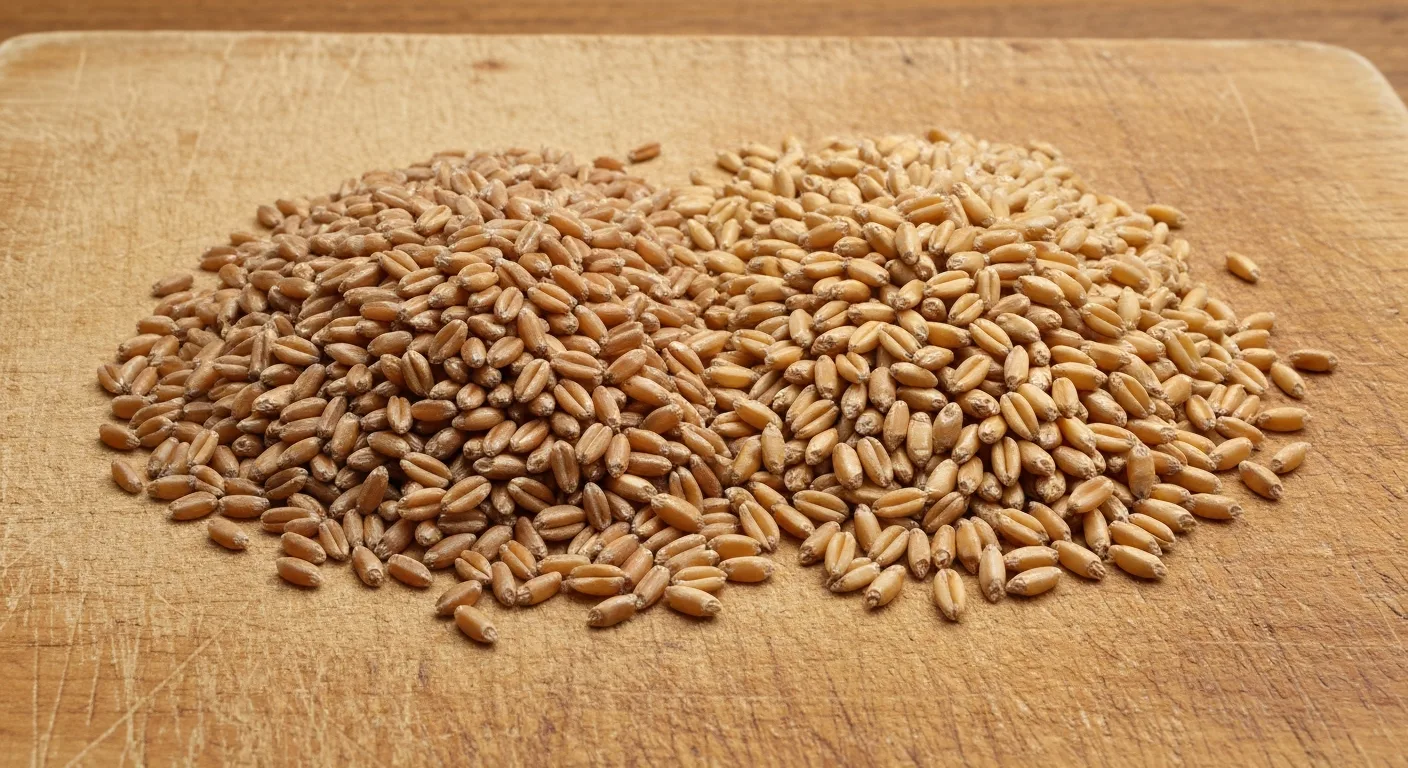
Spelt and modern wheat are closer relatives than most people realize. Both are hexaploid wheats with 42 chromosomes, both contain gluten, and both have been cultivated in Europe for centuries. Yet they differ in meaningful ways that affect nutrition, baking performance, taste, digestibility, and price. This guide covers every angle of the comparison so you can decide when to use each grain.
For broader context on how all ancient wheats compare to modern varieties, see Ancient Grains vs Modern Wheat. For an overview of every heritage grain, start with What Are Ancient Grains?.
Botanical Background
Spelt (Triticum spelta) and modern bread wheat (Triticum aestivum) share a common ancestor. Both are hexaploid wheats produced by the same ancient hybridization events. They diverged over the course of millennia as farmers in different regions selected for different traits. Modern bread wheat was further transformed by intensive scientific breeding in the 19th and 20th centuries, culminating in the Green Revolution semi-dwarf varieties that dominate commercial agriculture today.
Spelt, by contrast, was largely abandoned by commercial agriculture in the early 1900s as higher-yielding bread wheat varieties became available. It survived primarily in traditional farming communities in southern Germany, Switzerland, and parts of Austria, where it was valued for its flavor and hardiness. The revival of interest in spelt began in the 1980s and has accelerated steadily.
One key physical difference: spelt is a “hulled” wheat, meaning its kernels are enclosed in a tough outer husk (glume) that does not separate during threshing. Modern bread wheat is “free-threshing,” meaning the kernels fall cleanly from the chaff. The hulled characteristic makes spelt more labor-intensive to process but also protects the grain from pests, environmental contaminants, and moisture damage during storage.
Nutritional Comparison
The nutritional differences between spelt and wheat are consistent across multiple analyses, though the magnitudes vary depending on growing conditions, cultivar, and testing methodology.
Macronutrients
| Nutrient (per 100 g, dry grain) | Spelt | Modern Whole Wheat |
|---|---|---|
| Calories | 338 | 340 |
| Protein | 14.6 g | 12.6 g |
| Total Fat | 2.4 g | 1.5 g |
| Carbohydrates | 70 g | 72 g |
| Fiber | 10.7 g | 12.2 g |
Spelt provides roughly 15% more protein than modern whole wheat. It also contains more fat, primarily unsaturated fatty acids. The fiber difference is modest but favors modern wheat. Both grains are excellent sources of complex carbohydrates.
Minerals
| Mineral (per 100 g) | Spelt | Modern Whole Wheat |
|---|---|---|
| Manganese | 2.9 mg | 3.0 mg |
| Phosphorus | 401 mg | 288 mg |
| Magnesium | 136 mg | 126 mg |
| Iron | 4.4 mg | 3.2 mg |
| Zinc | 3.3 mg | 2.6 mg |
| Copper | 0.51 mg | 0.38 mg |
Spelt delivers meaningfully more iron (38% more), zinc (27% more), phosphorus (39% more), and copper (34% more) than modern whole wheat. These differences are large enough to be nutritionally relevant over a regular diet. The higher mineral content in spelt is consistent with the “dilution effect” observed across ancient vs. modern wheat comparisons. As wheat yields increased through breeding, mineral concentrations per grain declined. Spelt, having been spared this yield intensification, retained its original mineral density. For the full scientific context, see Ancient Grains vs Modern Wheat.
Vitamins
Both grains are good sources of B vitamins, particularly niacin (B3), thiamine (B1), and B6. Spelt has moderately higher levels of niacin and B6. Neither grain is a significant source of vitamins A, C, D, or B12.
Antioxidants
Spelt contains higher levels of several bioactive compounds, including alkylresorcinols (phenolic lipids with anti-inflammatory properties) and certain polyphenols. However, the differences are less dramatic than those seen when comparing modern wheat to diploid einkorn, which has substantially higher carotenoid concentrations.
Gluten: Similar But Not Identical
Both spelt and modern wheat contain gluten. Neither is safe for people with celiac disease. However, their gluten proteins differ in structure, and these differences have practical consequences for both baking and digestion.
Structural Differences
Spelt gluten is more water-soluble and breaks down more easily than modern wheat gluten. Modern bread wheat was specifically selected for high-molecular-weight glutenin subunits that create strong, elastic gluten networks ideal for risen bread. Spelt has a different distribution of glutenin subunits, producing a gluten matrix that is weaker and more extensible.
In practical terms, this means:
- Spelt dough is softer and stickier than wheat dough
- Spelt dough tears more easily if overworked
- Spelt bread tends to have a denser, more tender crumb
- Spelt requires less kneading and gentler handling
Digestibility
Anecdotal reports of improved digestibility with spelt are widespread, and some preliminary research supports them. The weaker gluten network in spelt may be broken down more readily by digestive enzymes. Some in vitro studies have shown that spelt gluten produces fewer of the large, indigestible peptide fragments associated with intestinal irritation.
However, the clinical evidence is limited. No large, well-controlled trials have definitively established that spelt is better tolerated than modern wheat in people with non-celiac wheat sensitivity. The hypothesis is plausible and consistent with what we know about gluten structure, but it remains an area of active research.
If you have celiac disease, spelt is not an option. If you have diagnosed non-celiac wheat sensitivity, you should consult your healthcare provider before experimenting with spelt. If you simply notice that modern wheat products cause mild digestive discomfort, spelt may be worth trying as an alternative.
Taste and Culinary Character
Flavor is one of the strongest arguments for spelt. Where modern whole wheat flour can taste flat or slightly bitter, spelt has a distinctly sweet, nutty, almost malty flavor. Many people who dislike the taste of whole wheat bread enjoy spelt bread.
Whole Berries
Whole spelt berries (kernels) have a chewy, satisfying texture when cooked. They are excellent in grain salads, soups, pilafs, and as a base for grain bowls. The cooking time for whole berries is 45 to 60 minutes without pre-soaking, or about 30 minutes with an overnight soak.
Flour
Spelt flour comes in two forms: whole spelt flour (with bran and germ) and white spelt flour (with bran and germ sifted out). Whole spelt flour has a light brown color and the full nutritional profile. White spelt flour is more refined but retains more flavor and nutrition than comparable white wheat flour, partly because spelt’s nutrients are more evenly distributed throughout the kernel.
Baking With Spelt: What Changes
Switching from wheat flour to spelt flour is one of the easiest ancient grain substitutions, but it does require adjustments.
Hydration
Spelt flour absorbs less water than modern wheat flour. If you are converting a wheat recipe, reduce the liquid by approximately 20-25%. For a recipe calling for 1 cup of water, start with about 3/4 cup and add more only if the dough seems too dry.
Mixing and Kneading
Spelt’s fragile gluten means less mixing is better. Overmixing or overkneading spelt dough destroys the gluten network that took less effort to develop in the first place. For yeast breads, knead for about half the time you would for wheat dough. For quick breads, muffins, and pancakes, stir just until ingredients are combined.
Rise Time
Spelt dough ferments faster than wheat dough because its gluten network offers less resistance to the gas produced by yeast. Watch your dough rather than following time-based instructions. It will likely reach its first rise 20-30% sooner than wheat dough.
Substitution Ratios
For most recipes, spelt flour can replace wheat flour at a 1:1 ratio by weight (not volume). Spelt flour is lighter by volume than wheat flour, so if measuring by cups, you may need slightly more spelt flour. Using a kitchen scale eliminates this variable.
Best Applications for Spelt Flour
Spelt flour performs best in:
- Muffins and quick breads: The tender crumb that spelt naturally produces is ideal.
- Pancakes and waffles: Light, flavorful, and slightly sweet.
- Cookies: Spelt’s nuttiness complements butter and brown sugar flavors.
- Pasta: Fresh spelt pasta has excellent flavor and texture.
- Pizza dough: Workable and flavorful, though the crust will be less chewy than wheat-based pizza.
- Flatbreads and crackers: Where strong gluten is not required.
Spelt flour is less ideal for:
- Tall sandwich loaves: The weaker gluten produces a denser loaf that will not rise as high.
- Bagels: Bagels require very strong gluten for their characteristic chewiness.
- Laminated doughs (croissants, puff pastry): The fragile gluten makes lamination difficult.
For these applications, you can use a blend of spelt and bread flour (50/50 or 70/30 wheat-to-spelt) to get spelt’s flavor with wheat’s structural performance.
Price and Availability
Spelt flour is widely available in natural food stores, online retailers, and increasingly in mainstream supermarkets. It is one of the most accessible ancient grain flours in Western markets.
| Product | Typical Price (per lb, USA) |
|---|---|
| Modern all-purpose wheat flour | $0.50 - $0.80 |
| Modern whole wheat flour | $0.80 - $1.50 |
| Whole spelt flour | $2.50 - $4.00 |
| White spelt flour | $3.00 - $5.00 |
| Whole spelt berries | $2.00 - $3.50 |
Spelt costs roughly three to five times more than commodity wheat flour. The premium reflects lower yields, specialized processing (de-hulling), and smaller-scale production. As demand has grown, prices have come down modestly, and competition among brands has improved availability.
For budget-conscious cooks, blending spelt and wheat flour is a practical way to get some of spelt’s nutritional and flavor benefits at a lower cost.
Environmental and Agricultural Considerations
Spelt has several agricultural advantages over modern wheat:
- Disease resistance. Spelt’s tough husk protects against several fungal diseases, including Fusarium head blight, reducing or eliminating the need for fungicide applications.
- Low input requirements. Spelt produces reasonable yields with less synthetic fertilizer than modern wheat. It is well-suited to organic farming systems and is frequently grown under organic certification.
- Soil health. Spelt’s deeper root system accesses nutrients from lower soil horizons and may contribute to better soil structure.
- Storage. The husk protects stored spelt from insect damage and moisture, reducing storage losses without chemical fumigation.
The main agricultural disadvantage is yield. Spelt produces roughly 60-80% of the grain per hectare that modern wheat does under comparable conditions. For a global food system feeding 8 billion people, yield matters. But for diversified, sustainable farming systems, spelt’s lower input costs and environmental benefits can make it economically competitive with modern wheat on a profit-per-hectare basis.
Spelt vs Wheat: Summary Table
| Factor | Spelt | Modern Wheat |
|---|---|---|
| Protein | Higher (~14.6 g/100g) | Lower (~12.6 g/100g) |
| Iron | Higher (4.4 mg) | Lower (3.2 mg) |
| Zinc | Higher (3.3 mg) | Lower (2.6 mg) |
| Fiber | Slightly lower (10.7 g) | Slightly higher (12.2 g) |
| Gluten strength | Weaker, more extensible | Stronger, more elastic |
| Celiac-safe | No | No |
| Flavor | Sweet, nutty, malty | Neutral to mildly bitter |
| Bread rise | Lower, denser | Higher, lighter |
| Price | 3-5x more expensive | Commodity pricing |
| Organic availability | Widely organic | Variable |
| Yield per hectare | Lower | Higher |
The Bottom Line
Spelt is not a magic grain, but it is a genuinely superior option in several measurable ways: higher protein, richer mineral content, better flavor, and agricultural practices that align with sustainable farming. Its main drawbacks are price, reduced baking performance in high-rise applications, and the fact that it still contains gluten.
For most home cooks, the simplest approach is to start substituting spelt flour into recipes where its characteristics are advantageous, particularly muffins, pancakes, cookies, pasta, and flatbreads, and use wheat flour or a blend where strong gluten development is needed. Over time, as you learn spelt’s behavior in your kitchen, you can expand its use.
For more ancient grain comparisons, see Einkorn vs Wheat and the full Ancient Grains vs Modern Wheat guide. For detailed nutritional data across all grains, visit our ancient grains nutrition page.
Last updated March 12, 2026
Related reading
Einkorn vs Modern Wheat: The Original Wheat Compared
Einkorn is the oldest cultivated wheat. Discover how this ancient grain compares to modern bread wheat on nutrition, gluten, taste, and more.
Quinoa vs Rice: Nutrition, Calories, and Which Is Healthier
A head-to-head comparison of quinoa and rice — protein, fiber, calories, glycemic index, and how to swap one for the other in real meals.
Spelt: The Ancient Wheat with Modern Appeal
Spelt is one of Europe's oldest cultivated grains. Discover its nutrition, baking properties, how it compares to wheat, and whether it's right for you.
Red vs White vs Black Quinoa: What's the Difference?
How the three quinoa colors differ in taste, texture, cook time, and nutrition — and which one to reach for in salads, bowls, breakfast, and baking.