What Are Ancient Grains? The Complete Guide to Heritage Cereals
Learn what defines ancient grains, why they matter for modern nutrition, and how these heritage cereals differ from modern wheat varieties.
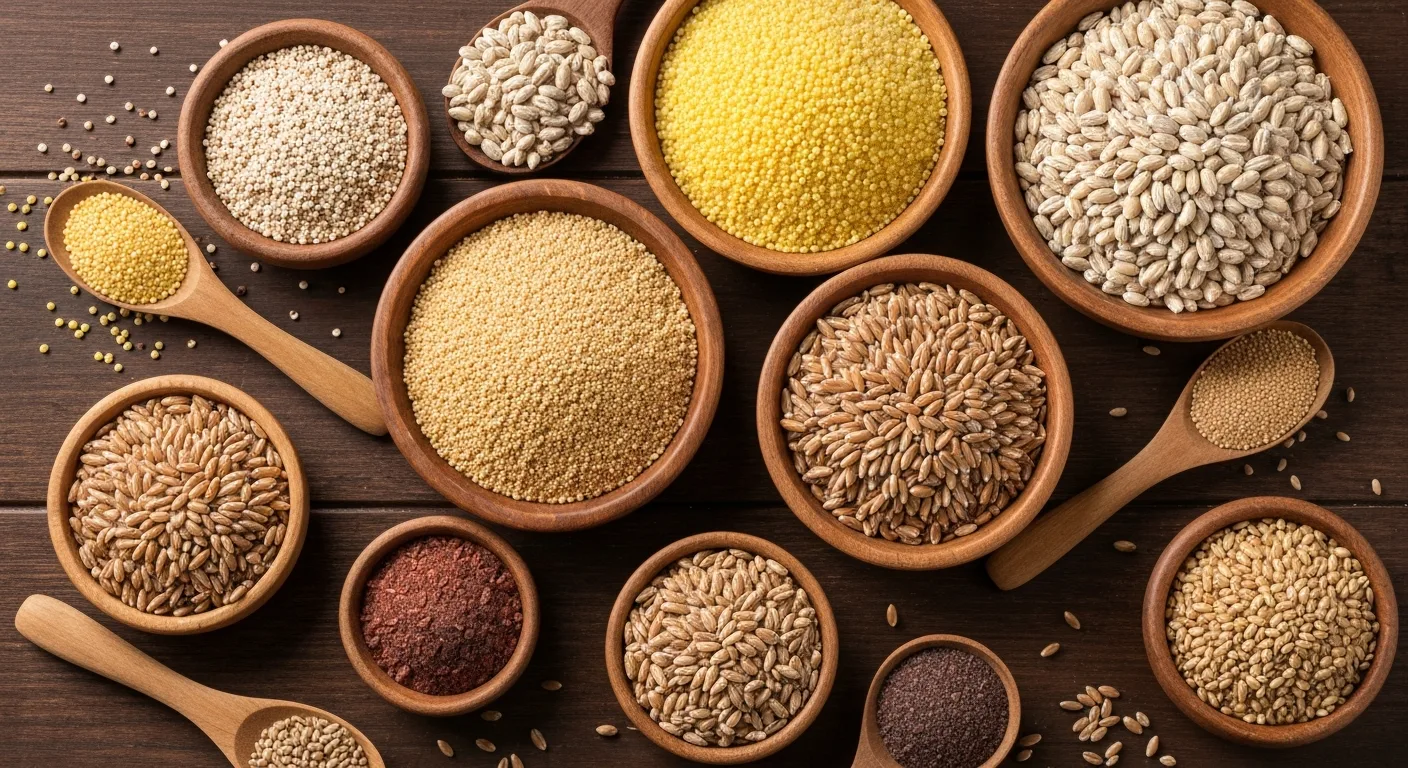
The phrase “ancient grains” has moved from specialty health-food shelves into mainstream grocery aisles, restaurant menus, and even fast-food offerings. But what exactly qualifies a grain as “ancient,” and why should you care? This guide covers everything you need to know: the definition, the key grains that belong in the category, their nutritional advantages, and why they are experiencing a dramatic resurgence in the modern food system.
Defining Ancient Grains
There is no single regulatory definition of “ancient grain.” The Whole Grains Council, the most widely cited authority on the subject, uses the term to describe grains and pseudocereals that have remained largely unchanged by selective breeding over the last several hundred years. In contrast, modern bread wheat (Triticum aestivum) has been extensively crossbred and, since the mid-twentieth century, subjected to intensive agronomic programs that radically altered its genetics, stature, and yield characteristics.
A practical working definition includes three criteria:
- Minimal modern breeding intervention. The species has not undergone the kind of systematic hybridization that produced modern semi-dwarf wheats during the Green Revolution of the 1960s and 1970s.
- Long cultivation history. The grain has been grown and consumed for at least several centuries, and in many cases for millennia.
- Genetic closeness to wild ancestors. Ancient grains tend to retain traits that modern commodity crops have been bred away from, including taller stalks, lower per-acre yields, and more complex nutrient profiles.
By these standards, crops as genetically diverse as quinoa, teff, einkorn, and sorghum all qualify, even though they come from different botanical families and different continents.
True Cereals vs. Pseudocereals
Before walking through the list, it helps to understand a key botanical distinction. True cereals belong to the grass family Poaceae. They include wheat relatives like spelt, einkorn, and emmer, as well as grains like millet, sorghum, teff, and barley. Pseudocereals are broadleaf plants whose seeds are used like grains but are not grasses. Quinoa, amaranth, and buckwheat fall into this group. The distinction matters because all pseudocereals are naturally gluten-free, while true cereals in the wheat tribe (Triticeae) contain some form of gluten.
The Key Ancient Grains
The complete ancient grains list covers more than fifteen distinct species. Here is a brief tour of the most important ones.
Wheat Ancestors
Einkorn (Triticum monococcum) is the oldest known cultivated wheat, domesticated around 10,000 years ago in the Fertile Crescent. It is a diploid wheat with only 14 chromosomes, compared to 42 in modern bread wheat. Its gluten is structurally different and some preliminary research suggests it may be less immunoreactive, though it is not safe for people with celiac disease. Read the full einkorn profile.
Emmer (Triticum dicoccum), also known as farro medio in Italy, is a tetraploid wheat with 28 chromosomes. It was the dominant wheat of ancient Egypt and Rome. Emmer has a rich, nutty flavor and holds its shape well in soups and salads. Explore emmer.
Spelt (Triticum spelta) is a hexaploid wheat like modern bread wheat but diverged from the main breeding lineage centuries ago. It has higher protein and mineral content than standard wheat and a distinctly sweet, slightly nutty taste. Spelt flour is widely available and bakes well, though its gluten is more fragile than modern wheat gluten. Learn more about spelt.
Kamut (Khorasan wheat, Triticum turgidum ssp. turanicum) is a tetraploid wheat with large, elongated kernels and a buttery flavor. The name KAMUT is a registered trademark guaranteeing the grain is grown organically and has never been hybridized. It contains gluten but is often reported as easier to digest than modern wheat.
Freekeh is not a separate species but rather young, green durum wheat that is roasted and cracked. The fire-roasting process gives it a distinctive smoky flavor and modifies its nutritional profile, increasing resistant starch content. It has been a staple in Levantine and North African cuisines for centuries.
Non-Wheat Cereals
Teff (Eragrostis tef) is the world’s smallest grain, originating in Ethiopia where it remains the staple cereal. It is naturally gluten-free, high in calcium compared to other grains, and rich in resistant starch. Teff is the flour behind injera, the spongy fermented flatbread central to Ethiopian and Eritrean cuisine. Discover teff.
Millet is actually a group of several small-seeded cereal species, including pearl millet, finger millet, foxtail millet, and proso millet. Collectively, millets are the sixth most important cereal group globally and a primary food source for hundreds of millions of people in Africa and Asia. They are drought-tolerant, gluten-free, and nutritionally dense. Read about millet.
Sorghum (Sorghum bicolor) is the fifth most produced cereal in the world. It is gluten-free, heat- and drought-resistant, and a staple food across sub-Saharan Africa and parts of India. In the West, sorghum is gaining attention for gluten-free baking and as a whole grain for salads and pilafs. Explore sorghum.
Barley (Hordeum vulgare) was one of the first domesticated cereals. While hulled barley qualifies as minimally processed, much of the barley sold today is pearled, which removes the bran. Hulled barley retains its full fiber content, including high levels of beta-glucan, a soluble fiber shown to lower cholesterol.
Pseudocereals
Quinoa (Chenopodium quinoa) originated in the Andean highlands of South America and was sacred to the Inca civilization. It is one of the few plant foods that provides all nine essential amino acids in nutritionally significant amounts, making it a complete protein source. Quinoa is gluten-free, cooks in about 15 minutes, and comes in white, red, and black varieties. Full quinoa guide.
Amaranth (Amaranthus spp.) was a staple of the Aztec diet and, like quinoa, is a pseudocereal with a complete amino acid profile. Its tiny seeds cook into a porridge-like consistency and can also be popped like miniature popcorn. Amaranth is exceptionally high in manganese, magnesium, and phosphorus. Learn about amaranth.
Buckwheat (Fagopyrum esculentum) is neither wheat nor a grass. Despite its misleading name, it is entirely gluten-free. Buckwheat is the base of Japanese soba noodles, Russian blini, and French galettes. It is notably high in rutin, a flavonoid associated with improved vascular health.
Why Ancient Grains Are Gaining Popularity
The resurgence of ancient grains is driven by several converging trends.
Nutritional Density
Multiple comparative studies have found that ancient wheat varieties tend to deliver higher concentrations of minerals like zinc, iron, magnesium, and selenium than modern bread wheat. A 2012 review published in the Journal of the Science of Food and Agriculture analyzed mineral content across wheat species and confirmed that einkorn and emmer consistently outperformed modern cultivars. This pattern extends beyond wheat: teff is exceptionally high in calcium, amaranth leads in manganese, and quinoa provides a complete amino acid profile rare among plant foods. For a deep dive into the nutritional science, see our ancient grains nutrition guide.
Digestibility Concerns
Many people who experience discomfort after eating modern wheat products report better tolerance with ancient wheat varieties. While rigorous clinical evidence is still limited, several hypotheses explain why this might occur. Ancient wheats contain different gluten protein ratios (gliadin to glutenin), and some studies suggest their gluten may trigger less intestinal inflammation in non-celiac individuals. The ancient grains vs modern wheat comparison explores this evidence in detail.
It is essential to stress: ancient wheats are not safe for people diagnosed with celiac disease. All wheat-tribe species contain gluten. However, for the much larger population experiencing non-celiac wheat sensitivity, ancient grains may offer a meaningful alternative.
Environmental and Agricultural Benefits
Ancient grains tend to be hardier than modern wheat. Many evolved in marginal environments: teff tolerates waterlogged soils, millet and sorghum thrive in drought, and spelt resists many common wheat diseases without chemical fungicides. As climate change intensifies pressure on global agriculture, these traits are increasingly valuable. Ancient grains also contribute to crop diversity, reducing the genetic vulnerability that comes with monoculture farming of a handful of modern cultivars.
Culinary Interest
Chefs and home cooks are drawn to ancient grains for their distinctive flavors and textures. Modern commodity wheat has been optimized for yield and baking performance, not taste. Ancient grains offer a wider flavor spectrum: the earthy sweetness of spelt, the nutty chew of farro, the grassy pop of freekeh, the mild creaminess of quinoa. This culinary diversity has made ancient grains staples in restaurant kitchens and on food media platforms.
How Ancient Grains Differ From Modern Wheat
The differences between ancient grains and modern wheat go beyond marketing. They are rooted in genetics, agronomy, and biochemistry.
Genetic Complexity
Modern bread wheat is a hexaploid organism with six sets of chromosomes (42 total), the result of two natural hybridization events that occurred thousands of years apart. Einkorn is diploid (14 chromosomes), and emmer is tetraploid (28 chromosomes). These differences in ploidy level affect protein composition, gluten strength, and nutrient concentration. Generally, the simpler the genome, the higher the concentration of minerals and bioactive compounds per calorie.
The Green Revolution Factor
In the 1960s and 1970s, Norman Borlaug and collaborators developed semi-dwarf wheat varieties that dramatically increased yield per hectare. These varieties were shorter (reducing lodging), more responsive to synthetic fertilizers, and higher-yielding. However, the breeding process prioritized yield, pest resistance, and baking performance over nutrient density. Some research indicates that mineral concentrations in wheat have declined as yields increased, a phenomenon known as the “dilution effect.”
Ancient grains were untouched by this process. Their lower yields per acre come with trade-offs that many modern consumers see as advantages: denser nutrition, more complex flavor, and cultivation practices that often align with organic and regenerative farming.
Gluten Structure
Not all gluten is identical. Gluten is a complex of storage proteins, primarily gliadins and glutenins, and their proportions and molecular structures vary across wheat species. Modern bread wheat has been specifically selected for high-molecular-weight glutenin subunits that create the strong, elastic gluten matrix ideal for risen bread. Ancient wheats tend to have weaker gluten networks, which makes them less suitable for fluffy sandwich loaves but perfectly adequate for flatbreads, pasta, pastry, and many other applications. The structural differences in gluten may also contribute to the digestibility differences some people experience.
For the complete breakdown, see Ancient Grains vs Modern Wheat.
Cooking With Ancient Grains
If you are new to ancient grains, the prospect of cooking unfamiliar ingredients can feel intimidating. In practice, most ancient grains are no more difficult to prepare than rice. A few general principles apply:
- Rinsing. Quinoa should always be rinsed to remove saponins, which impart a bitter taste. Most other grains benefit from a quick rinse but do not require it.
- Soaking. Larger, harder grains like hulled barley, whole spelt berries, and emmer cook faster if soaked for several hours or overnight. Soaking also activates phytase enzymes that break down phytic acid, improving mineral absorption.
- Water ratios and times. These vary widely. Quinoa uses a 1:1.5 ratio and cooks in 15 minutes. Whole spelt berries may need a 1:3 ratio and 45 to 60 minutes. Our cooking ancient grains guide provides a full reference table.
- Toasting. Dry-toasting grains in a skillet before adding water deepens flavor. This technique works especially well with millet, amaranth, and buckwheat.
Ancient grains work in virtually every culinary context: breakfast porridges, grain bowls, salads, soups, pilafs, risotto-style dishes, baked goods, and even beverages. Teff makes injera. Buckwheat makes soba noodles and crepes. Sorghum can be popped like popcorn. The versatility is one of their greatest strengths.
Gluten-Free Ancient Grains
For people avoiding gluten, several ancient grains are naturally gluten-free:
Always verify that products are certified gluten-free, as cross-contamination during processing is common when grains are milled in facilities that also handle wheat.
Ancient wheat relatives, including spelt, einkorn, emmer, kamut, and freekeh, all contain gluten and are not safe for people with celiac disease.
Are Ancient Grains Worth the Higher Price?
Ancient grains typically cost more than modern wheat or white rice. Several factors explain the premium: lower agronomic yields, smaller-scale farming operations, specialty processing requirements (many ancient wheats have tough husks that must be mechanically removed), and logistics costs for grains imported from specific regions.
Whether the premium is worthwhile depends on your priorities. From a pure macronutrient standpoint, modern whole wheat is a perfectly healthful food. But if you value greater micronutrient density, broader flavor profiles, support for agricultural biodiversity, and in the case of some wheat-sensitive individuals, improved digestive comfort, ancient grains deliver measurable advantages that many people find worth the extra cost.
A practical approach: you do not need to replace every grain in your diet. Start by substituting ancient grains in one or two meals per week. Use farro in place of rice in a grain bowl. Try spelt flour for half the flour in your next bread recipe. Cook a pot of quinoa for meal-prep lunches. Small changes compound over time.
The Bottom Line
Ancient grains are not a fad. They are the original cultivated cereals and pseudocereals that sustained human civilizations for thousands of years before modern agriculture optimized a narrow set of crops for maximum yield. Their resurgence reflects a growing recognition that nutritional density, culinary diversity, and agricultural resilience matter as much as bushels per acre.
Ancient grains are worth exploring regardless of your starting point. Browse the complete ancient grains list to find a grain that matches your taste, check the nutrition guide for detailed data, or jump straight to our cooking guide and start experimenting in your kitchen.
Last updated March 12, 2026