Einkorn vs Modern Wheat: The Original Wheat Compared
Einkorn is the oldest cultivated wheat. Discover how this ancient grain compares to modern bread wheat on nutrition, gluten, taste, and more.
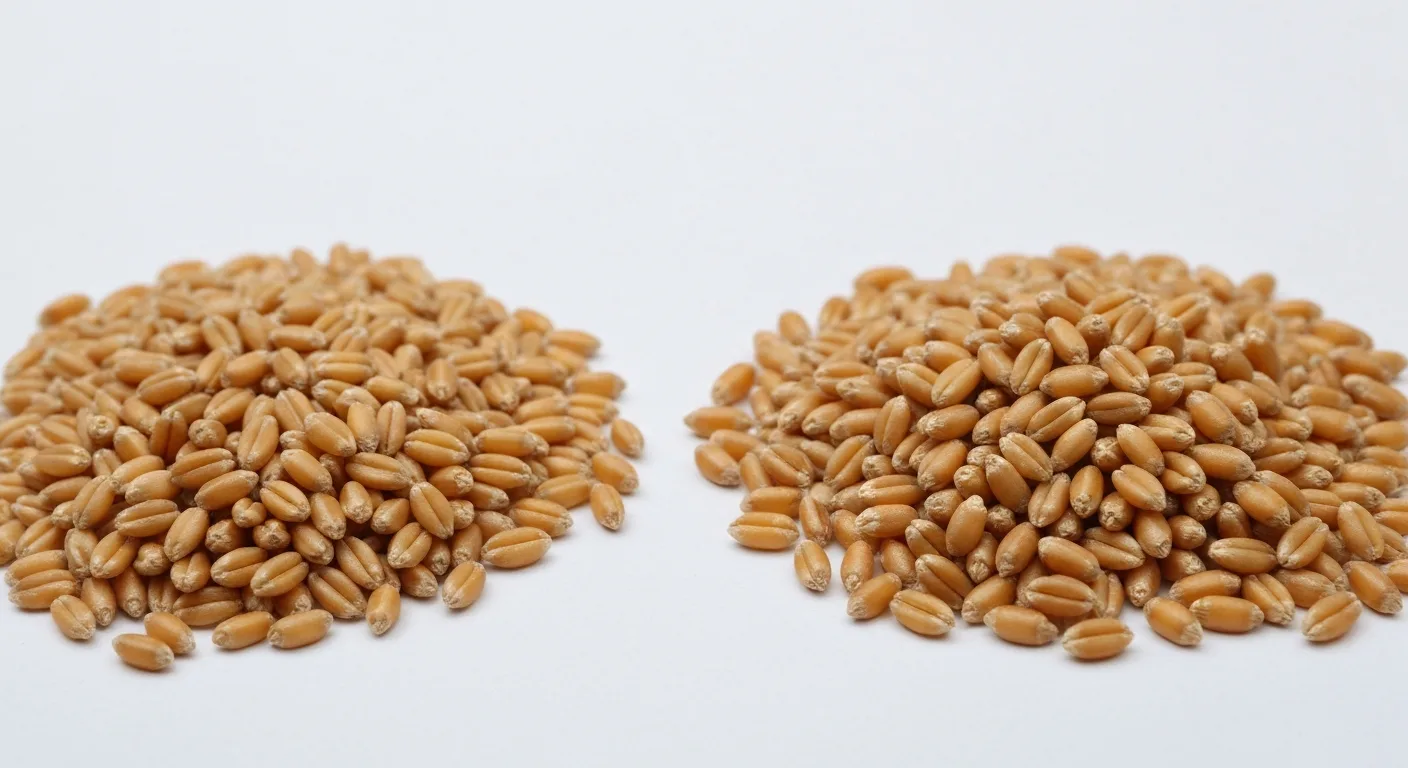
Einkorn is where wheat began. Domesticated around 10,000 years ago in the Karacadag mountains of southeastern Turkey, Triticum monococcum was the first wheat humans deliberately cultivated. Every other wheat, from emmer to durum to modern bread wheat, traces part of its lineage back to einkorn or its wild ancestor Triticum boeoticum. Comparing einkorn to modern wheat is not just comparing two grains; it is comparing the origin point of wheat agriculture to its most engineered descendant.
This article covers the genetic, nutritional, culinary, and agricultural differences between einkorn and modern bread wheat. For a broader view of how all ancient wheats compare to modern varieties, see Ancient Grains vs Modern Wheat. For the comparison with spelt, another ancient hexaploid wheat, see Spelt vs Wheat.
The Genetic Gap: Diploid vs. Hexaploid
The most fundamental difference between einkorn and modern wheat is genetic complexity.
Einkorn is a diploid organism with two sets of chromosomes, totaling 14 (genome designation AA). It has one of the simplest genomes of any cultivated cereal.
Modern bread wheat (Triticum aestivum) is a hexaploid with six sets of chromosomes, totaling 42 (genome designation AABBDD). It acquired its complexity through two hybridization events:
- A wild grass (Aegilops speltoides or a close relative) crossed with an ancestor of einkorn, producing the tetraploid wheats (emmer, durum) with 28 chromosomes (AABB).
- The tetraploid wheat then crossed with another wild grass (Aegilops tauschii), adding a third genome (DD) to create the hexaploid bread wheats with 42 chromosomes.
This means modern bread wheat contains three times the genetic material of einkorn. The additional genomes contributed new protein-coding genes, fundamentally altering the grain’s protein composition, starch structure, and metabolic profile. The D genome, in particular, is responsible for many of the high-molecular-weight glutenin subunits that give modern bread wheat its strong, elastic gluten.
Why Ploidy Matters
The practical consequences of this genetic difference include:
- Protein diversity: Hexaploid wheat produces a much larger array of storage proteins, including gluten proteins. More protein diversity means more complex immune interactions.
- Nutrient concentration: With a simpler genome, einkorn allocates fewer metabolic resources to the sheer variety of proteins and more to concentrating specific nutrients. This contributes to einkorn’s higher mineral and carotenoid density per gram.
- Gluten character: Einkorn’s simpler genome produces a fundamentally different gluten, one that behaves differently in dough and may interact differently with the human immune system.
Nutritional Comparison
Einkorn consistently outperforms modern bread wheat on several nutritional metrics. The data below synthesizes findings from multiple published analyses.
Macronutrients
| Nutrient (per 100 g, dry) | Einkorn | Modern Bread Wheat |
|---|---|---|
| Calories | 340 | 340 |
| Protein | 14.3 g | 12.6 g |
| Fat | 2.5 g | 1.5 g |
| Carbohydrates | 68 g | 72 g |
| Fiber | 9.8 g | 12.2 g |
Einkorn has about 13% more protein than modern wheat. It is also higher in fat, primarily monounsaturated and polyunsaturated fatty acids. Modern wheat has somewhat more fiber, largely due to its larger bran fraction.
Minerals
| Mineral (per 100 g) | Einkorn | Modern Bread Wheat | Difference |
|---|---|---|---|
| Zinc | 4.2 mg | 2.6 mg | +62% |
| Iron | 4.4 mg | 3.2 mg | +38% |
| Phosphorus | 420 mg | 288 mg | +46% |
| Magnesium | 155 mg | 126 mg | +23% |
| Potassium | 390 mg | 340 mg | +15% |
| Manganese | 3.3 mg | 3.0 mg | +10% |
The mineral advantages are substantial and consistent across studies. Zinc and phosphorus show the largest relative differences. These higher concentrations likely reflect both einkorn’s inherent genetics and the absence of the yield-driven “dilution effect” that has reduced mineral density in modern wheat cultivars over the past 60 years.
Carotenoids: Einkorn’s Standout Feature
The most distinctive nutritional trait of einkorn is its carotenoid content. Einkorn contains three to eight times more lutein and zeaxanthin than modern bread wheat. These are the same carotenoids found in egg yolks, dark leafy greens, and orange peppers. In the body, lutein accumulates in the macula of the eye and is associated with reduced risk of age-related macular degeneration and cataracts.
The high carotenoid content is visible. Einkorn flour has a distinct golden-yellow color that produces baked goods with a warm, rich hue. No other wheat species comes close to einkorn’s carotenoid levels, making this one of the most compelling nutritional arguments for incorporating einkorn into your diet.
Antioxidant Activity
Einkorn demonstrates higher total antioxidant capacity than modern wheat in most comparative assays. Beyond carotenoids, einkorn contains higher levels of tocols (vitamin E-related compounds) and certain polyphenolic acids. A 2006 study published in the Journal of Agricultural and Food Chemistry found that einkorn had significantly higher levels of lutein, beta-carotene, and tocols compared to both emmer and modern bread wheat cultivars.
Gluten in Einkorn: Different, Not Absent
This is the most nuanced and frequently misunderstood aspect of the einkorn comparison. Some marketing overstates the case, implying that einkorn is nearly gluten-free or safe for celiac patients. It is neither. Einkorn contains gluten and is not safe for people with celiac disease.
However, einkorn’s gluten is structurally different from modern wheat gluten in ways that are scientifically documented and potentially significant for non-celiac individuals.
Protein Composition
Einkorn’s gluten has a high ratio of gliadins to glutenins. In modern bread wheat, glutenins form large polymeric networks that give dough its elasticity and strength. Einkorn’s lower glutenin content and different glutenin subunit composition mean that its dough is soft, extensible, and sticky rather than elastic and structured.
Alpha-Gliadin Epitopes
Alpha-gliadins are the proteins most strongly associated with celiac immune responses. Modern hexaploid wheat, with its three genomes, encodes a large number of alpha-gliadin genes, including the 33-mer peptide and other potent immunogenic epitopes. Einkorn, with only the A genome, has fewer alpha-gliadin gene copies and, in some cultivars, lower concentrations of the most immunoreactive peptide sequences.
Research from Molberg et al. (2005) and others demonstrated that certain einkorn accessions produce fewer T-cell-stimulating epitopes in celiac patient assays compared to modern wheat. However, other einkorn accessions still triggered responses. The variability between einkorn cultivars means that blanket claims about einkorn and celiac safety are irresponsible.
In Vitro and Clinical Observations
A 2012 study in Molecular Nutrition and Food Research examined the cytotoxic effects of different wheat species on intestinal cell cultures from celiac patients. Einkorn showed reduced toxicity compared to modern wheat, but the effects were not zero. The researchers concluded that einkorn proteins were less, but not non-immunogenic, for celiac disease.
For the broader population of people with non-celiac wheat sensitivity, einkorn’s different gluten composition may contribute to better tolerance. The lower glutenin polymer content means the protein network breaks down more easily during digestion, potentially producing fewer of the large, pro-inflammatory peptide fragments that cause symptoms in sensitive individuals. But robust clinical trial data for this population is still limited.
Bottom line on gluten: Einkorn contains gluten. It is off-limits for celiac disease. It may be better tolerated by some people with non-celiac wheat sensitivity, but this should be tested carefully and ideally under medical guidance.
Taste and Culinary Profile
Einkorn has a flavor profile unlike any other wheat. Where modern wheat tastes neutral to slightly bitter (especially in whole grain form), einkorn is rich, buttery, and subtly sweet. The high carotenoid content contributes a warm, almost egg-like richness to baked goods. People who have never enjoyed whole wheat products often find einkorn appealing because it does not have the earthy bitterness associated with conventional whole wheat.
Whole Berries
Einkorn berries are small, with a distinctive elongated shape. They cook in 25 to 35 minutes and have a tender, slightly chewy texture. They work well in grain salads, pilafs, and as a side dish. Their smaller size means they absorb dressings and sauces effectively.
Flour
Einkorn flour behaves differently from modern wheat flour in ways that require adjustment:
- Hydration: Einkorn flour absorbs less liquid than modern wheat flour. Reduce water or milk by about 20-25% when adapting recipes.
- Mixing: Einkorn dough should be mixed minimally. Its fragile gluten network tears easily with overmixing.
- Stickiness: Einkorn dough is notably sticky. Resist the urge to add more flour; instead, use wet hands or oiled surfaces.
- Color: The golden color is natural and does not indicate that anything has been added. It comes entirely from the grain’s carotenoid content.
- Shelf life: Einkorn’s higher fat content means the flour goes rancid more quickly than modern wheat flour. Store it in the refrigerator or freezer and use it within a few months of milling.
Best Uses for Einkorn Flour
Einkorn flour excels in applications where strong gluten development is not critical:
- Pancakes and waffles: The buttery flavor is outstanding in breakfast applications.
- Cookies and bars: Tender, rich, and flavorful.
- Pasta: Fresh einkorn pasta has a beautiful golden color and silky texture.
- Flatbreads, tortillas, and crackers: No need for strong gluten rise.
- Muffins and quick breads: Tender crumb with rich flavor.
- Pie crust and tart doughs: The slightly crumbly texture is actually an advantage.
Einkorn flour is challenging for:
- Tall yeast breads: The weak gluten cannot support a tall loaf. Expect denser, flatter breads. Some bakers address this by blending einkorn with bread flour at ratios like 50/50.
- Bagels and pretzels: These require very strong gluten.
- Any recipe relying on long kneading: Einkorn’s gluten network does not improve with extended kneading the way modern wheat’s does. It degrades.
Growing and Sourcing Einkorn
Agricultural Characteristics
Einkorn is a tall wheat, growing 100 to 140 cm, much taller than modern semi-dwarf varieties at 70 to 80 cm. Its height makes it more susceptible to lodging (falling over in wind and rain), which is one reason industrial agriculture abandoned it. However, einkorn compensates with several valuable traits:
- Disease resistance: Einkorn shows natural resistance to several wheat diseases, including certain rusts and powdery mildew.
- Low input requirements: It grows well without synthetic fertilizers and pesticides, making it well-suited to organic farming.
- Hulled grain: The tough husk protects stored grain from insects and moisture without chemical treatment.
- Soil adaptability: Einkorn can produce acceptable yields on poor, thin, or marginal soils where modern wheat would fail.
The major drawback is yield. Einkorn produces approximately 1 to 2 tonnes per hectare, compared to 3.5 to 10 tonnes for modern wheat. This, combined with the extra processing step of de-hulling, explains einkorn’s higher retail price.
Where to Buy
Einkorn was difficult to source a decade ago, but availability has improved considerably. In the United States, Jovial Foods is the most prominent brand selling einkorn flour, pasta, and whole berries. Several smaller mills offer fresh-milled einkorn flour online. In Europe, einkorn (often labeled “petit epeautre” in French or “Einkorn” in German) is available in organic and specialty stores, particularly in France, Italy, Germany, and Austria.
Einkorn flour typically costs $5 to $10 per pound, significantly more than modern wheat flour but not out of reach for occasional use.
Growing Your Own
Einkorn is one of the easier ancient grains to grow in a home garden or small plot. It is winter-hardy in most temperate climates, requires no special soil amendments, and is less attractive to pests than modern wheat. The main challenges are harvesting and de-hulling, which require mechanical equipment or considerable manual effort for anything beyond a small experimental patch.
Einkorn vs Wheat: Summary
| Factor | Einkorn | Modern Bread Wheat |
|---|---|---|
| Chromosomes | 14 (diploid) | 42 (hexaploid) |
| Age of domestication | ~10,000 years ago | ~8,000-10,000 years (hexaploid form) |
| Protein | 14.3 g/100g | 12.6 g/100g |
| Zinc | 4.2 mg/100g | 2.6 mg/100g |
| Iron | 4.4 mg/100g | 3.2 mg/100g |
| Carotenoids (lutein) | 3-8x higher | Baseline |
| Gluten strength | Weak, extensible | Strong, elastic |
| Celiac-safe | No | No |
| Flavor | Buttery, rich, sweet | Neutral, slightly bitter |
| Bread rise | Low, dense | High, light |
| Yield per hectare | 1-2 tonnes | 3.5-10 tonnes |
| Typical flour price (per lb) | $5-$10 | $0.50-$1.00 |
Who Should Consider Einkorn?
Einkorn makes the most sense for:
- People who dislike whole wheat flavor but want the nutritional benefits of whole grains. Einkorn’s buttery taste is genuinely different and widely preferred in taste comparisons.
- Those interested in higher nutrient density, particularly lutein, zinc, and iron.
- Home bakers who primarily make pancakes, cookies, muffins, pasta, and flatbreads rather than tall sandwich loaves.
- People with non-celiac wheat sensitivity who want to experiment with a structurally different wheat gluten, under the guidance of a healthcare provider.
- Supporters of sustainable agriculture who want to contribute to crop genetic diversity and support small-scale farming.
Einkorn is not the right choice for:
- Anyone with celiac disease or a medical need to avoid gluten.
- Bakers who primarily need strong gluten performance for risen breads and bagels (unless blending with bread flour).
- Budget-focused shoppers who need the lowest cost per calorie.
The Bigger Picture
Einkorn is not a replacement for modern wheat. Modern wheat feeds billions of people because of its unmatched yield efficiency, and no amount of nutritional superiority can offset that practical reality at a global scale. But at the individual level, incorporating einkorn into your diet, even occasionally, gives you access to a nutrient profile that modern wheat simply does not provide. The carotenoid content alone sets einkorn apart from every other wheat on the planet.
Start small. Buy a bag of einkorn flour and make pancakes. If the flavor appeals to you, and for most people it does, expand from there. Over time, you will develop intuition for how einkorn dough behaves and which recipes showcase it best.
For more comparisons, see Spelt vs Wheat and the full Ancient Grains vs Modern Wheat overview. To explore the full range of heritage grains, visit the ancient grains list. For nutritional data across all ancient grains, see the nutrition guide.
Last updated March 12, 2026
Related reading
Spelt vs Wheat: Nutrition, Taste, and Baking Differences
How does spelt compare to modern wheat? We break down the nutritional, culinary, and agricultural differences between these two grains.
Quinoa vs Rice: Nutrition, Calories, and Which Is Healthier
A head-to-head comparison of quinoa and rice — protein, fiber, calories, glycemic index, and how to swap one for the other in real meals.
Einkorn: The World's First Cultivated Wheat
Einkorn is the original domesticated wheat from 10,000 years ago. Discover its unique nutrition, simpler gluten structure, and rich buttery flavor.
Red vs White vs Black Quinoa: What's the Difference?
How the three quinoa colors differ in taste, texture, cook time, and nutrition — and which one to reach for in salads, bowls, breakfast, and baking.