Quinoa: The Complete Guide to the World's Favorite Ancient Grain
Everything you need to know about quinoa — nutrition, cooking methods, varieties, health benefits, and why this Andean pseudocereal conquered the world.
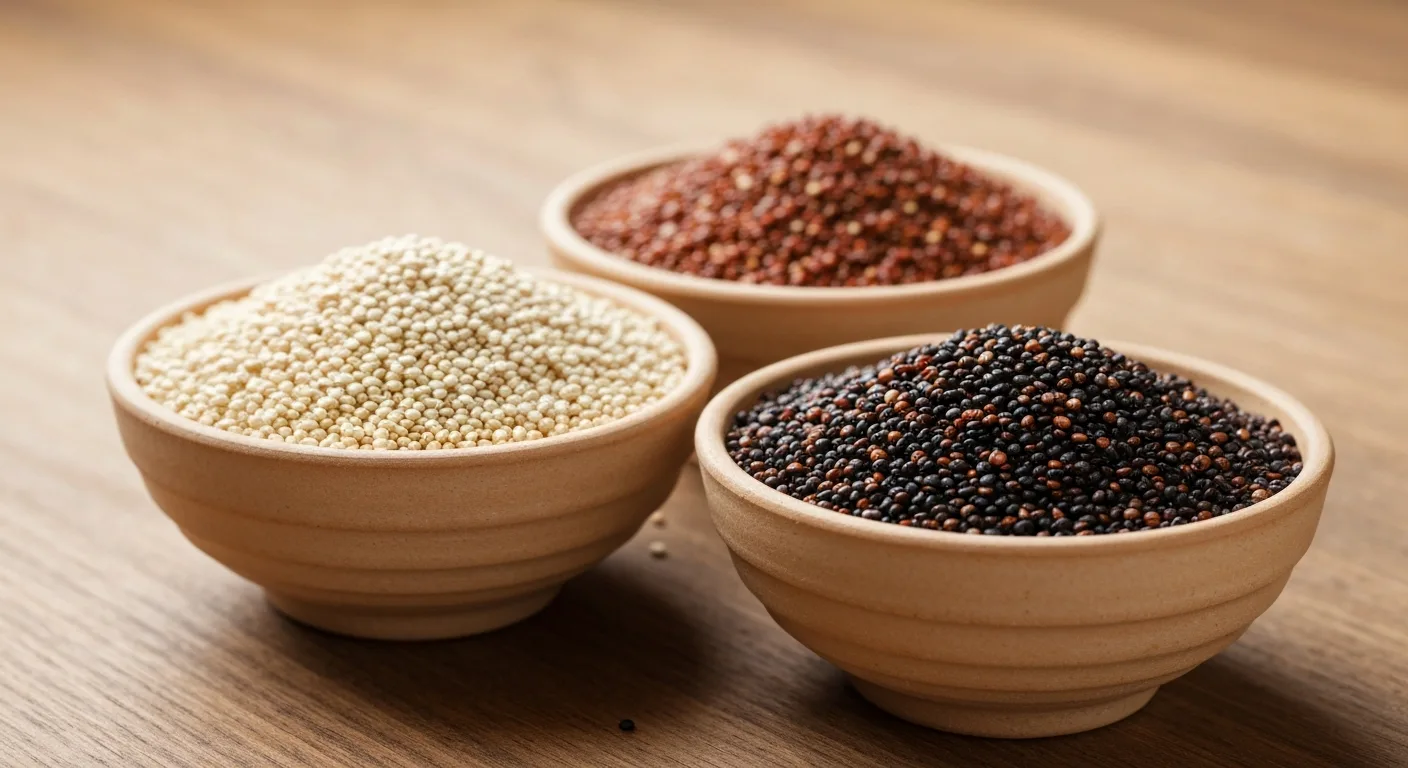
Quinoa has traveled an extraordinary path, from a sacred crop cultivated on Andean mountain terraces thousands of years ago to a fixture on grocery shelves and restaurant menus across the globe. Pronounced “KEEN-wah,” this seed has become synonymous with healthy eating, yet much of what makes quinoa genuinely remarkable goes deeper than its superfood reputation suggests.
In this guide, we cover what quinoa actually is, how it compares to other grains on the ancient grains list, why its nutritional profile is genuinely exceptional, and how to prepare it properly at home.
What Is Quinoa? Understanding the Pseudocereal
Quinoa (Chenopodium quinoa) is not technically a grain at all. It belongs to the Amaranthaceae family, making it a relative of spinach, beets, and amaranth rather than wheat or rice. Botanists classify it as a pseudocereal — a plant that produces seeds used like cereal grains but does not belong to the grass family (Poaceae).
This distinction matters for several reasons. Because quinoa is not a grass, it is naturally gluten-free, which makes it safe for people with celiac disease and gluten sensitivity. Its botanical lineage also accounts for its unusual nutritional profile, particularly its status as a complete protein source, which is rare in the plant kingdom. For a broader look at gluten-free options among heritage crops, see our guide to gluten-free ancient grains.
The quinoa plant itself is a hardy annual that can grow one to two meters tall, producing large seed heads in colors ranging from white and yellow to red, purple, and near-black. It thrives in harsh conditions (poor soil, high altitude, frost, drought, and saline environments), a resilience that made it indispensable to Andean civilizations for millennia.
A Brief History: The Mother Grain of the Andes
Archaeological evidence places quinoa cultivation in the Lake Titicaca basin of modern-day Peru and Bolivia as far back as 5,000 to 7,000 years ago. The Inca called it chisaya mama (“the mother grain”) and considered it sacred. Inca emperors traditionally planted the first seeds of the season using golden implements in elaborate ceremonies.
When Spanish conquistadors arrived in the 16th century, they actively suppressed quinoa cultivation. They viewed the crop’s ritual significance as a threat to colonial control and replaced it with European crops like wheat and barley. Quinoa survived primarily among indigenous farmers in remote highland communities, cultivated quietly for centuries in relative obscurity.
Quinoa’s modern revival began in the 1970s when Western researchers started documenting its exceptional nutritional value. By the 2000s, global demand had exploded. The United Nations declared 2013 the “International Year of Quinoa,” and production expanded beyond the Andes to more than 70 countries. For more on how ancient grains have shaped human civilization, see our article on the history of quinoa.
The Three Main Varieties of Quinoa
While over 3,000 varieties of quinoa exist, the commercial market centers on three primary types, distinguished by color and culinary characteristics.
White Quinoa (Ivory Quinoa)
White quinoa is the most widely available and mildest in flavor. It cooks up the lightest and fluffiest of the three varieties, with a slightly nutty taste and a delicate texture. This is the best entry point for people trying quinoa for the first time, and it works well as a neutral base in salads, bowls, and side dishes where you want other flavors to shine.
Cooking time for white quinoa is approximately 15 minutes, making it the quickest of the three varieties. When properly prepared, the grains become translucent and the characteristic germ ring (the small spiral “tail”) separates visibly from the seed.
Red Quinoa
Red quinoa has a slightly stronger, earthier flavor than white and holds its shape better during cooking. This structural integrity makes it the preferred choice for cold salads, grain bowls, and any dish where distinct, individual grains are desirable. The color mellows from a deep russet to a brownish-red during cooking.
Red quinoa takes a minute or two longer to cook than white and has a somewhat chewier texture. It contains slightly more antioxidants than the white variety, particularly betalains and phenolic compounds.
Black Quinoa
The most robust of the three, black quinoa has an earthy, slightly sweet flavor and the crunchiest texture. It holds its shape exceptionally well and takes the longest to cook — roughly 20 minutes. Black quinoa is striking in mixed grain dishes and salads, and it contains the highest concentration of anthocyanin antioxidants among quinoa varieties.
Many cooks enjoy blending all three varieties together, which creates visual appeal and a range of textures. Pre-mixed tri-color quinoa is now widely available in most grocery stores.
Quinoa Nutrition: Why the Hype Is Justified
Quinoa’s nutritional profile is genuinely exceptional, and it ranks among the most nutrient-dense foods in the ancient grains nutrition category. Here is what a one-cup serving (185 grams) of cooked quinoa provides:
- Calories: 222
- Protein: 8.1 grams
- Fat: 3.6 grams (mostly unsaturated)
- Carbohydrates: 39.4 grams
- Fiber: 5.2 grams
- Iron: 2.8 mg (15% DV)
- Magnesium: 118 mg (28% DV)
- Phosphorus: 281 mg (22% DV)
- Manganese: 1.2 mg (52% DV)
- Folate: 77.7 mcg (19% DV)
- Copper: 0.4 mg (18% DV)
- Zinc: 2.0 mg (13% DV)
Complete Protein
The standout nutritional fact about quinoa is its status as a complete protein: it contains all nine essential amino acids in sufficient proportions for human needs. Most plant foods are deficient in one or more essential amino acids (typically lysine in grains, and methionine in legumes), requiring careful food combining. Quinoa sidesteps this entirely.
The protein quality of quinoa, measured by the Protein Digestibility Corrected Amino Acid Score (PDCAAS), approaches that of casein (milk protein). This makes quinoa particularly valuable for vegetarians, vegans, and anyone looking to increase plant-based protein intake.
Mineral Density
Quinoa is unusually rich in magnesium, a mineral in which an estimated 50% of the American population is deficient. Adequate magnesium supports over 300 enzymatic reactions in the body, including muscle and nerve function, blood sugar regulation, and blood pressure control.
The iron content is also notable, particularly for a plant food. While the non-heme iron in quinoa is less bioavailable than the heme iron in meat, pairing quinoa with vitamin C-rich foods (tomatoes, bell peppers, citrus) significantly improves absorption.
Fiber and Glycemic Impact
With over 5 grams of fiber per cooked cup, quinoa supports digestive health and contributes to stable blood sugar levels. Its glycemic index ranges from 35 to 53 depending on the variety and preparation method — significantly lower than white rice (73) and most refined grains.
Health Benefits Supported by Research
Beyond its basic nutritional profile, quinoa has been the subject of numerous clinical and observational studies.
Cardiovascular health. Regular quinoa consumption has been associated with reduced LDL cholesterol and triglyceride levels. The combination of fiber, magnesium, and heart-healthy fats contributes to improved cardiovascular markers.
Blood sugar management. Several studies have demonstrated that replacing typical gluten-free products (often made from refined starches) with quinoa leads to significantly lower post-meal blood glucose and insulin responses. This is particularly relevant for people with type 2 diabetes or insulin resistance.
Anti-inflammatory effects. Quinoa contains saponins, phenolic acids, and flavonoids with demonstrated anti-inflammatory properties. While saponins are often rinsed away before cooking (more on that below), even residual amounts may confer benefits.
Satiety and weight management. The combination of protein, fiber, and complex carbohydrates in quinoa promotes feelings of fullness. Research comparing quinoa to wheat and rice found that quinoa produced greater satiety and reduced subsequent food intake.
The Saponin Question: Rinsing and Bitterness
Quinoa seeds are naturally coated in saponins — bitter-tasting compounds that serve as a natural pest deterrent. If you have ever cooked quinoa without rinsing and found it unpleasantly bitter or soapy-tasting, saponins are the culprit.
Most commercially sold quinoa has been mechanically processed to remove the bulk of saponin coating. However, trace amounts often remain. A thorough rinse under cold running water for 30 to 60 seconds, using a fine-mesh strainer, removes the residual bitterness. You will notice the water becoming slightly foamy — that is the saponins washing away.
Some people skip rinsing entirely and notice no bitterness, particularly with well-processed brands. If you are unsure, rinse first and adjust in future batches.
How to Cook Quinoa Perfectly
The basic method for cooking quinoa is straightforward, but small details make the difference between fluffy, well-separated grains and a mushy, waterlogged result. For a more detailed walkthrough, see our dedicated how to cook quinoa guide.
Basic Stovetop Method
- Rinse one cup of quinoa in a fine-mesh strainer under cold water for 30-60 seconds.
- Toast (optional but recommended) the rinsed quinoa in a dry saucepan over medium heat for 2-3 minutes, stirring frequently. This evaporates excess moisture and deepens the nutty flavor.
- Add liquid. Pour in 1.5 cups of water or broth (the 1:1.5 ratio is key — most recipes call for too much water).
- Bring to a boil, then reduce heat to low, cover, and simmer for 15 minutes.
- Rest. Remove from heat and let the quinoa sit, covered, for 5 minutes.
- Fluff with a fork and serve.
Common Mistakes to Avoid
- Too much water. The 1:2 ratio printed on many packages yields mushy quinoa. Use 1:1.5 for fluffy results.
- Skipping the rest period. Those final five minutes of steaming off heat allow excess moisture to absorb and the grains to firm up.
- Stirring during cooking. Leave the lid on and resist the urge to stir. Disturbing quinoa releases starch and creates a gummy texture.
- Overcrowding. Quinoa roughly triples in volume when cooked. Use a pot with adequate capacity.
Quinoa in the Kitchen: Versatility and Meal Ideas
Quinoa’s mild flavor and adaptable texture make it suitable for virtually any meal.
Breakfast: Cook quinoa in milk (dairy or plant-based) with cinnamon, vanilla, and a drizzle of honey or maple syrup for a protein-rich porridge. Top with fresh fruit, nuts, and seeds.
Salads: Cooled quinoa forms an excellent base for grain salads. Toss with roasted vegetables, fresh herbs, feta or goat cheese, and a bright vinaigrette. Red and black varieties hold up particularly well in dressed salads.
Bowls: Use quinoa as the grain base in nourish bowls with roasted sweet potato, avocado, greens, and a tahini dressing.
Soups and stews: Add uncooked quinoa directly to soups during the last 15 minutes of cooking. It adds body, protein, and a pleasant texture.
Baking: Quinoa flour can replace a portion of wheat flour in baking. Cooked quinoa can also be added directly to muffins, pancakes, and bread for added nutrition and moisture.
Stuffing: Use quinoa as a filling for stuffed peppers, tomatoes, or squash.
Sustainability: A Complex Picture
Quinoa’s global rise has created both opportunities and challenges. On one hand, quinoa is a remarkably climate-resilient crop. It grows with minimal water, tolerates saline and poor soils, and thrives at altitudes where few other food crops survive. As climate change intensifies, crops like quinoa become strategically important for global food security.
On the other hand, surging international demand in the 2000s and 2010s drove up prices in Bolivia and Peru, raising concerns that local populations could no longer afford their traditional staple food. Quinoa land displaced llama grazing land, disrupting traditional agricultural systems. Monoculture practices on fragile Andean soils led to erosion and declining soil fertility in some regions.
The picture has grown more nuanced over time. Prices have stabilized, domestic consumption in Andean countries has actually increased, and quinoa cultivation has spread to dozens of new countries — reducing pressure on Andean production. Researchers continue working on varieties adapted to diverse climates, from sea-level European farms to arid African regions. For those interested in home production, our guide to growing quinoa covers climate requirements and cultivation techniques.
Buying and Storing Quinoa
Buying tips: Look for quinoa that is labeled “pre-rinsed” or “saponin-free” if you want to skip the rinsing step. Organic quinoa is widely available. For the best value, buy in bulk from natural food stores or warehouse clubs.
Storage: Uncooked quinoa keeps for two to three years in an airtight container in a cool, dark place. Cooked quinoa refrigerates well for up to five days and freezes for up to two months. Spread cooled cooked quinoa on a sheet pan to freeze individually before transferring to freezer bags — this prevents clumping and allows you to portion out exactly what you need.
Where Quinoa Fits Among Ancient Grains
Quinoa occupies a distinctive position on the ancient grains list. As a pseudocereal, it stands alongside amaranth as a complete protein source that is naturally gluten-free — a combination that no true cereal grain can match. Compared to gluten-containing ancient wheats like farro, spelt, and einkorn, quinoa offers a safer alternative for those avoiding gluten entirely.
Among gluten-free grains, quinoa surpasses millet, sorghum, and teff in overall protein quality, though each of those grains brings its own nutritional strengths. Teff, for instance, exceeds quinoa in iron and calcium content, while millet offers superior drought resilience.
Quinoa earned its place in the modern pantry not through marketing hype but through a genuinely exceptional nutritional profile, strong agricultural resilience, and culinary versatility that few other single ingredients can match.
Last updated March 12, 2026