Teff: Ethiopia's Tiny Grain with Enormous Nutrition
Teff is the world's smallest grain and the foundation of Ethiopian cuisine. Learn about its exceptional nutrition, gluten-free status, and culinary uses.
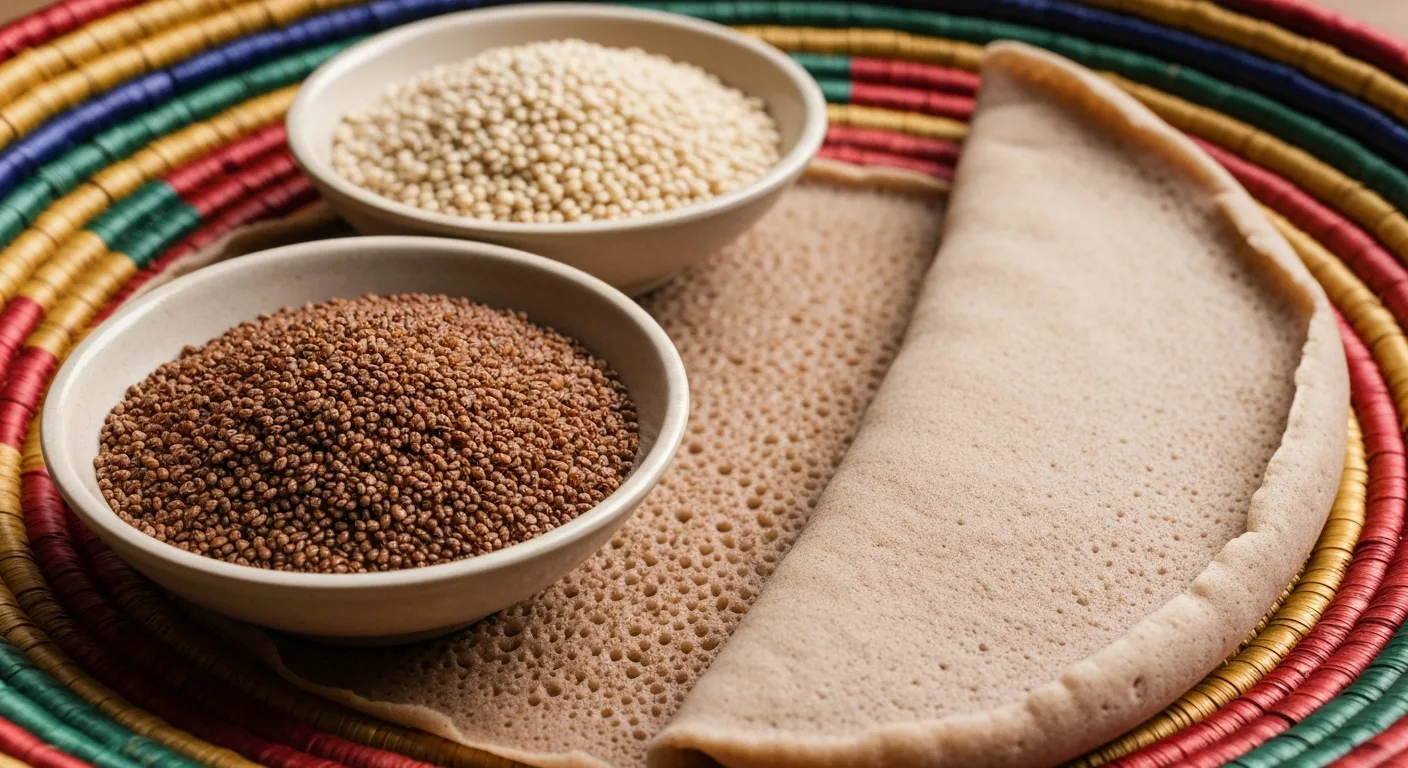
Teff is the world’s smallest grain, so tiny that a single grain is barely visible between your fingers, yet it produces one of the most nutritionally dense foods on earth. It has sustained Ethiopian civilization for over three millennia, but most of the world has only become aware of it in the past two decades. It is the foundation of one of the world’s great cuisines, yet it remains unknown to the majority of Western cooks.
That is changing, and rapidly. As interest in gluten-free ancient grains grows and the global food system seeks climate-resilient crops, teff is gaining the international recognition it has long deserved.
What Is Teff?
Teff (Eragrostis tef) is an annual grass native to the Ethiopian Highlands. It is a true cereal grain, a member of the Poaceae (grass) family, unlike pseudocereals such as quinoa and amaranth. The word “teff” is believed to derive from the Amharic word teffa, meaning “lost,” a reference to the grain’s minuscule size: drop a handful of teff and you will never recover the fallen seeds.
To put the size in perspective: approximately 3,000 teff grains weigh just one gram. A single grain of teff measures about 1 millimeter in diameter. You could fit 150 teff grains on a single grain of wheat. This has significant nutritional consequences: because teff grains are too small to separate into bran, germ, and endosperm, teff is always consumed as a whole grain, regardless of how it is processed. There is no “white” teff flour equivalent to white wheat flour. Every teff product inherently carries the full nutritional complement of the whole grain.
Varieties: Brown and Ivory
Teff comes in a spectrum of colors, but commercial production centers on two main types:
Brown Teff (Red Teff)
The most traditional and most commonly grown variety in Ethiopia, brown teff ranges from reddish-brown to dark chocolate in color. It has a deeper, earthier flavor than ivory teff, often described as nutty with hints of cocoa and hazelnut. Brown teff is the traditional choice for injera, Ethiopia’s iconic sourdough flatbread.
Ivory Teff (White Teff)
Lighter in color and milder in flavor, ivory teff has a slightly sweeter, more delicate taste. In Ethiopia, ivory teff is considered the premium variety and commands higher prices. It produces a lighter-colored injera and works well in baking applications where a more neutral flavor is desired.
Both varieties offer similar nutritional profiles, though brown teff contains slightly higher iron and fiber content.
Three Thousand Years of Ethiopian Heritage
Teff has been cultivated in the Ethiopian Highlands for an estimated 3,000 to 5,000 years, making it one of the oldest cultivated crops in Africa. It is so central to Ethiopian culture and identity that the Ethiopian government restricted teff exports for over a decade (2006-2019) to protect domestic food security.
Ethiopia remains by far the world’s largest teff producer. Over six million Ethiopian farmers cultivate teff, and it accounts for roughly 30% of all cereal acreage in the country. Approximately 50 million Ethiopians rely on teff as a dietary staple.
The crop’s importance extends beyond nutrition. Teff straw is a valued animal feed and construction material (mixed with mud for building). The grain plays a role in Ethiopian social customs, religious practices, and economic identity. For more on how grains have shaped civilizations, see our article on ancient grains and civilizations.
Injera: The Soul of Ethiopian Cuisine
No discussion of teff is complete without injera, the spongy, tangy, crepe-like flatbread that serves as both plate and utensil in Ethiopian dining. Injera is made from teff flour fermented with a wild yeast starter for two to three days, then cooked on a large, flat griddle (a mitad) to produce a large, thin pancake with a distinctively spongy, porous texture.
The fermentation process is critical. It develops injera’s characteristic sour flavor (similar to a mild sourdough), creates the honeycomb-like bubble structure on the surface, and breaks down phytic acid — an anti-nutrient that inhibits mineral absorption. This means that the iron, calcium, and zinc in teff become significantly more bioavailable when consumed as injera compared to unfermented preparations.
In Ethiopian meals, injera lines the plate and various wot (stews) are served on top. Diners tear off pieces of injera and use them to scoop up the stews — no forks or spoons needed. This communal, hands-on eating style is central to Ethiopian social culture, and eating from the same plate is considered an act of friendship and trust.
Teff Nutrition: Small Grain, Big Numbers
Teff’s nutritional profile is strong across the board. Here is what a one-cup serving (about 252 grams) of cooked teff provides:
- Calories: 255
- Protein: 9.8 grams
- Fat: 1.6 grams
- Carbohydrates: 50 grams
- Fiber: 7.1 grams
- Iron: 7.6 mg (42% DV)
- Calcium: 123 mg (9% DV)
- Magnesium: 126 mg (30% DV)
- Phosphorus: 302 mg (24% DV)
- Manganese: 5.2 mg (226% DV)
- Zinc: 3.7 mg (25% DV)
- Copper: 0.6 mg (27% DV)
- Thiamine (B1): 0.3 mg (20% DV)
Iron Powerhouse
Teff’s iron content is among the highest of any grain, significantly higher than quinoa, farro, or millet. This is one reason why iron-deficiency anemia rates in Ethiopia are lower than in many other sub-Saharan African countries despite comparable economic conditions. The traditional preparation as injera (with its fermentation reducing phytic acid) further enhances iron bioavailability.
Some older studies reported even higher iron values for teff, which subsequent research attributed to soil contamination during traditional threshing practices (teff was threshed on bare ground, incorporating iron-rich soil particles). Even with corrected values, teff remains an outstanding plant-based iron source.
Calcium Content
With 123 mg of calcium per cooked cup, teff provides more calcium than most grains and rivals some dairy products on a calorie-for-calorie basis. This is particularly significant because Ethiopia has historically low dairy consumption in many regions, making teff a critical calcium source for much of the population.
Resistant Starch
Teff contains a notable proportion of resistant starch, a type of starch that resists digestion in the small intestine and functions more like fiber. Resistant starch feeds beneficial gut bacteria, supports colon health, improves insulin sensitivity, and contributes to satiety. The resistant starch content of teff increases when it is cooked and then cooled, as in injera.
Protein Quality
Teff protein is rich in essential amino acids, though like most true cereal grains it is somewhat limited in lysine. However, its lysine content is higher than that of wheat, barley, or sorghum. The protein content of around 10-11% by dry weight is comparable to wheat and higher than rice or corn.
For a comprehensive nutritional comparison across heritage grains, visit our ancient grains nutrition guide. For more on fiber content specifically, see our article on ancient grains and fiber.
Teff Is Naturally Gluten-Free
Teff contains no gluten proteins whatsoever and is safe for people with celiac disease and gluten sensitivity. This has been a major driver of its growing popularity in the Western health food market, where consumers are actively seeking gluten-free ancient grains that offer superior nutrition compared to rice and corn.
As with any gluten-free grain, cross-contamination during processing is a concern. For strict celiac diets, choose teff products certified gluten-free.
Teff flour has become particularly valued in gluten-free baking because it contributes a rich, complex flavor and slightly binding texture that many gluten-free flours lack. It works well in combination with other gluten-free flours (rice flour, tapioca starch, buckwheat flour) to create baked goods with better flavor and structure.
How to Cook Teff
Teff’s tiny size means it cooks very differently from larger grains. There is no individual grain texture; cooked teff becomes creamy and porridge-like, similar to amaranth or polenta. This is a characteristic to embrace, not fight.
Basic Teff Porridge
- Combine 1 cup teff with 3 cups water or milk in a saucepan.
- Bring to a boil, stirring to prevent clumping.
- Reduce heat to low, cover, and simmer for 15-20 minutes, stirring occasionally.
- The teff is done when it has absorbed the liquid and reached a thick, porridge-like consistency.
For breakfast, cook teff porridge with a pinch of salt and serve with honey, cinnamon, fresh fruit, and nuts. For a savory preparation, cook in broth and serve alongside stews or roasted vegetables, similar to how you would use polenta.
Teff Polenta
Cook teff in a 1:4 ratio of teff to water with salt, simmering and stirring for about 20 minutes until very thick. Pour into a greased pan, smooth the top, and refrigerate until firm (at least one hour). Slice the set teff and pan-fry, grill, or bake until golden on the outside. Serve with sauces, roasted vegetables, or as a base for composed dishes.
Baking with Teff Flour
Teff flour brings deep, malty, slightly cocoa-like flavor to baked goods. It is heavier than wheat flour, so it works best in recipes where density is welcome: brownies, cookies, muffins, and quick breads. For lighter applications, blend teff flour with other flours. A good starting ratio is 25-30% teff flour combined with lighter gluten-free flours.
Teff flour is also excellent in pancakes and waffles, where its natural binding properties and rich flavor produce outstanding results without gluten.
Growing Global Interest
Teff cultivation is expanding beyond Ethiopia. The Netherlands, the United States (particularly Idaho), Australia, and several African countries have begun commercial teff production. This expansion is driven by several factors:
Nutritional demand. Health-conscious consumers in wealthy nations are seeking nutrient-dense, gluten-free whole grains with genuine culinary heritage.
Climate resilience. Teff is remarkably adaptable. It tolerates both waterlogging and drought, grows in poor soils, has a short growing season (60-120 days), and is relatively pest-resistant. As climate change disrupts traditional cropping patterns, resilient grains like teff become strategically important.
Culinary interest. The global rise of Ethiopian restaurants and the broadening of Western palates have introduced millions of people to injera and Ethiopian cuisine, creating demand for teff among home cooks.
However, the expansion of teff production raises questions about intellectual property, benefit-sharing with Ethiopian communities, and the economic impact on Ethiopian farmers. A controversial patent on teff by a Dutch company (later invalidated) highlighted the tension between global commercialization and the rights of communities who developed and preserved these crops over millennia.
Buying and Storage
Teff grain and teff flour are available at natural food stores, Ethiopian grocery stores, and online retailers. Both brown and ivory varieties are worth trying. Ethiopian-grown teff is generally considered superior in flavor, though domestic production in several countries now meets high quality standards.
Storage: Whole teff grain keeps well for over a year in an airtight container at room temperature. Teff flour should be stored in the refrigerator or freezer, as its whole-grain composition (remember, all teff flour is whole grain) means it contains oils that can go rancid. Use teff flour within three to four months for best results.
Teff’s Place in the Grain World
Among the entries on the ancient grains list, teff holds a unique position. It is the smallest grain cultivated for food, the only grain that is inherently always whole, and one of the most iron-rich plant foods available. Its cultural significance to Ethiopian civilization is unmatched by perhaps any other single crop-to-culture relationship in the world.
For those seeking a gluten-free grain with serious nutritional credentials and distinctive flavor, teff stands alongside quinoa, amaranth, millet, and sorghum as a top-tier option, and it may exceed them all in mineral density.
Last updated March 12, 2026