Amaranth: Nutrition, Cooking, and History of the Aztec Superfood
Discover amaranth — the tiny grain packed with complete protein, calcium, and iron that sustained the Aztec empire and is now a global superfood.
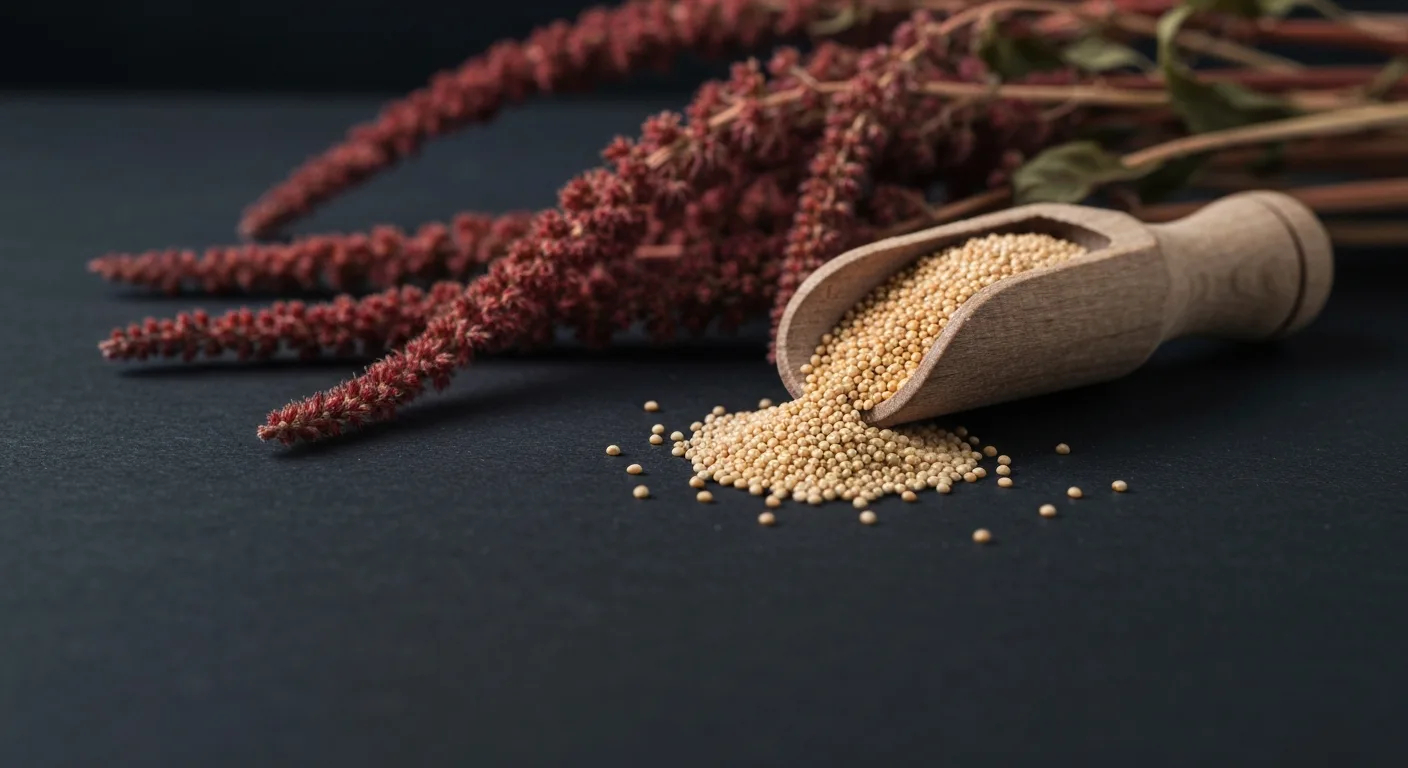
Amaranth is one of those foods that history tried to erase but could not. Banned by Spanish colonizers, driven underground for centuries, and largely forgotten by the Western world until the late 20th century, this tiny seed (smaller than a pinhead) has reemerged as one of the most nutritionally impressive foods available.
What Is Amaranth?
Amaranth (Amaranthus spp.) is a pseudocereal - it produces seeds consumed like cereal grains, but the plant is not a member of the grass family. Like its close relative quinoa, amaranth belongs to the Amaranthaceae family, making it more closely related to spinach, beets, and chard than to wheat or rice.
There are roughly 60 species of amaranth, but three are primarily cultivated for grain production: Amaranthus caudatus (love-lies-bleeding), Amaranthus cruentus, and Amaranthus hypochondriacus. The plants are striking — tall, broad-leaved, with dramatic flower plumes that droop in cascading tassels of deep crimson, purple, gold, or green. Many species are also grown as ornamentals and as leaf vegetables, particularly in Asia and Africa.
The seeds themselves are extraordinarily small. It takes approximately 700,000 amaranth seeds to make a single pound. Despite their size, these seeds carry a nutritional density that rivals or exceeds most grains many times larger.
The Aztec Grain: History and Suppression
Amaranth cultivation in Mesoamerica dates back at least 6,000 to 8,000 years, with evidence of its use throughout what is now Mexico, Guatemala, and the southwestern United States. For the Aztec empire, amaranth was not merely a food but a foundation of civilization, economy, and religion.
The Aztecs called it huauhtli, and it ranked alongside maize and beans as one of their three primary crops. The Aztec capital Tenochtitlan received an estimated 20,000 tons of amaranth annually as tribute from conquered provinces. In sheer volume, amaranth tribute nearly equaled that of maize.
But amaranth’s role extended beyond nutrition. It was central to Aztec religious practice. During festivals honoring the war god Huitzilopochtli, priests mixed amaranth flour with honey and sometimes sacrificial blood to form a dough called tzoalli. This dough was sculpted into deity figures, paraded through the streets, then broken apart and consumed by worshippers - a sacramental act that bore uncomfortable parallels to Christian communion for the arriving Spanish.
When Hernán Cortés conquered the Aztec empire in 1521, the Spanish colonial authorities moved to dismantle the religious practices that sustained resistance. They banned amaranth cultivation outright. Growing it could result in having your hands cut off. Fields were burned. The crop was systematically suppressed in a way that maize and beans never were — precisely because of its sacred significance.
Yet amaranth survived. Indigenous farmers in remote mountain valleys continued cultivating it quietly, passing seeds and knowledge through generations. Today, Mexico remains a significant producer, and alegría — a confection of popped amaranth bound with honey or sugar — is still sold by street vendors throughout the country, a living descendant of the ancient tzoalli. For more on how ancient grains shaped civilizations, see our article on ancient grains and civilizations.
Amaranth Nutrition: A Microscopic Powerhouse
Amaranth’s nutritional profile is exceptional by any standard and one of the most nutrient-dense entries on the ancient grains list. Here is what one cup (246 grams) of cooked amaranth provides:
- Calories: 251
- Protein: 9.3 grams
- Fat: 3.9 grams
- Carbohydrates: 46 grams
- Fiber: 5.2 grams
- Iron: 5.2 mg (29% DV)
- Magnesium: 160 mg (38% DV)
- Phosphorus: 364 mg (29% DV)
- Manganese: 2.1 mg (91% DV)
- Calcium: 116 mg (9% DV)
- Potassium: 332 mg (7% DV)
- Zinc: 2.1 mg (14% DV)
Complete Protein with Outstanding Amino Acid Balance
Like quinoa, amaranth is a complete protein, containing all nine essential amino acids. Where amaranth stands out is in its lysine content. Lysine is the amino acid most commonly deficient in cereal grains, and it plays critical roles in calcium absorption, collagen production, and immune function. Amaranth contains roughly twice the lysine of wheat and three times that of maize.
The protein in amaranth accounts for approximately 13-14% of the seed by weight, comparable to quinoa and higher than most true cereal grains. This makes amaranth particularly valuable in diets where animal protein is limited or excluded. For a deeper comparison of protein content across heritage crops, see our ancient grains protein guide.
Calcium Champion
Amaranth contains more calcium than virtually any other grain or pseudocereal, roughly 116 mg per cooked cup. This is notable because calcium from plant sources can be harder to absorb due to the presence of phytic acid and oxalates. However, the sheer quantity in amaranth means that even with reduced bioavailability, it contributes meaningfully to daily calcium intake. Soaking and cooking amaranth reduces phytic acid content, improving mineral absorption.
Iron and Blood Health
With nearly 30% of the daily value for iron per cooked cup, amaranth is an excellent source of this essential mineral. Iron deficiency remains the most common nutritional deficiency worldwide, and plant-based iron sources like amaranth are especially important for vegetarians and vegans. Pairing amaranth with vitamin C-rich foods enhances non-heme iron absorption significantly.
Squalene Content
Amaranth oil contains an unusually high concentration of squalene, a compound more commonly associated with shark liver oil. Squalene is an antioxidant and moisturizer, valued in both nutrition and cosmetics. Amaranth oil contains 5-8% squalene by weight — far higher than olive oil (0.5%) and most other plant oils. Research suggests squalene may have anti-tumor, cardioprotective, and skin-protective properties.
Amaranth Is Naturally Gluten-Free
Because amaranth is a pseudocereal and not a member of the grass family, it contains no gluten proteins whatsoever. This makes it safe for people with celiac disease and non-celiac gluten sensitivity, provided it has not been cross-contaminated during processing.
When purchasing amaranth for a strictly gluten-free diet, look for packages explicitly labeled “certified gluten-free,” which indicates testing and processing controls to prevent cross-contamination. Amaranth is an excellent choice for diversifying a gluten-free ancient grains diet that might otherwise rely heavily on rice and corn.
How to Cook Amaranth
Amaranth behaves differently from most grains in the kitchen. Its tiny size means it does not cook into discrete, fluffy grains the way quinoa or millet does. Instead, cooked amaranth develops a porridge-like consistency: creamy, thick, and slightly gelatinous. This is a feature, not a flaw, once you understand how to work with it.
Basic Stovetop Porridge
- Combine 1 cup amaranth with 2.5 cups water or broth in a saucepan.
- Bring to a boil, then reduce heat to low.
- Simmer uncovered for 20-25 minutes, stirring occasionally, until the liquid is absorbed and the amaranth is tender.
- The texture will be thick and porridge-like. For a thinner consistency, add more liquid.
Popped Amaranth
This is the traditional Mesoamerican preparation and one of the most delightful ways to enjoy amaranth. The tiny seeds pop like miniature popcorn, becoming crunchy, nutty, and toasty.
- Heat a dry, heavy-bottomed skillet or pot over high heat until very hot.
- Add 1-2 tablespoons of amaranth seeds at a time — no more, or they will burn instead of popping.
- Shake the pan constantly. The seeds will pop within seconds, turning white and expanding.
- Immediately pour the popped seeds into a bowl and repeat with the next batch.
Popped amaranth is extraordinary as a topping for yogurt, salads, and soups. Mixed with honey or chocolate, it creates the traditional Mexican alegría candy. It adds crunch to baked goods and breakfast cereals.
Amaranth Flour
Ground amaranth makes a nutritious, naturally gluten-free flour. Because it lacks gluten, amaranth flour cannot replace wheat flour entirely in baked goods that require rise and structure. However, substituting 15-25% of the wheat flour in a recipe with amaranth flour adds nutrition and a subtle, earthy flavor. In gluten-free baking, combine amaranth flour with other gluten-free flours and a binding agent like xanthan gum.
Flavor Profile and Culinary Uses
Amaranth has an earthy, slightly peppery, faintly grassy flavor that is more assertive than quinoa’s mild nuttiness. Some people detect a faint sweetness as well. The flavor intensifies when the seeds are toasted or popped.
Porridge and breakfast bowls: Amaranth porridge with coconut milk, cinnamon, and fresh fruit makes a protein-rich alternative to oatmeal.
Thickening agent: Cooked amaranth’s natural viscosity makes it an excellent gluten-free thickener for soups, stews, and sauces.
Energy bars and granola: Popped amaranth combined with nuts, seeds, dried fruit, and a sweetener creates nutrient-dense snack bars.
Flatbreads: In India, amaranth flour (called rajgira flour) is traditionally used during religious fasting periods to make flatbreads, since amaranth is not classified as a grain in Hindu dietary law.
Polenta-style: Cooked amaranth can be spread into a pan, chilled until firm, then sliced and pan-fried — similar to polenta. Serve with sauces, roasted vegetables, or as a side dish.
Amaranth vs. Quinoa: How Do They Compare?
Since both are Andean-origin pseudocereals with complete protein profiles, the comparison is inevitable. Here is how they stack up:
| Nutrient (per cooked cup) | Amaranth | Quinoa |
|---|---|---|
| Calories | 251 | 222 |
| Protein | 9.3 g | 8.1 g |
| Fiber | 5.2 g | 5.2 g |
| Iron | 5.2 mg | 2.8 mg |
| Calcium | 116 mg | 31 mg |
| Magnesium | 160 mg | 118 mg |
Amaranth wins on iron, calcium, and magnesium. Quinoa wins on versatility and ease of preparation — its fluffy, grain-like cooked texture is more intuitive for most Western cooks. Both are complete proteins and naturally gluten-free.
The best approach is not to choose between them but to rotate both in your diet, taking advantage of their complementary strengths. For a comprehensive nutritional comparison across all heritage grains, see our ancient grains nutrition guide.
Growing Amaranth
Amaranth is remarkably easy to grow in home gardens. The plants are heat-loving, drought-tolerant, and thrive in conditions that would stress most vegetables. They grow quickly, produce dramatic ornamental flower heads, and yield both edible leaves (harvested young) and grain (harvested when seed heads dry on the plant).
Amaranth grows best in full sun, warm temperatures (above 70F), and well-drained soil. Seeds are sown directly after the last frost, barely covered with soil since they need light to germinate. Plants can reach 5-7 feet tall and produce striking red, purple, or golden flower plumes.
Buying and Storage
Amaranth seeds, flour, and popped amaranth are increasingly available in natural food stores, specialty grocers, and online retailers. Look for organic options when possible.
Storage: Whole amaranth seeds keep for several years in an airtight container in a cool, dark place. Amaranth flour is more perishable due to its fat content — store it in the refrigerator or freezer and use within a few months. Popped amaranth should be consumed within a few days for optimal crunch, though it can be stored in an airtight container for a week or two.
Summary
Amaranth is a food with a history as striking as its nutrition. Suppressed by colonizers, preserved by indigenous communities, and now rediscovered globally, this tiny seed delivers more protein than most grains, more calcium than any grain, iron levels that rival red meat, and complete amino acid coverage. It has earned its place on the ancient grains list and in the modern pantry.
Last updated March 12, 2026