The History of Quinoa: Mother Grain of the Inca Empire
From sacred Andean crop to global superfood — the remarkable 5,000-year history of quinoa and its role in Inca civilization.
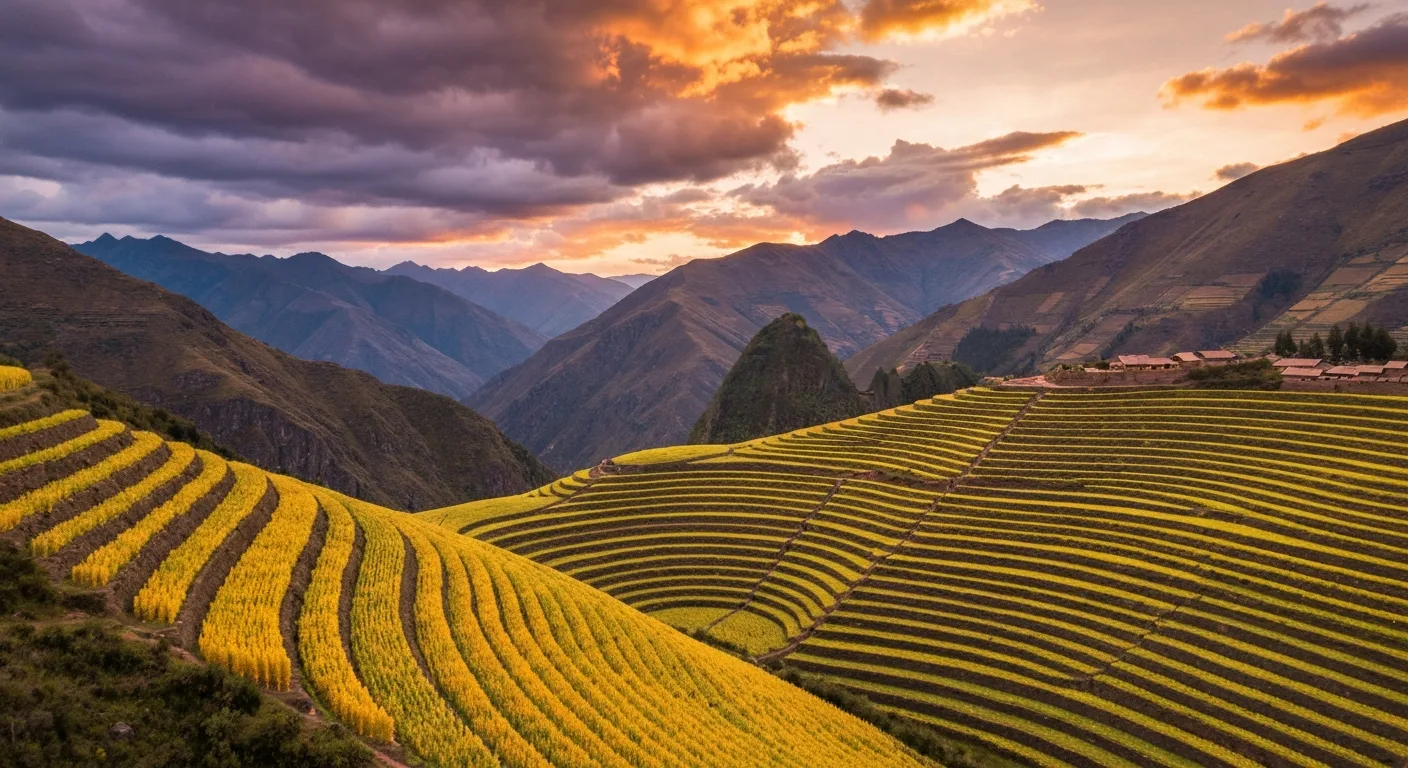
Quinoa’s modern reputation as a superfood obscures a history that is far more complex, dramatic, and consequential than most consumers realize. This tiny seed - technically not a grain at all, but a pseudocereal from the goosefoot family - sustained Andean civilizations for thousands of years, survived deliberate suppression by European colonizers, nearly vanished from global consciousness, and then staged one of the most remarkable agricultural comebacks of the 21st century.
The story of quinoa is a story about power, resilience, cultural identity, and the unintended consequences of good intentions.
For the broader context of grain domestication across the world, see our history of ancient grains.
Origins: Lake Titicaca and the First Farmers
The birthplace of quinoa is the Altiplano - the high plateau of the Andes that straddles modern-day Peru and Bolivia, centered around Lake Titicaca at an elevation of approximately 3,800 meters (12,500 feet). Archaeological evidence indicates that wild quinoa was gathered by Andean peoples as far back as 7,000 years ago, with intentional cultivation beginning around 5,000 BCE.
The wild ancestor of cultivated quinoa is Chenopodium hircinum, a weedy plant that still grows across South America. Over centuries of selective breeding, Andean farmers transformed this plant into something far more useful: larger seeds, more uniform maturation, reduced saponin content (the bitter coating on quinoa seeds), and adaptation to a wide range of growing conditions.
The Altiplano is one of the harshest agricultural environments on earth. Situated above the tree line, it experiences intense solar radiation, freezing nighttime temperatures even in summer, unpredictable rainfall, and thin, alkaline soil. Most crops fail under these conditions. Corn will not grow reliably above 3,500 meters. Potatoes can handle the altitude but do not provide complete nutrition on their own.
Quinoa thrived where almost nothing else would. It tolerates frost, drought, saline soil, and altitudes up to 4,000 meters. It matures in 90 to 120 days. And unlike potatoes and other tubers, quinoa provides a complete protein - all nine essential amino acids in sufficient quantities - making it one of the most nutritionally balanced plant foods in the world.
For the Altiplano communities, quinoa was not simply a food crop. It was survival itself.
The Inca Empire: Sacred Status
By the time the Inca Empire consolidated power in the 15th century, quinoa had been cultivated in the Andes for over four thousand years. The Inca elevated quinoa to a status that was simultaneously agricultural, spiritual, and political.
The Inca called quinoa “chisaya mama” - the mother of all grains. It occupied a place in Inca cosmology alongside corn (sara), potatoes (papa), and coca leaves as one of the fundamental gifts of Pachamama (Mother Earth) to humanity.
Each planting season, the Sapa Inca (emperor) would personally plant the first quinoa seeds using a golden taquiza, or planting stick. This ceremony carried enormous symbolic weight - it sanctified the agricultural cycle and reaffirmed the emperor’s role as intermediary between the human and divine worlds. Only after the emperor’s ceremonial planting could common farmers begin sowing their own quinoa fields.
Quinoa served multiple practical functions within the Inca Empire:
Military rations. Inca soldiers carried “war balls” - compact provisions made from quinoa mixed with fat, sometimes combined with dried potato (chuño). These rations were calorie-dense, lightweight, and did not spoil, allowing Inca armies to campaign for extended periods far from supply lines. Historians have noted parallels with Roman legions carrying spelt rations - in both cases, a high-energy grain enabled military expansion across vast distances.
Taxation and redistribution. The Inca state operated without currency, using a sophisticated system of labor taxation (mit’a) and centralized food storage. Quinoa was collected as tribute and stored in qollqa - state granaries positioned along the Inca road network. During famine, disease, or military emergency, stored quinoa could be redistributed to affected populations. Some qollqa held enough grain to feed entire regions for months.
Ceremonial use. Quinoa was brewed into chicha, a fermented beverage consumed during religious festivals and offered to the gods. Quinoa flour was also used to make ritual objects and offerings.
Medicine. Inca healers used quinoa in poultices for wounds and as a treatment for altitude sickness. While the specific efficacy of these applications is debated, quinoa’s high mineral content - particularly iron and magnesium - may have provided genuine therapeutic benefit.
The Inca road system, one of the most impressive infrastructure achievements of the pre-modern world, was designed partly to facilitate the movement of agricultural products, including quinoa, across the empire’s diverse ecological zones. Quinoa grown at high altitude could be traded for corn, fruit, and fish from lower elevations, creating a complementary nutritional network that sustained an empire of 12 million people.
Spanish Conquest and Suppression
The arrival of Francisco Pizarro and the Spanish conquistadors in 1532 was catastrophic for Andean civilization and for quinoa.
The Spanish pursued a systematic campaign of cultural destruction. Indigenous religious practices were suppressed, temples were destroyed, and traditional agricultural systems were disrupted. Quinoa, because of its deep association with Inca religion and identity, became a specific target.
Spanish colonial authorities discouraged or outright banned quinoa cultivation in many regions. They promoted European crops - wheat, barley, and broad beans - as replacements, both for practical reasons (feeding Spanish settlers) and as instruments of cultural assimilation. Growing quinoa was associated with indigenous identity, which the colonial regime sought to erase.
The consequences were severe. Quinoa cultivation declined sharply across the former Inca territories. Large-scale terrace farming systems, developed and maintained over centuries, fell into disrepair. Agricultural knowledge accumulated over thousands of years was lost as communities were disrupted by disease, forced labor, and displacement.
But quinoa did not disappear entirely. In the most remote highland communities - places too high, too cold, and too isolated for the Spanish to effectively control - indigenous farmers continued to grow quinoa as they had for millennia. These communities preserved not only the crop but the traditional ecological knowledge required to cultivate it: understanding of soil preparation, seed selection, crop rotation, and pest management adapted to extreme conditions.
This quiet persistence in the face of colonial suppression is one of the most important chapters in quinoa’s history. Without these highland farmers, the genetic diversity and agricultural knowledge needed for quinoa’s modern revival would have been lost.
Centuries of Obscurity
For roughly four hundred years - from the Spanish conquest in the 1530s through the mid-20th century - quinoa existed in relative obscurity. It was grown and consumed primarily by indigenous Andean communities, particularly Aymara and Quechua peoples in the highlands of Bolivia and Peru.
During this period, quinoa carried a social stigma in Andean societies shaped by colonial hierarchies. It was dismissed as “Indian food” - a peasant staple associated with poverty and indigenous identity. Urban Andean populations, aspiring to European cultural norms, favored wheat, rice, and barley. This stigma further suppressed quinoa cultivation and consumption.
The grain was virtually unknown outside South America. It does not appear in European or North American agricultural or culinary literature until the late 20th century. A few botanists and explorers documented it as a curiosity, but there was no commercial interest.
Rediscovery: The 1970s and 1980s
Quinoa’s rediscovery began with two parallel developments: scientific interest and countercultural food movements.
In the 1970s and 1980s, nutritional scientists began studying Andean crops as part of broader research into food security and underutilized species. When they analyzed quinoa’s nutritional composition, the results were striking. Here was a plant food that provided complete protein comparable to casein (the protein in milk), along with high levels of iron, magnesium, manganese, and fiber. No other grain or pseudocereal came close to this profile.
Simultaneously, the health food and natural foods movements in North America and Europe were creating demand for alternative grains. Consumers were looking for whole, unprocessed foods that went beyond standard wheat and rice. Quinoa fit perfectly - it was nutritious, whole, ancient, and exotic.
The first significant commercial imports of quinoa to the United States began in the 1980s. Small natural food companies started marketing quinoa to health-conscious consumers. Sales were modest but growing.
Two Americans played important early roles. Don McKinley and David Cusack, working in the 1980s, helped establish import pathways and promoted quinoa to the U.S. natural foods industry. Cusack, a researcher who studied Andean agriculture, was tragically murdered in Bolivia in 1989 under circumstances that remain disputed but may have been related to conflicts over quinoa commerce.
The 2000s: Going Mainstream
Quinoa’s transition from niche health food to mainstream ingredient accelerated in the 2000s, driven by several converging trends.
The rise of gluten-free diets brought enormous attention to naturally gluten-free grains and pseudocereals. Quinoa, with its complete protein and versatile cooking properties, became the flagship grain-alternative for gluten-free consumers.
The “superfood” marketing phenomenon adopted quinoa early. While nutritionists generally dislike the term “superfood” as scientifically meaningless, there is no denying its commercial power. Quinoa appeared on superfood lists alongside blueberries, kale, and salmon, and sales surged accordingly.
Celebrity endorsements and media coverage compounded the effect. Food magazines, cooking shows, and wellness influencers promoted quinoa relentlessly. By the early 2010s, quinoa was appearing on restaurant menus from fast-casual chains to fine dining establishments.
2013: The International Year of Quinoa
The United Nations General Assembly, at the request of the Bolivian government under President Evo Morales, declared 2013 the International Year of Quinoa. The resolution, co-sponsored by numerous countries, recognized quinoa’s potential contribution to global food security and its importance to Andean indigenous cultures.
The declaration brought unprecedented global attention. Quinoa consumption in North America and Europe rose by over 300 percent between 2006 and 2013. Wholesale prices for Bolivian quinoa tripled between 2006 and 2014, reaching over $3,000 per metric ton at their peak.
This price surge had profound and paradoxical consequences in the Andes.
The Quinoa Paradox: Boom and Consequences
The international quinoa boom created what economists and food security researchers have called the “quinoa paradox” - a situation where the crop’s success in global markets potentially undermined the food security of the very communities that had preserved it.
As export prices soared, Bolivian and Peruvian quinoa farmers could earn more selling their harvest internationally than consuming it locally. Many farming families began selling nearly all their quinoa and purchasing cheaper imported food - white rice, pasta, processed goods - with the proceeds. Nutritional studies from this period found that some Andean communities were consuming less quinoa than they had before the boom, despite producing more of it.
The price spike also triggered agricultural intensification that threatened the Altiplano ecosystem. Traditional quinoa farming used extensive crop rotation - planting quinoa for one or two years, then leaving the land fallow for four to eight years to recover. Responding to market incentives, some farmers shortened or eliminated fallow periods, leading to soil depletion. Others expanded quinoa cultivation into fragile grasslands that had traditionally been used for llama grazing, displacing animals that had been integral to the farming system (llama manure was the primary fertilizer for quinoa fields).
Land disputes and social tensions emerged as quinoa’s value increased. Communal lands that had been informally managed for generations became subjects of ownership conflicts.
The situation prompted significant media coverage, much of it simplifying a complex issue into a narrative of “First World consumers stealing Third World food.” The reality was more nuanced. Many quinoa farming families experienced genuine improvements in income and living standards during the boom. New schools, health clinics, and infrastructure appeared in quinoa-growing regions. And the farmers themselves were active agents making rational economic choices, not passive victims.
Stabilization and Global Expansion
The quinoa market has stabilized considerably since the peak prices of 2013 to 2014. Several factors contributed to this stabilization.
Quinoa production has expanded well beyond the Andes. By the 2020s, quinoa is commercially grown in over 90 countries, including the United States (primarily Colorado), Canada, France, the Netherlands, India, Kenya, and Australia. This geographic diversification has increased global supply and reduced price pressure on Andean producers.
Within the Andes, government programs and international development organizations have worked to balance export opportunities with domestic food security. Bolivia established quinoa price floors and invested in programs to maintain domestic consumption. Peru expanded quinoa cultivation to coastal regions, increasing total production.
Research institutions worldwide have developed quinoa varieties adapted to a wider range of climates, including sea-level environments with temperate or tropical conditions. This research reduces dependence on Andean production and opens quinoa cultivation to farmers on every continent.
For those interested in growing quinoa themselves, we have a practical guide to growing quinoa at home.
Quinoa Today
As of the mid-2020s, quinoa is firmly established as a global crop and a pantry staple for millions of consumers. It is available in mainstream supermarkets worldwide in multiple forms: whole grain (white, red, black, tri-color), flour, flakes, puffed, and as an ingredient in pasta, cereal, snack bars, and other processed foods.
Global production has diversified, but Bolivia and Peru remain the largest producers by a wide margin, collectively accounting for over 80 percent of world output. The Andean quinoa industry has matured, with producer cooperatives, fair trade certification, and organic labeling helping farmers capture more value from the supply chain.
Culturally, quinoa’s rise has prompted a broader revaluation of indigenous Andean foodways. Ingredients that were once stigmatized as “Indian food” - quinoa, amaranth, kiwicha, cañihua, maca - are now celebrated by Peruvian and Bolivian chefs and consumers as points of national pride. This cultural reclamation, while driven partly by international market forces, has genuine significance for indigenous identity and visibility.
The quinoa story is not over. Climate change, population growth, and evolving dietary preferences will continue to shape the crop’s role in global agriculture. What is clear is that this small seed from the Andes, cultivated by human hands for five thousand years, suppressed by colonial powers, preserved by indigenous farmers, and rediscovered by a hungry world, has earned its place at the table.
For cooking instructions that will help you make the most of quinoa’s remarkable qualities, see our complete guide to cooking quinoa. And for quinoa’s nutritional profile and culinary uses, visit our quinoa overview page.
Last updated March 12, 2026