Ancient Grains and Fiber: The Best Grains for Digestive Health
Discover which ancient grains are highest in fiber and how they support gut health, regularity, and the microbiome.
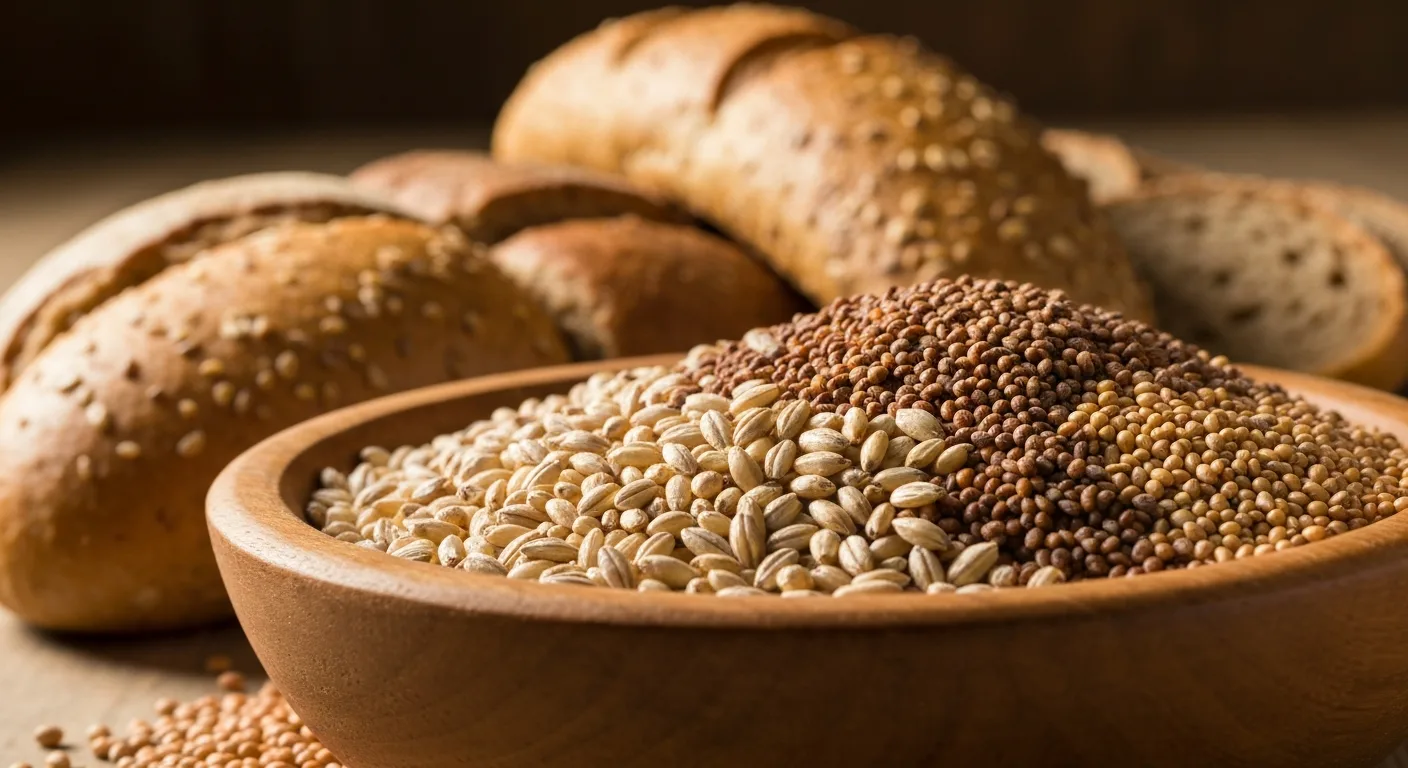
Fiber is arguably the single most important nutritional component of whole grains, and the one most conspicuously absent from modern refined diets. The average American consumes roughly 15 grams of fiber per day, barely half of the 25-38 gram daily target recommended by major health organizations. Ancient grains offer a practical, versatile way to close that gap.
But fiber is not a single substance. Different grains provide different types of fiber - soluble and insoluble, beta-glucan and arabinoxylan, resistant starch and cellulose - each with distinct physiological effects. This guide breaks down which ancient grains deliver the most fiber, what kinds of fiber they contain, and how each type benefits your digestive system and overall health.
For the full nutrient profiles including protein, minerals, and vitamins, see our ancient grains nutrition guide.
Fiber Content Rankings
The following table compares total dietary fiber across major ancient grains, with modern whole wheat and white rice as reference points.
| Grain | Total Fiber per 100g (dry) | Fiber per cooked cup (g) | Soluble Fiber (%) | Insoluble Fiber (%) |
|---|---|---|---|---|
| Freekeh | 16.5 | 8.2 | ~20 | ~80 |
| Barley (hulled) | 15.6 | 6.0 | ~30 | ~70 |
| Spelt | 10.7 | 7.5 | ~25 | ~75 |
| Kamut | 11.1 | 7.4 | ~20 | ~80 |
| Einkorn | 10.2 | 7.2 | ~22 | ~78 |
| Farro (emmer) | 10.0 | 6.8 | ~25 | ~75 |
| Teff | 8.0 | 7.1 | ~25 | ~75 |
| Sorghum | 6.3 | 6.5 | ~20 | ~80 |
| Quinoa | 7.0 | 5.2 | ~30 | ~70 |
| Buckwheat | 10.0 | 4.5 | ~30 | ~70 |
| Amaranth | 6.7 | 5.2 | ~35 | ~65 |
| Millet | 8.5 | 2.3 | ~15 | ~85 |
| Modern whole wheat | 10.7 | 4.6 | ~20 | ~80 |
| White rice | 0.4 | 0.6 | ~25 | ~75 |
Freekeh leads the ranking by a significant margin - its high fiber content is partly due to the early harvest (green durum wheat), which preserves more of the bran and fiber-rich outer layers that would diminish as the grain fully matures. The roasting process used to produce freekeh also creates some resistant starch.
Barley comes in second overall but is the undisputed leader in soluble fiber, thanks to its extraordinary beta-glucan content. More on that below.
Teff is notable for its fiber-per-cup when cooked - despite a moderate dry-weight fiber content, teff’s tiny grain size means a higher bran-to-endosperm ratio, and its fiber is well-distributed throughout the grain rather than concentrated in an outer shell that might be removed during processing.
Understanding Fiber Types
Soluble Fiber
Soluble fiber dissolves in water to form a viscous gel. This gel slows digestion, which has cascading metabolic effects:
- Slowed glucose absorption - the gel creates a physical barrier between digestive enzymes and starch granules, flattening the postprandial blood sugar curve. This is why high-soluble-fiber grains like barley produce lower glycemic responses.
- Cholesterol reduction - soluble fiber binds bile acids in the small intestine. These bile acids, which are made from cholesterol, are excreted rather than reabsorbed, forcing the liver to pull cholesterol from the blood to make replacements.
- Increased satiety - viscous fiber slows gastric emptying, keeping you feeling full longer.
Ancient grains with the highest proportion of soluble fiber include barley, amaranth, quinoa, and buckwheat.
Insoluble Fiber
Insoluble fiber does not dissolve in water. It passes through the digestive tract largely intact, where it:
- Adds bulk to stool - making bowel movements larger, softer, and easier to pass.
- Accelerates transit time - reducing the time digested food spends in the colon, which limits exposure of the intestinal lining to potential carcinogens.
- Provides structural scaffolding for gut bacteria - certain insoluble fibers (like cellulose and hemicellulose) are partially fermented by colonic bacteria, contributing to SCFA production.
The ancient wheats - freekeh, spelt, kamut, einkorn, and farro - are particularly high in insoluble fiber, as is millet.
The Distinction Is Not Always Clean
The soluble/insoluble framework, while useful, is somewhat oversimplified. Many fiber molecules have both soluble and insoluble fractions, and fermentability (whether gut bacteria can break it down) does not map perfectly onto solubility. Beta-glucan is soluble and highly fermentable. Cellulose is insoluble and poorly fermentable. But arabinoxylan - a major fiber component of wheat, spelt, and kamut - is partially soluble and partially fermentable, fitting neatly into neither category.
The practical takeaway: eat a variety of high-fiber grains to get a range of fiber types.
Beta-Glucan: Barley’s Superpower
Beta-glucan is a linear polysaccharide composed of glucose units linked by mixed beta-1,3 and beta-1,4 glycosidic bonds. This structure makes it highly viscous when dissolved in water, and that viscosity drives its health benefits.
Barley Beta-Glucan Content
Hulled barley contains 3-11% beta-glucan by weight, depending on the variety - significantly more than any other cereal grain. Oats, the other well-known beta-glucan source, typically contain 3-5%. A cup of cooked hulled barley provides roughly 2.5-3 grams of beta-glucan.
FDA-Authorized Health Claims
The FDA permits two health claims related to beta-glucan:
- Soluble fiber from whole oats and barley may reduce the risk of coronary heart disease (when consumed as part of a diet low in saturated fat and cholesterol).
- Barley beta-glucan can lower blood cholesterol levels.
The threshold for these benefits is 3 grams of beta-glucan per day, achievable with 1-1.5 cups of cooked hulled barley.
Beyond Cholesterol
Beta-glucan also modulates immune function. It is recognized by dectin-1 receptors on macrophages and dendritic cells, activating innate immune responses. While the clinical significance of dietary beta-glucan for immune function is still being established, animal studies consistently show enhanced pathogen resistance and improved vaccine responses with beta-glucan supplementation.
Resistant Starch: The Fiber That Is Not Fiber
Resistant starch (RS) is starch that resists digestion in the small intestine and reaches the colon intact, where it behaves functionally like fiber. It is not classified as fiber on most nutrition labels, but its physiological effects - fermentation, SCFA production, microbiome modulation - overlap significantly with those of dietary fiber.
Types of Resistant Starch in Ancient Grains
- RS1 (physically inaccessible starch): Intact grain structures trap starch granules within cell walls, preventing enzymatic access. This is why intact cooked barley produces a lower glycemic response than barley flour - the same starch, but physically less accessible.
- RS2 (native granular starch): Some raw grain starches resist digestion due to their crystalline structure. High-amylose sorghum and millet varieties are notable RS2 sources, though cooking disrupts most of this structure.
- RS3 (retrograded starch): When cooked starch cools, amylose chains re-associate into tightly packed crystalline structures that resist re-digestion. This is why leftover cooked barley, quinoa, or any grain has more resistant starch than freshly cooked grain. Reheating does not fully reverse retrogradation, making batch-cooked and refrigerated grains a practical RS3 source.
Practical Resistant Starch Strategy
Cook grains in batches, cool them in the refrigerator for 12-24 hours, and reheat before serving. This simple practice can increase resistant starch content by 30-50%, effectively boosting the functional fiber of your grain dishes without changing anything else about the recipe.
The Gut Microbiome Connection
The gut microbiome - the community of trillions of bacteria, fungi, archaea, and viruses inhabiting the large intestine - is deeply influenced by dietary fiber. Ancient grains feed this community in ways that promote health.
Short-Chain Fatty Acid Production
When colonic bacteria ferment dietary fiber and resistant starch, they produce short-chain fatty acids (SCFAs). The three primary SCFAs each have distinct functions:
Butyrate is the most studied SCFA and arguably the most important for gut health. It:
- Serves as the primary energy source for colonocytes (the cells lining the colon)
- Strengthens the intestinal barrier by promoting tight junction protein expression
- Reduces inflammation through inhibition of NF-kB signaling
- Promotes apoptosis of aberrant cells, potentially reducing colorectal cancer risk
- Supports regulatory T cell differentiation, contributing to immune tolerance
Barley beta-glucan and resistant starch from cooled grains are among the most potent dietary butyrate producers.
Propionate is produced in significant quantities from arabinoxylan fermentation - making the ancient wheats (spelt, kamut, farro, freekeh) good propionate-promoting foods. Propionate travels to the liver where it inhibits cholesterol synthesis (an additional mechanism by which grain fiber lowers cholesterol) and modulates gluconeogenesis.
Acetate is the most abundantly produced SCFA. It enters systemic circulation and influences appetite regulation through hypothalamic signaling, and it modulates fat oxidation in peripheral tissues.
Microbiome Diversity
Dietary fiber diversity - consuming a range of different fiber structures from different food sources - is one of the strongest predictors of gut microbiome diversity, which in turn is associated with better metabolic health, stronger immune function, and lower rates of allergic and autoimmune disease.
This is a key argument for eating multiple ancient grains rather than relying on any single one. The beta-glucan in barley feeds different bacterial populations than the arabinoxylan in spelt, which feeds different populations than the pectin-like fibers in quinoa. A grain-diverse diet creates a microbially diverse gut.
Specific Microbiome Effects of Ancient Grains
Research on specific ancient grains and gut microbiota includes:
- Barley: Increases Bifidobacterium and Lactobacillus populations, both considered beneficial genera. A four-week barley intervention study showed significant increases in fecal butyrate concentration.
- Sorghum: The polyphenols in pigmented sorghum reach the colon intact (they are poorly absorbed in the small intestine) where they are metabolized by gut bacteria into bioavailable phenolic metabolites. This creates a synergy between sorghum fiber and sorghum polyphenols - the fiber feeds the bacteria, and the polyphenols are transformed by those same bacteria into health-promoting compounds.
- Teff: The resistant starch and soluble fiber in teff support SCFA production. In Ethiopian populations where teff is a dietary staple, studies have noted distinct microbiome profiles with high prevalence of fiber-fermenting Prevotella species.
Practical Fiber Targets and Meal Planning
Daily Fiber Recommendations
| Population | Daily Fiber Target |
|---|---|
| Women (19-50) | 25 g |
| Men (19-50) | 38 g |
| Women (51+) | 21 g |
| Men (51+) | 30 g |
| Children (1-3) | 19 g |
| Children (4-8) | 25 g |
| Pregnant women | 28 g |
Sample High-Fiber Ancient Grain Day
Here is how ancient grains can help you meet a 30+ gram daily fiber target:
Breakfast: Teff porridge with berries and flax seeds - 7 g fiber Lunch: Barley and vegetable soup with a side of roasted vegetables - 9 g fiber Snack: Popped sorghum or amaranth granola bar - 4 g fiber Dinner: Freekeh pilaf with chickpeas and roasted cauliflower - 12 g fiber Total: ~32 g fiber
Increasing Fiber Gradually
If you are currently eating a low-fiber diet, increase fiber intake gradually over 2-3 weeks. A sudden jump from 15 g to 35 g daily can cause bloating, gas, and cramping as your gut bacteria adjust to the increased substrate. Drink adequate water - fiber absorbs water, and insufficient hydration with high fiber intake can worsen constipation rather than improve it.
Cooking Methods and Fiber Retention
Cooking does not significantly reduce the fiber content of grains. Unlike some vitamins, fiber is heat-stable. Boiling, steaming, baking, and pressure cooking all preserve total fiber content. The main variable is not cooking method but processing degree - whole intact grains retain all their fiber, while refined flour products lose most of it.
Soaking and sprouting can slightly reduce certain fiber fractions (particularly soluble fiber that leaches into the soaking water), but these losses are modest and offset by improved digestibility and mineral bioavailability.
Fiber and Specific Health Conditions
Irritable Bowel Syndrome (IBS)
IBS affects 10-15% of the global population, and fiber recommendations for IBS are nuanced. Soluble fiber (beta-glucan from barley, the soluble fraction of quinoa and buckwheat fiber) generally improves IBS symptoms by normalizing stool consistency. Insoluble fiber can worsen symptoms in some IBS patients, particularly those with diarrhea-predominant IBS.
Low-FODMAP ancient grains - quinoa, millet, buckwheat, and sorghum - are generally well-tolerated by IBS patients. Barley, spelt, kamut, and freekeh contain fructans (a FODMAP category) that may trigger symptoms in sensitive individuals. However, portion size matters - small servings of fructan-containing grains may be tolerable even for FODMAP-sensitive people.
Diverticular Disease
High-fiber diets reduce the risk of developing diverticular disease (outpouchings in the colon wall) by reducing intraluminal pressure. The old advice to avoid seeds and nuts with diverticular disease has been debunked - there is no evidence that small seeds (including tiny grains like teff and amaranth) lodge in diverticula or cause complications.
Type 2 Diabetes
The fiber in ancient grains directly improves glycemic control through multiple mechanisms. Viscous soluble fiber slows glucose absorption. Resistant starch reduces the total glycemic load. SCFA production from fiber fermentation improves insulin sensitivity through mechanisms that are still being fully characterized but likely involve GLP-1 secretion and reduced hepatic glucose output.
For a broader discussion of diabetes and ancient grains, see our health benefits guide.
Gluten-Free High-Fiber Options
For people who need to avoid gluten, the highest-fiber ancient grain options are:
- Teff - 8.0 g fiber per 100 g dry, with excellent soluble-to-insoluble ratio
- Sorghum - 6.3 g fiber per 100 g dry, plus resistant starch and polyphenols
- Buckwheat - 10.0 g fiber per 100 g dry (note: despite the name, completely gluten-free)
- Quinoa - 7.0 g fiber per 100 g dry with a high proportion of soluble fiber
- Millet - 8.5 g fiber per 100 g dry, predominantly insoluble
- Amaranth - 6.7 g fiber per 100 g dry with notable soluble fiber content
For complete guidance on gluten-free ancient grains, visit our gluten-free ancient grains guide.
The Bottom Line
Ancient grains are among the most practical fiber sources available - versatile, flavorful, and nutrient-dense beyond just their fiber content. The key principles for maximizing fiber benefits from ancient grains are:
- Eat them whole. Intact grains retain all their fiber; refined grain products lose most of it.
- Eat them varied. Different grains provide different fiber types that feed different microbial populations.
- Cook in batches and cool. Retrogradation increases resistant starch content.
- Increase gradually. Give your microbiome time to adapt.
- Prioritize barley if cholesterol management is a goal (beta-glucan).
- Prioritize freekeh, spelt, or kamut if regularity is the primary goal (high insoluble fiber).
For the complete nutritional picture, return to our ancient grains nutrition guide. For how fiber contributes to disease prevention, see our health benefits guide.
Last updated March 12, 2026