The History of Ancient Grains: From Neolithic Farms to Modern Tables
Trace the 10,000-year journey of ancient grains from the Fertile Crescent to today's health food shelves — the crops that built civilizations.
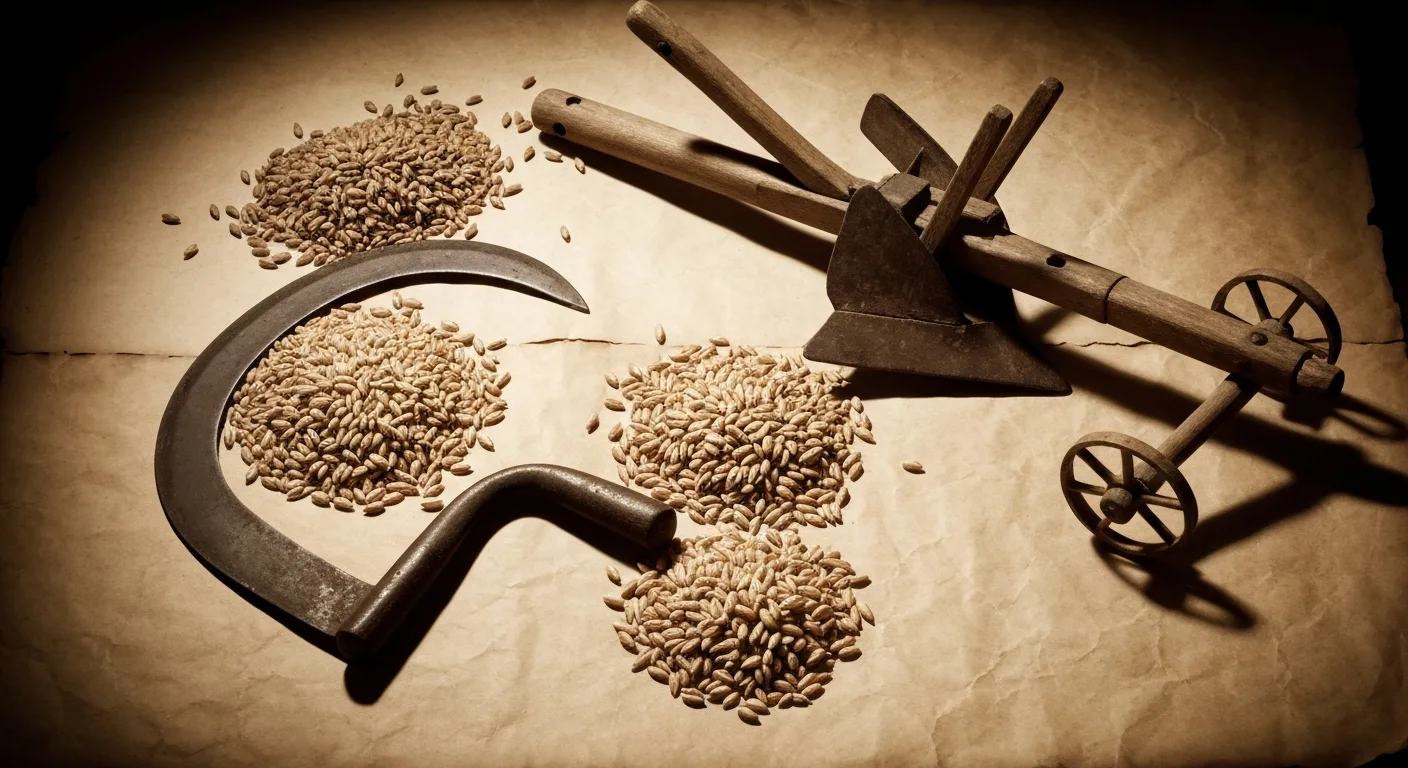
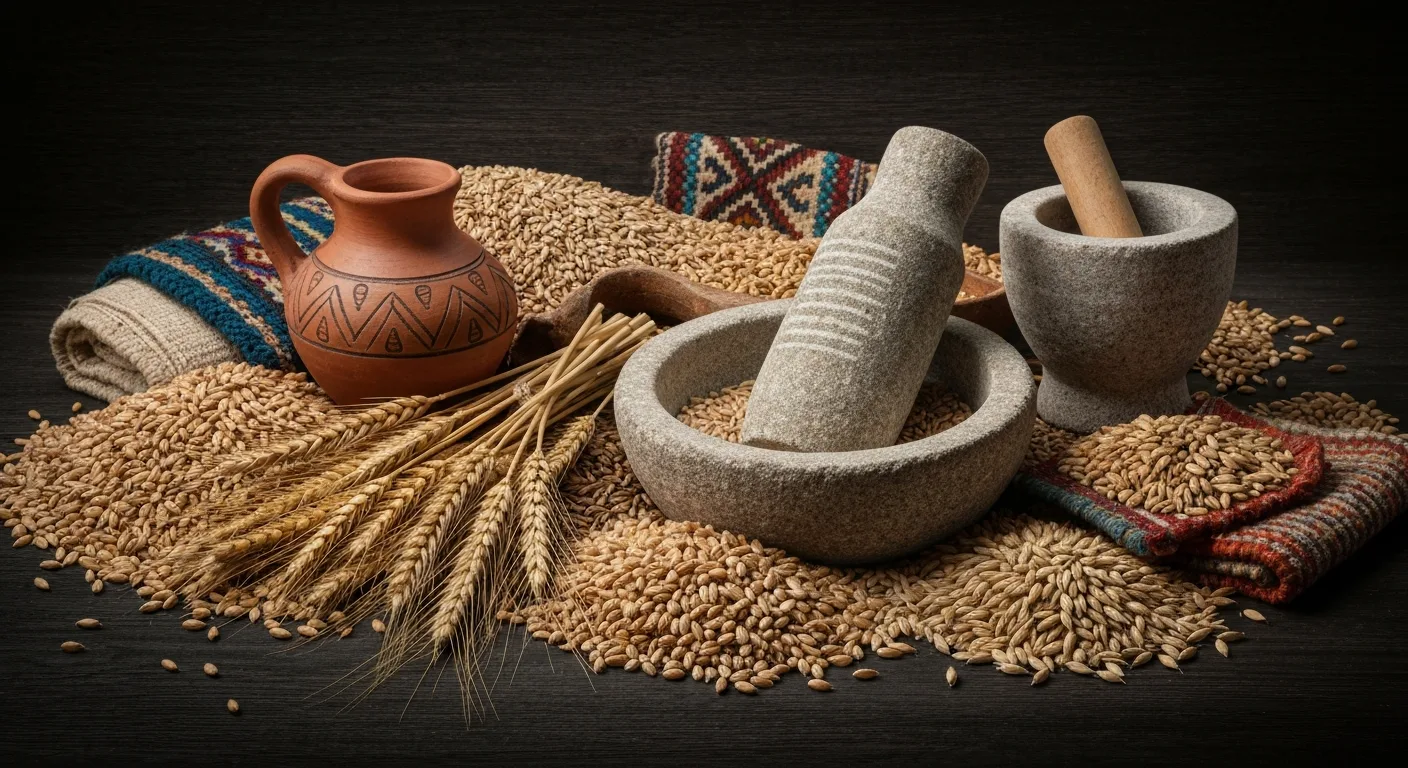
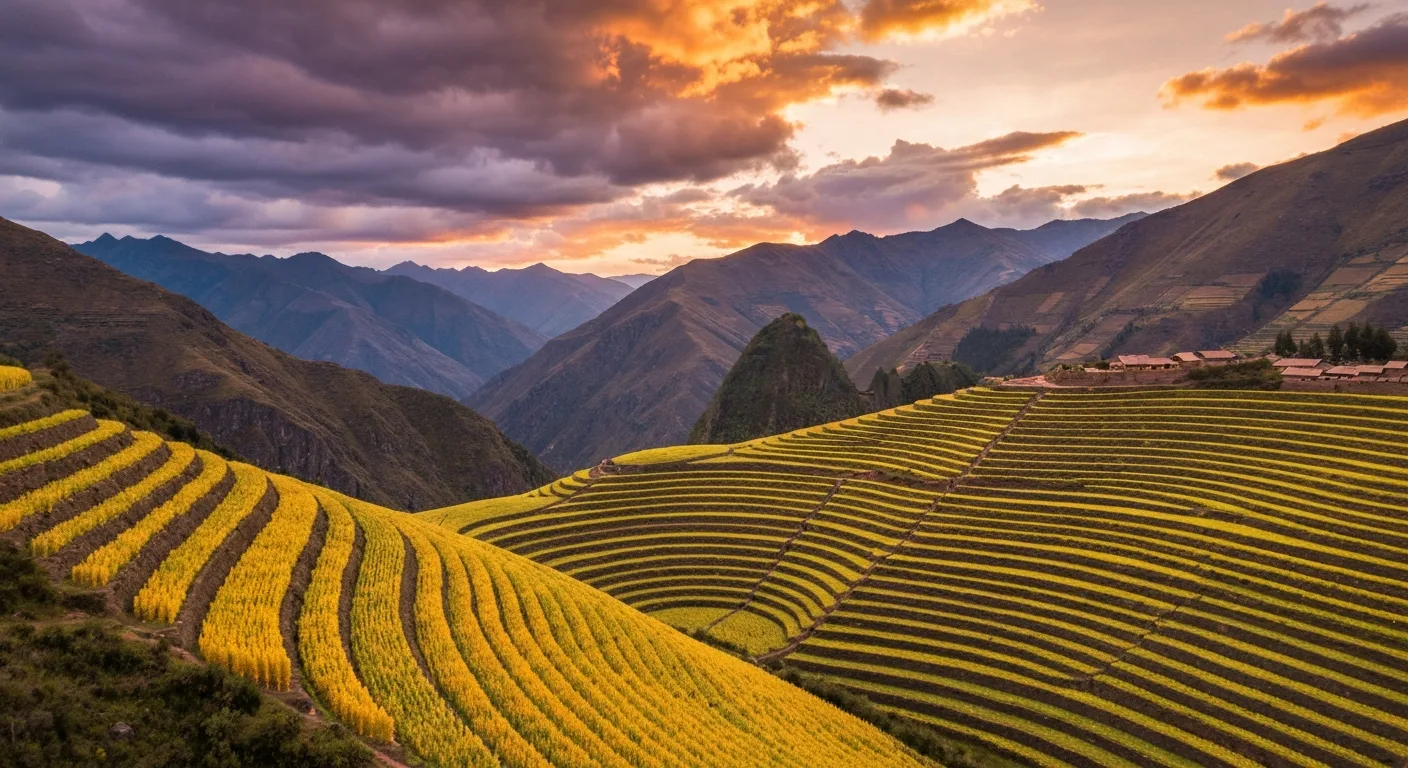
The story of ancient grains is the story of human civilization itself. Every major society that emerged in the last ten thousand years - from the city-states of Mesopotamia to the terraced empires of the Andes - was built on the foundation of grain cultivation. These crops did not merely feed people. They enabled the transition from nomadic hunting and gathering to settled agricultural life, which in turn made possible writing, mathematics, organized religion, standing armies, and everything else we associate with civilization.
Today, we call these crops “ancient grains,” a term that has become a marketing category as much as a historical one. But behind the branding lies a genuinely remarkable history. Understanding where these grains come from - and why they nearly disappeared before their modern revival - enriches every meal you make with them.
For a practical overview of these grains and what makes them distinct from modern varieties, see our guide on what are ancient grains.
The Neolithic Revolution: When Everything Changed
Around 10,000 BCE, in a crescent-shaped region stretching from modern-day Iraq through Syria, Turkey, and into the Levant, something unprecedented happened. Humans began deliberately planting seeds and tending crops instead of simply gathering wild plants.
This was not a sudden invention. Archaeological evidence suggests that the transition from foraging to farming unfolded over centuries, perhaps millennia. Early humans had been managing wild stands of grain - burning areas to encourage regrowth, selectively harvesting certain plants - long before formal agriculture emerged. But at some point, the balance tipped. People began saving seeds, clearing land, planting in rows, and staying in one place to tend their crops.
The earliest domesticated grains were einkorn wheat (Triticum monococcum) and emmer wheat (Triticum dicoccum), along with barley (Hordeum vulgare). Archaeologists have found charred grains of einkorn at sites in southeastern Turkey dating to roughly 8,500 BCE. Emmer appears at sites of similar age across the Fertile Crescent.
These were not the plump, high-yielding wheat varieties we know today. Einkorn has a single small grain per spikelet (its name means “single grain” in German). Emmer has two grains per spikelet and a tough hull that must be removed before eating. Both are nutritionally denser than modern bread wheat, with higher protein content and a richer mineral profile, but they yield significantly less grain per acre.
The Fertile Crescent: Wheat, Barley, and the Birth of Cities
The Fertile Crescent was not fertile by accident. Bounded by the Tigris and Euphrates rivers and blessed with a Mediterranean climate of wet winters and dry summers, it provided ideal conditions for wild grasses to flourish. Among those grasses were the ancestors of modern wheat and barley.
Barley was arguably more important than wheat in the earliest civilizations. It tolerates poor soil, drought, and salt better than wheat, making it a more reliable crop in the unpredictable conditions of early agriculture. The Sumerians, who built the first known cities in southern Mesopotamia around 4,000 BCE, used barley as currency, as food, and as the primary ingredient in beer - which was safer to drink than untreated water and provided essential calories and B vitamins.
Emmer wheat became the grain of ancient Egypt. The annual flooding of the Nile deposited rich silt across the floodplain, creating some of the most productive farmland in the ancient world. Egyptian farmers grew emmer on a massive scale, and the grain was used to make bread and beer - the two dietary staples that, along with onions, fed the laborers who built the pyramids. Emmer remained Egypt’s primary wheat for over three thousand years.
Spelt (Triticum spelta) emerged later, probably as a natural hybrid between emmer and wild goat grass. It became the dominant grain of Bronze Age and Iron Age Europe, particularly in the Alpine regions and what is now Germany, Switzerland, and northern Italy. Roman legions carried spelt as a marching ration, and it remained a European staple until the medieval period.
For more on how these grain-civilization relationships shaped history, see our article on ancient grains and the civilizations they built.
The Andes: Quinoa and Amaranth
While Fertile Crescent farmers were cultivating wheat and barley, an entirely independent agricultural revolution was taking place in the highlands of South America. Around 5,000 BCE, communities near Lake Titicaca - straddling the modern border of Peru and Bolivia - began cultivating quinoa (Chenopodium quinoa).
Quinoa is not a true cereal grain. It is a pseudocereal - a seed from a broadleaf plant that is used like a grain. But its impact on Andean civilization was equivalent to wheat’s impact in the Middle East. Quinoa thrives at high altitudes (up to 4,000 meters), in poor soil, with minimal water, and in temperature extremes that would kill most crops. For highland communities where corn would not grow and potatoes alone could not provide complete nutrition, quinoa was essential.
The Inca Empire, which at its height in the 15th century stretched across much of western South America, considered quinoa sacred. The Inca emperor would ceremonially plant the first quinoa seeds of the season using a golden taquiza (planting stick). Quinoa was called “chisaya mama” - the mother grain - reflecting its central importance to Inca life and spirituality.
Amaranth played a similar role in Mesoamerica. The Aztecs cultivated amaranth extensively and used it not only as food but in religious ceremonies, mixing the grain with honey and sometimes blood to form figures of gods that were eaten during festivals. When the Spanish conquistadors arrived in the 16th century, they banned amaranth cultivation as part of their campaign to suppress indigenous religion. This suppression nearly drove amaranth to extinction as a cultivated crop.
The full story of quinoa’s journey from Inca sacred grain to modern superfood is covered in our history of quinoa.
Ethiopia: The Birthplace of Teff
In the Ethiopian highlands, another grain was quietly sustaining a civilization. Teff (Eragrostis tef) was domesticated between 4,000 and 1,000 BCE in what is now Ethiopia and Eritrea. It is the smallest grain in the world - each seed is less than a millimeter in diameter, so small that a single handful contains thousands of grains.
Teff’s tiny size is actually one of its evolutionary advantages. The seeds are too small for birds to eat efficiently, reducing crop losses. They also cook quickly and can be ground into flour without specialized equipment. Teff is remarkably drought-tolerant and matures in as few as 60 days, making it reliable in Ethiopia’s variable climate.
For Ethiopian civilization, teff is inextricable from injera - the spongy, sourdough flatbread that serves as both plate and utensil in Ethiopian cuisine. Injera is made by fermenting a batter of teff flour and water for several days, then pouring it onto a hot clay plate. The resulting bread is slightly sour, highly nutritious (teff is rich in iron, calcium, and complete protein), and central to Ethiopian communal eating traditions.
Teff remained virtually unknown outside Ethiopia until the late 20th century. Even today, Ethiopia produces over 90 percent of the world’s teff supply, and the grain is so culturally important that the Ethiopian government periodically restricts teff exports to protect domestic food security.
Asia: Millet, Rice, and Buckwheat
The agricultural story of Asia centers on rice, but several ancient grains preceded and accompanied rice cultivation across the continent.
Millet was one of the first crops domesticated in East Asia. Foxtail millet (Setaria italica) and broomcorn millet (Panicum miliaceum) were cultivated in northern China by at least 6,000 BCE - possibly earlier. Millet was the primary grain of the Yellow River civilizations, the predecessors of Chinese imperial culture. Its importance is reflected in the Chinese language: the word for “grain” (gu) originally referred specifically to millet.
Millet has several properties that made it invaluable to early farmers. It matures quickly (60 to 90 days), tolerates poor soil and drought, and stores well. In regions too dry or too cold for rice, millet sustained communities for millennia. It remains a dietary staple across parts of India, Africa, and China, where it is eaten as porridge, flatbread, and fermented beverages.
Buckwheat (Fagopyrum esculentum) is a pseudocereal domesticated in the highlands of Central or Southeast Asia, possibly as early as 6,000 BCE. Despite its name, buckwheat is not related to wheat and is naturally gluten-free. It reached Europe via trade routes and became a staple in Russia (as kasha), Japan (as soba noodles), and the mountainous regions of France and Italy (as galettes and polenta taragna).
How Grain Cultivation Enabled Civilization
The connection between grain and civilization is not merely correlational - it is causal. Historians and anthropologists have identified several mechanisms through which grain cultivation directly enabled the rise of complex societies.
Caloric surplus. Grain is calorically dense, stores for months or years without spoiling, and can be produced in quantities far exceeding immediate need. For the first time, a community could produce more food than it consumed. This surplus freed people from the constant search for food, allowing specialization - some individuals could become potters, weavers, priests, soldiers, or bureaucrats rather than farmers.
Taxation and state formation. Grain is visible, measurable, and storable, making it an ideal tax base. Early states - Mesopotamia, Egypt, China - were built on the ability to collect grain taxes from farmers and redistribute that grain to non-farming populations. This administrative function drove the development of writing, mathematics, and bureaucracy.
Population growth. Reliable grain production supported larger populations than hunting and gathering. Higher population density led to urbanization, which concentrated human creativity and innovation.
Military capacity. Armies march on grain. The ability to produce, store, and transport large quantities of grain - as rations for soldiers - was a prerequisite for military campaigns. Roman expansion was fueled by spelt and emmer; Inca imperial expansion was fueled by quinoa and corn.
Trade networks. Grain surpluses became trade goods. Ancient trade routes - from the Silk Road to Mediterranean shipping lanes - carried grain along with spices, metals, and textiles. These trade networks transmitted not only goods but ideas, technologies, and cultural practices.
The Decline: Modern Wheat Takes Over
If ancient grains are so nutritious and well-adapted, why did they nearly disappear?
The answer is yield. Beginning in the medieval period and accelerating dramatically in the 18th and 19th centuries, farmers and plant breeders selected for wheat varieties that produced more grain per acre. Modern bread wheat (Triticum aestivum) - a complex hybrid that emerged from crosses between emmer, einkorn, and wild grasses - proved extraordinarily productive compared to its ancestors.
The Green Revolution of the mid-20th century completed this transformation. Starting in the 1940s, agricultural scientists led by Norman Borlaug developed semi-dwarf wheat varieties that, when combined with synthetic fertilizers and irrigation, could produce yields three to four times higher than traditional varieties. These high-yield wheats spread across the world, and by the 1970s, they had largely replaced traditional varieties in commercial agriculture.
Einkorn, emmer, spelt, and other ancient wheats could not compete on yield. Farmers abandoned them for economic reasons: modern wheat produced more grain per acre, which meant more income. Ancient grain varieties survived mainly in small pockets - mountain communities in Italy growing farro, Andean villages maintaining quinoa terraces, Ethiopian farmers tending teff fields - where tradition, geography, or both kept old practices alive.
The same pattern played out with non-wheat grains. Millet was displaced by corn and rice across much of Asia and Africa. Amaranth, already suppressed by colonial powers, retreated to a handful of regions in Mexico and Central America. Sorghum held on better than most, particularly in Africa, but lost ground to corn.
The 21st Century Revival
The modern ancient grains revival is driven by a convergence of factors that would have seemed unlikely just a few decades ago.
Nutritional awareness. Research has consistently shown that ancient grains are nutritionally superior to modern refined wheat in several dimensions: higher protein (especially quinoa, with its complete amino acid profile), higher fiber, more minerals, and a richer phytochemical profile. As consumers have become more nutrition-conscious, ancient grains have benefited.
Gluten sensitivity. The rise in celiac disease diagnoses and broader awareness of gluten sensitivity has driven demand for gluten-free grains like quinoa, millet, teff, sorghum, amaranth, and buckwheat. Even the gluten-containing ancient wheats (einkorn, emmer, spelt) are sometimes tolerated better than modern wheat by people with mild gluten sensitivity, though they are not safe for celiacs.
Sustainability. Many ancient grains require less water, fewer pesticides, and less fertilizer than modern wheat. In an era of climate change and resource scarcity, crops that thrive in marginal conditions are increasingly valuable. Millet, sorghum, and teff are particularly drought-tolerant. Quinoa grows at extreme altitudes in poor soil.
Culinary interest. The rise of global cuisines in Western cooking has introduced people to grains they had never encountered. Ethiopian restaurants introduced teff. Middle Eastern cooking popularized freekeh. Italian chefs evangelized farro. Each exposure created new consumers.
The 2013 International Year of Quinoa. The United Nations declared 2013 the International Year of Quinoa, shining a global spotlight on the grain and its Andean origins. Quinoa sales in North America and Europe surged, and the broader ancient grains category rode the wave.
The revival has not been without controversy. Rising global demand for quinoa drove prices so high that some Andean farmers - who had eaten quinoa for generations - could no longer afford to buy it, instead selling their harvest and eating cheaper imported foods. The situation has since stabilized somewhat, with expanded quinoa cultivation in other countries reducing price pressure, but it remains a cautionary tale about the unintended consequences of food trends.
The Living Legacy
Every time you cook a pot of farro, simmer a batch of teff porridge, or rinse quinoa under cold water, you are participating in traditions that stretch back thousands of years. The same basic gestures - washing grain, adding water, applying heat, waiting - have been repeated billions of times across human history, on every inhabited continent.
Ancient grains are not just ingredients. They are living artifacts of human ingenuity, domesticated and refined over hundreds of generations by farmers whose names we will never know. They carry within their genetics the story of human migration, adaptation, and survival.
Understanding that history does not make the grains taste better. But it does make the act of cooking them feel like what it is: a connection to something larger and older than ourselves.
To explore these grain-civilization connections in more detail, read our article on ancient grains and the civilizations they built. For the specific story of quinoa’s remarkable journey, see our piece on the history of quinoa. And for a complete list of ancient grains with their origins and characteristics, visit our ancient grains list.
Last updated March 12, 2026